Categories
animal welfare compassion Food and Drink News/Blog plant-based diet Promoted Recipes vegan vegetarianism

Vancouver’s Eric Hamber Secondary Embraces Meatless Monday

Diverse high school students eating lunch in the cafeteria

School is back in session, which means so is Meatless Monday! Vancouver’s Eric Hamber Secondary is kicking off the school year with a re-launch of their highly successful Meatless Monday initiative. Last year, the school’s Environmental Club worked with VHS, school administrators and their food service provider, Canuel Caterers, to introduce delicious meatless meals every Monday!

Eric Hamber’s Environmental Club was keen to bring the humane, sustainable and healthy-eating campaign to their cafeteria after learning about the impact of meat consumption on animal welfare, the environment and our health. Mouth-watering menu items, including hummus wraps, chickpea curry rice bowls, mushroom burgers and a salad bar, made Mondays something to look forward to. Students and staff have embraced the initiative, with Mondays seeing an increase in sales and customer count by 15 percent and 10 percent respectively.

This year, the Environmental Club is ready to share the Meatless Monday message again with fellow students and teachers, utilizing posters, prizes, social media and school announcements to raise awareness and participation.

“We’re excited to bring back Meatless Monday for a second year! In an effort to reduce our environmental footprint, we’ll be encouraging students to cut back on meat, which requires many resources to produce and transport, and to choose a tasty and healthy salad instead,” said the Environmental Club’s Program Coordinator.

You can follow Eric Hamber’s lead by taking our Meatless Monday pledge – we’ll send you a weekly recipe! You can also make a donation in support of our effort to bring the initiative to more classrooms, cafeterias and communities this year.

Interested in introducing Meatless Monday to your school, workplace, business or community? Learn more and get in touch with us!

Categories
fundraising News/Blog Promoted Scotiabank Uncategorized

We reached our goal – thanks to you!

team pic 2016

On Sunday, June 26th, Team VHS ran for the animals in the Scotiabank Half-Marathon & 5k. This year marks VHS’s sixth year participating in the Scotiabank Charity Challenge. Thanks to our amazing team of runners and all of the generous donors who sponsored our team, an incredible total of $39,100 was raised to support VHS’s work to help animals.

The Scotiabank Charity Challenge is the most important fundraiser of the year and it enables us to continue our work to protect animals from exploitation and abuse, whether it’s due to factory farming, captivity or entertainment. The funds also allow us to assist low-income guardians in getting their pet spayed/neutered or in emergency situations. Learn more about our campaign work and how you can get involved!

We couldn’t do this important work without you! From the entire VHS Team, thank you to everyone who participated and sponsored our team in the Scotiabank Charity Challenge. A big thank you to West Coast Monograms for the great team t-shirts!

VHS at the Scotiabank Half Marathon and 5K

Vancouver Humane Society at the Scotiabank Half Marathon and 5K!


Categories
animal welfare compassion cruelty News/Blog Promoted Uncategorized

CBS: End the exploitation of wild animals on show “Zoo”

tigerVHS is joining the call for CBS to end the use of wild animals in the filming of its show “Zoo”. The Vancouver-shot series is based on James Patterson’s 2012 novel by the same name and is a thriller about a zoologist’s investigation into a wave of violent animal attacks against humans around the world.

For a series that’s based on the story-line that captive and exploited animals are fighting back against their oppressors, it’s disturbing that CBS itself fails to see the lesson and contributes to such exploitation through their use of wild animals, including bears, wolves and big cats, who have been forced to perform in the series. These animals are denied any semblance of a natural life and are transported around, caged, chained and forced to perform for mere entertainment.

Computer-generated imagery (CGI) has come a long way and has been used in other films to create realistic looking animals without the use and abuse of live ones, a popular example of this being Disney’s “The Jungle Book”.

Please join us in calling on CBS to follow the lead of others in the film industry by ending their use of wild animals and instead utilizing CGI technology in their productions. You can submit your request by visiting CBS’s website and selecting “Zoo” under the category drop-down of the feedback form.

Categories
animal welfare compassion Food and Drink News/Blog plant-based diet Promoted vegan vegetarianism

Vancouver Food Policy Council Endorses Meatless Monday


VHS-MM-Buttons-2015-WEBMeatless Monday in Vancouver just got an important boost! The influential Vancouver Food Policy Council (VFPC) has unanimously passed a motion that “endorses the concept of Meatless Mondays and encourages Vancouver citizens to choose plant-based meals on Mondays.”

The council is an important and respected voice in food policy in the city and the motion is a major step in advancing the Meatless Monday movement locally, which is being spearheaded by VHS.  With concerns growing about the impact of meat consumption on animal welfare, climate change and human health, Meatless Monday has steadily grown into a popular global initiative.

VHS has been working with the VFPC on the motion and is thrilled with the council’s support. “We’re extremely pleased the Vancouver Food Policy Council is endorsing the Meatless Monday concept,” said VHS Program Coordinator, Emily Pickett. “The issues that we face as a society – factory farming, preventable health conditions and climate change – can be daunting and leave one feeling helpless at times. But Meatless Monday is a meaningful way for individuals to be a part of the solution.”

The VFPC is an advisory group to Vancouver City Council and functions as a bridge between citizens and civic officials, coming together to work on food policy initiatives that benefit all Vancouverites. VHS pitched the Meatless Monday concept to the VFPC late last year, in the hopes that its members would endorse the humane, healthy and sustainable-eating campaign and help it reach a wider audience throughout Vancouver.

Below is a copy of the VFPC’s motion endorsing Meatless Monday:

WHEREAS the Vancouver Food Charter commits the City of Vancouver to

  • Supporting a food system that “contributes to the environmental stability and well-being of our local, regional, and global communities”,
  • Encouraging the “humane treatment of animals raised for food”, and
  • Increasing “the health of all members of our city”; and,

WHEREAS contemporary animal agriculture has negative environmental impacts including greenhouse gas emissions and water pollution and often does not confer humane treatment of animals; and,

WHEREAS scientific evidence links excess meat consumption with heart disease, stroke, type 2 diabetes, obesity, certain cancers, and earlier death; and,

WHEREAS “Meatless Monday” is a global movement endorsed in global cities such as New York, Portland, and San Francisco that uses a simple message (“once a week, cut the meat”) to raise awareness that reducing intake of meat and animal products, particularly from industrial sources, can help protect human, animal, and environmental health;

BE IT RESOLVED THAT the Vancouver Food Policy Council endorses the concept of Meatless Mondays and encourages Vancouver citizens to choose plant-based meals on Mondays.

English_Bay,_Vancouver,_BC

Every year, over 700 million animals are raised and killed for food in Canada, nearly all of whom are confined to unnatural and cruel factory farms. Our over-consumption of meat is not only bad for the animals, but studies have connected red and processed meat consumption with an increased risk of certain types of cancer, cardiovascular disease, diabetes and obesity. Animal agriculture is also responsible for more greenhouse gas emissions than the entire transportation sector, making the industry a major contributor to climate change, pollution, water use, deforestation and biodiversity decline. As the United Nations Food and Agricultural Organization has framed it, “livestock’s contribution to environmental problems is on a massive scale and its potential contribution to their solution is equally large.” That there is so much impact in what we choose to put on our plate means there is just as much potential for change and Meatless Monday is a great place to start.

The VFPC’s support for Meatless Monday is also in line with the actions of several Metro Vancouver schools, who have joined the local movement within the last year. VHS has helped Langara College, British Columbia Institute of Technology, Eric Hamber Secondary and Winston Churchill Secondary implement Meatless Monday in their cafeterias – promoting delicious plant-based menu items as a healthy, humane and sustainable choice for students and staff. The impact has been very positive, with multiple schools reporting an increase in cafeteria sales already. VHS is working with several other schools interested in bringing the initiative to their cafeterias once school resumes in the fall.

The council’s endorsement adds an important voice to the call for a more ethical and sustainable food system and it will certainly help expand the reach of the “once a week, cut the meat” message in and around Vancouver. Learn more and join the local movement today by taking the Meatless Monday pledge today!

Categories
Cruelty-free Food and Drink News/Blog plant-based diet Promoted Recipes Uncategorized vegan vegetarianism

Meatless Monday Goes Global With International Cookbook

canada recipeThe Vancouver Humane Society recently joined forces with other Canadian Meatless Monday advocates, including EarthSave Canada, to contribute to an exciting new online cookbook. “Meat-Free Monday Everywhere” brings together leaders in the Meatless Monday movement from around the globe, with each country submitting a meatless recipe representative of their corner of the world.

With no shortage of cruelty-free recipes out there, the process of narrowing it down to THE Canadian dish was no easy feat. In the end, it was Vancouver writer Eleanor Boyle’s personal recipe, a Potato and Carrot Salad with Garlic-Mustard Dressing, which would represent Canadian meatless cuisine on the international scene. The ingredients in this salad are all from hardy plants that grow well in our temperate climate. Canada produces significant quantities of mustard, potatoes, carrots, kale, lentils and the other ingredients found in this salad. The recipe contains familiar and nutritious ingredients, plus a delicious vinaigrette that includes a touch of Canadian maple syrup.

The Meat-Free Monday Everywhere cookbook showcases not only the delicious variety of meatless meal options to choose from, but also the impressive growth of the Meatless Monday movement. Active in over 30 countries, the movement is raising awareness of the impact that reducing/eliminating meat consumption has on animal welfare, our health and the environment.

Over 700 million animals are killed for food every year in Canada, and our over-consumption of cheap meat has forced nearly all of them into factory farms, where they endure conditions and practices that most Canadians find appalling. Reducing and eliminating meat consumption and incorporating more plant-based proteins in our diet has health benefits, including protecting against heart disease, stroke, and cancer, reducing our risk for diabetes, curbing obesity and improving the nutritional quality of diet.

If all of these benefits weren’t enough, plant-based eating is also much kinder to the planet. Animal agriculture is a major contributor not only to climate change, but to air and water pollution, water use, land degradation and deforestation, biodiversity decline, and ocean degradation. In fact, animal agriculture is responsible for more greenhouse gas emissions than the entire transportation sector. It takes far more resources to farm living animals who eat plants than it does to simply eat plant-based ourselves.

With all of this in mind, we encourage you to join us in standing up for animals every time you sit down to eat! Check out the online cookbook online cookbook for some delicious recipes and don’t forget to take the Meatless Monday pledge for a free weekly recipe to help you in your commitment to protecting animals, your health and the planet.

meatlessmonday.ca pic
Canadian Meatless Monday advocates – Vancouver writer, Eleanor Boyle, EarthSave President, David Steele and Vancouver Humane Society Program Coordinator, Emily Pickett
Categories
animal welfare compassion News/Blog Promoted Uncategorized

SeaWorld’s historic decision is lost on Vancouver Aquarium

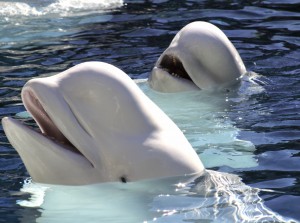
beluga whales iStock_000005049794MediumLast week, SeaWorld announced that, effective immediately, it is ending its orca breeding program and will be phasing out its theatrical shows involving orcas.

While this is certainly welcome news for the future generations of these whales who would have been born into a life of captivity, sadly, it amounts to little for the existing generation in SeaWorld parks, who will remain captive “for as long as they live.” Nor does it extend the same compassion to SeaWorld’s other captive cetaceans, including belugas and dolphins, who can continue to be bred in captivity and perform for audiences.

What does it mean for cetaceans in captivity at the Vancouver Aquarium? “It doesn’t change anything,” according to the aquarium’s general manager, who commented on SeaWorld’s announcement while in Spain, where the Vancouver aquarium has taken over operations of the L’Oceanografic aquarium. The marine park is the largest in Europe and has 13 bottlenose dolphins, 10 of which were caught in the wild. It also has a pair of belugas caught in Russian waters.

Despite growing criticism and a recent documentary on the subject, the Vancouver Aquarium defends its breeding programs and the keeping of cetaceans in captivity. Even Dr. Jane Goodall has voiced her opposition, calling captive breeding “no longer defensible by science.” She went on to argue that “the idea that certain cetaceans ‘do better’ in captivity than others is also misleading, as belugas, dolphins and porpoises are highly social animals which can travel in large pods and migrate long distances.”

Goodall is not alone in her opposition to the breeding and keeping of cetaceans in captivity. Senator Wilfred Moore has introduced a federal bill that, if passed, would prohibit the acquisition and captive breeding of cetaceans in Canada. We encourage you to sign and help circulate this potentially historic bill.

There is still much work to do in order to afford other animals the same freedom from exploitation, but we must recognize the SeaWorld announcement for the historical moment that it is. It serves as a testament to the power of compassionate people over corporations. Together, we can build on this momentum and work toward the inevitable day when the captivity industry is a thing of the past. Join the annual Empty the Tanks worldwide rally, taking place at the Vancouver Aquarium on Saturday, May 7th, 11am and voice your opposition to the captivity industry.

Categories
animal welfare compassion fundraising News/Blog Promoted Uncategorized

Lola & Susie receive help through VHS’s McVitie Fund

There are few options available for good pet owners who fall on hard times. Sometimes all it takes is an unexpected circumstance, like an injury at work or being laid off, which can make covering an equally unexpected vet bill for your pet overwhelming.

That’s where the Vancouver Humane Society’s McVitie Fund comes in. It’s our goal to help animals and people in need and to keep cherished pets in already loving homes, instead of being unnecessarily euthanized or surrendered to already crowded shelters.

Through donations to the McVitie Fund, VHS has been able to help provide emergency care for close to 1500 animals to date. We’ve also helped spay/neuter over 4200 animals, in an effort to address the pet overpopulation issue.

lola and susie2Lola and Susie are just two of the many animals helped through your generous donations. These two mean the world to their guardian, who tells us they are not only important members of his family, but play a crucial role in his mental health. So when Lola and Susie both developed a chronic skin issue, he worked tirelessly with the vet to resolve the problem. It seemed the source was likely environmental and due to issues with the building he and the dogs lived in. After little was done to rectify the situation on the part of the landlord, the three moved to a new home. Due to his limited income, their guardian reached out to VHS for help in getting Lola and Susie’s skin issues cleared up once and for all. Thanks to VHS’s supporters, Lola and Susie were able to get the treatment they needed and are now on the mend. Their caregiver is beyond grateful for the support of complete strangers during a tough time.
lola and susie

This is just one example of the many cases we assist with through your support. An incredible VHS supporter has issued a matching gift challenge through which donations made to the McVitie Fund before April 30th, 2016 will be matched, up to $20,000! This means we can help even more animals in need of emergency care.

Please, donate today, double your impact and encourage others to contribute to this much-needed fund. Help us help animals in need, like Lola and Susie.

Categories
News/Blog Promoted Uncategorized

VHS Helps More Schools Join the Meatless Monday Movement

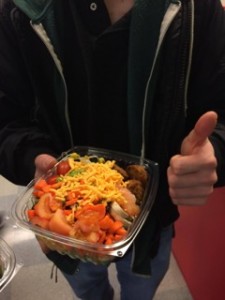
Thumbs up for Meatless Monday!

More and more people are looking for ways to eat humanely, healthfully and sustainably. Reducing or eliminating our meat consumption are both effective ways of doing just that! Our society’s overconsumption of meat condemns farm animals to a life of suffering in unnatural and inhumane conditions; increases our risk of heart disease, stroke, cancer, diabetes, obesity and other preventable conditions; and is a significant contributor to climate change and environmental degradation.

The good news in all of this is that every meatless meal helps to tackle these crucial issues, which is why we’re excited to launch our new Meatless Monday toolkit. This guide is intended to help students in BC schools join the ever growing Meatless Monday movement, with resources and tips for starting your own school campaign.

VHS’s Meatless Monday project has already helped several secondary and post-secondary schools kick start their own cafeteria initiatives, the most recent being Eric Hamber Secondary. After learning about the impact of meat consumption on the environment, animals and our health, Eric Hamber’s Environmental Club worked with VHS, school administrators and the school’s food services provider, Canuel Caterers, to introduce and promote delicious meatless meals every Monday.

The Environmental Club reports that cafeteria sales have increased, as students enjoy the exciting new menu items, including a salad bar, chickpea curry rice bowl, hummus wrap, mushroom burger and pasta primavera.

If you’re a student, download our Meatless Monday toolkit to get started on your campaign today. Remember that every time you sit down to eat, you have the opportunity to help create a more humane, healthy and sustainable society!

Categories
animal welfare compassion News/Blog Promoted Uncategorized

Help animals in need, like Rosie, this holiday season

rosie6When Rosie’s guardian was given Rosie as a puppy, the two had an instant connection. Not only was Rosie an adorable and sweet puppy, but her gentle nature was especially helpful for her caregiver, who suffers from Post-Traumatic Stress Disorder.

Soon after though, Rosie began to experience difficulty walking and a vet determined she had been born with a congenital defect in both hind legs that would only worsen as she aged. If the condition was not surgically corrected, she’d never walk normally again.

Her guardian, who is on disability for PTSD and whose roommate abruptly moved out leaving her to cover rent alone, desperately needed help. She was able to cover the cost of surgery for one of Rosie’s legs, but needed help finding the funds for her other leg. Rosie’s caregiver was worried that she wouldn’t get her companion the surgery she needed so she could walk, run and just be a dog!

Below is a video of Rosie before surgery.

Rosie needs leg surgery

No Description

rosie button

It was heartbreaking to see her best friend struggle to move around and enjoy life as she should. Still, despite Rosie’s own limitations, she was her caregiver’s constant companion. The pair that took such good care of each other now needed a helping hand.

Rosie’s guardian reached out to VHS and, thanks to a very special anonymous donor, we were able to help Rosie with the surgery she needed and get her back on ALL fours! Her caregiver updated us that after her recovery period, Rosie is now enjoying life to the fullest – walking, running and playing! She tells us that seeing Rosie enjoy her new-found independence brings her such happiness and that she couldn’t be more grateful for the help from complete strangers in giving a little dog her freedom back.

Below is a video of Rosie post-surgery!

medium

Rosie Post surgery

Rosie is like many other animals in need who VHS helps through our McVitie fund. Only through donations from supporters like you are we able to help low-income pet guardians with an emergency bill or in having their pet spayed/neutered.

This holiday season, please consider giving back to those in need by making a donation to the McVitie Fund. Your gift will be doubled thanks to a generous anonymous donor and all gifts are eligible for a tax receipt!

rosie3

Categories
animal welfare compassion Cruelty-free Food and Drink News/Blog plant-based diet Promoted Uncategorized vegan vegetarianism

Meatless Monday Goes To School

Capture

School is back and we at VHS couldn’t be more excited (sorry, kids)! You’ll recall we launched our Meatless Monday program this past spring, which even as the school year was winding down, was well-received by students in the Lower Mainland. Three post-secondary schools (Langara, BCIT and Trinity Western) joined the growing movement and multiple secondary schools expressed interest in bringing the initiative to their cafeterias this fall.

Over the summer we worked with the Vancouver School Board (VSB) to develop a flyer that served as a “how-to” guide for bringing Meatless Monday to school cafeterias. The flyer also draws attention to society’s over-consumption of meat, which has forced animals into factory farms, where their lives are characterized by intensive confinement, cruelty and suffering. Educating and empowering the public through an initiative like Meatless Monday is an important step toward reducing that suffering and creating a more humane society.

As the new school year kicked off, the VSB shared the flyer with every school administrator and teacher across the district! VHS commends this support for Meatless Monday by the VSB, as it provides individual schools the tools and confidence in implementing their own Meatless Monday initiative to better the treatment of animals, the well-being of the planet and of course, the health of the students.

We look forward to helping more students take action to reduce animal suffering by bringing Meatless Monday to more classrooms and cafeterias this year! If you’re interested in implementing Meatless Monday at your school, workplace or in your community, contact Emily Pickett. Don’t forget to take the Meatless Monday pledge and receive a weekly recipe/tip to help you start your week off right!

mlm