Categories
News/Blog Uncategorized

Wolf kill contest should be cancelled

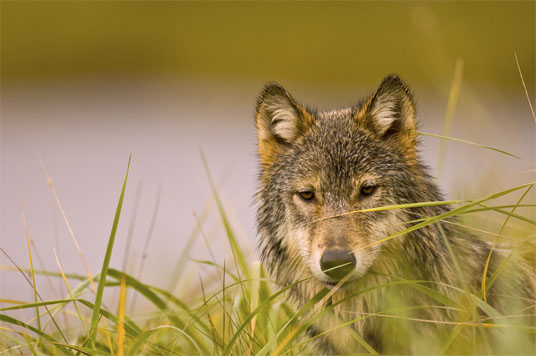
                             Photo: Ian McAllister, Pacificwild.org

A report in the Vancouver Sun describes a disturbing contest in Fort St. John, B.C., in which prizes are to be awarded for killing wolves.  The Sun reports says:

“A privately sponsored wolf-kill contest is offering cash and other prize incentives for hunters to shoot the predators this winter in northeast B.C.

Hunters who kill the largest wolves stand to receive $250 to $1,000 and up, with a booby prize of $150 for the smallest wolf and draws for prizes such as a rifle and free taxidermy work.”

The contest has outraged many people in B.C. and VHS believes the contest’s sponsors should cancel the event.

The contest sponsors include (click for contact info):

Rich Petersen, Remax realtor

Guy Lahaye, president of the North Peace Rod & Gun Club

Raven Oilfield Rentals

Backcountry (hunting & fishing store)

Mr. Green-Up Envirotech Ltd.

If you agree that killing wolves for prizes is wrong, please contact the sponsors and politely request that they cancel this contest.

Categories
News/Blog Uncategorized

Not just a chicken

Earlier this year, a rather obscure gathering of scientists took place at the University of Prince Edward Island.  The “Poultry Welfare Conference September 2012” was never going to make big headlines but in its own small way it just might help alleviate the suffering of billions of animals.

As animal advocates will tell you, it’s hard to get the public to care about chickens.  To most people they are good for dinner and not much else.   Cats and dogs, zoo animals and wildlife all attract a degree of human empathy or sympathy, but farm animals, especially poultry just don’t rate. 

Perhaps it’s because people don’t think (or prefer not to think) of their drumsticks or nuggets as having once been a living, breathing animal.  And even if they do, well, it’s just a chicken.

But of course chickens are more than just food.  In fact, as scientists are discovering, they are not only smarter than anyone thought – they’re also capable of feelings such as frustration, distress and even empathy.

Dr. Ian Duncan, Canada’s foremost poultry welfare scientist, told the P.E.I. conference that there is now an acceptance that it is feelings that govern animal welfare and “therefore feelings that should be measured when assessing welfare.”  Duncan has designed experiments that “ask” animals how they feel by measuring how hard they are willing to work to obtain or avoid certain stimuli.

For example, he has shown that hens will work just as hard to find a secluded nesting place as they will to get food, suggesting that the frustration of being denied a nest is as powerful a feeling as hunger.  In Canada, 95 per cent of laying hens are kept in cages that deny them the opportunity to nest.  Science now supports the common sense contention that those caged hens, about 26 million of them, are suffering.

Duncan’s work is underpinned by a broader scientific rethink on animal intelligence and sentience.  In July of this year, a prominent group of neuroscientists gathered at the University of Cambridge to reassess consciousness in human and non-human animals.  The result was the Cambridge Declaration on Consciousness, which, among other things, declared that “Mammalian and avian emotional networks and cognitive microcircuitries appear to be far more homologous than previously thought.”  In other words, birds think and feel more like us than we had supposed.

The declaration has moral and cultural implications, as Dr. Christof Koch, a renowned neuroscientist and signatory to the declaration made clear: “The belief in human exceptionalism, so strongly rooted in the Judeo-Christian view of the world, flies in the face of all evidence for the structural and behavioural continuity between animals and people.”

Some specific studies on chickens have suggested that they possess “primitive self-consciousness.”  Others have found evidence that chickens have “one of the essential underpinning attributes of ‘empathy’; the ability to be affected by, and share, the emotional state of another.”

Even the social behaviours of chickens (in natural settings) indicate they are perhaps not so different from “higher animals” as previously thought. One Australian study found that roosters who lost out to dominant males when it came to attracting hens found alternative routes to romantic success by “being nice” and finding food for hens.  (Human males who never made the football team but still wanted to get dates will be familiar with such strategies.)

But should chickens’ welfare depend on how intelligent or more “like us” they are?  Philosophical debates rage over granting animals moral consideration based on their levels of sentience, intelligence and self-consciousness.  Some would argue that the capacity of an animal to feel pain should be enough to make inflicting such pain morally wrong.

It could also be argued that having intelligence hasn’t saved millions of pigs suffering in factory farms, or whales who continue to be slaughtered, or dogs and primates still used in laboratory research.

Nevertheless, making science-based arguments when advocating compassion for animals does carry weight with those suspicious of mere sentimentalism (although one wonders why the simple concept of mercy isn’t morally persuasive enough).  Proving animals are more intelligent and emotionally capable will, in the long run, make it harder for industries and authorities to justify making them suffer or killing them for human benefit.

Even changing chickens’ image will help.  Science is showing that they are not “bird-brained” “dumb clucks” but sentient, clever birds with unique personalities and interesting social behaviours.  That’s who is suffering on factory farms.  That’s who is being slaughtered by the millions.  That’s who is on your plate – not “just a chicken.”

Categories
News/Blog Uncategorized

Guest post: The Humanist view of animal rights

By Ian Bushfield, executive director of the B.C. Humanist Association

Religions have traditionally approached the topic of animal rights in one of two ways. The more conservative religions state that God gave dominion to us over all ‘lesser’ species to do with as we please. Alternatively, some say we were charged with stewardship over God’s creation, so we should reduce the harm that comes to God’s creatures.

Yet today, more than one-in-three British Columbians are non-religious. Of this non-religious community, many atheists and agnostics put forward an ethical system called Humanism. Humanism is about being good without God by basing our worldview on reason, compassion, and hope. It gives us the ability to create our own values and ethics, while forcing us to be skeptical of all claims – including our own.

Humanists see evolution by natural selection as the best theory we have to explain the diversity of life on earth. This theory tells us that given enough time, simple self-replicating molecules adapted and reproduced, eventually giving rise to all of the plants, animals, and people alive today. We therefore recognize that we are not superior to other animals and that we are a part of nature itself. We respect the rights of animals because it is a mere extension of the rights that we grant to other human beings.

Furthermore, as we learn more about the different species of life on earth, we are beginning to recognize that animals feel pain, fear, and suffering to different extents. The more an animal is like us, the more we identify with its suffering and seek to alleviate that.

All Humanists oppose torture and cruelty to animals. However, Humanism is a worldview without dogma, so our beliefs form a wide spectrum when applied to the real world. For example, some strongly oppose the existence of zoos and aquariums, believing that the animals would be better off in the wild. Others argue that the scientific and conservation benefits of these institutions outweigh those arguments. Many Humanists support animal research, provided it is done in a humane and ethical way, while others oppose it.

Where many religions have taboos on what foods may or may not be eaten (sometimes depending on the day of the week), Humanists use our own reasoning to decide what we each feel is ethical to consume. Some Humanists strongly oppose the eating of meat, as there are many alternatives to provide our required nutrients and there are many deplorable aspects of modern factory farming; however, many Humanists are not vegetarians, but try to choose more ethical and sustainable food sources whenever possible. Few Humanists support the ritualistic slaughter practices of some religions which involve letting an animal bleed to death.

Humanism is a dynamic and progressive philosophy. What is considered moral and acceptable today will be put under a critical eye and may be rejected as barbaric in the future. By rejecting the authority of dogmatic tradition, we can focus on creating a better future for all life on earth.

Note: VHS is interested in all ethical points of view relating to animal rights and welfare.  We plan to publish more articles from different philosophical and religious standpoints in future blog posts.  

Categories
News/Blog Uncategorized

Visa helps VHS help animals


Visa will donate $10 to VHS for each new monthly online donor!

CanadaHelps (VHS’s online donation port) and Visa are teaming up to help charities! Beginning November 1st, 2012 (today!!) Visa will donate $10 to VHS when new donors set up a new monthly donation through CanadaHelps*. Monthly donations not only enable VHS to help animals today; they also enable us to plan for tomorrow. Consider asking a friend or family member to give a monthly donation to VHS in your honour for Christmas!

Here’s how it works:

  1. Set up a new recurring donation to the Vancouver Humane Society through CanadaHelps at this link: www.canadahelps.org/beattherush
  2. Check out with Visa
  3. Visa will add a one-time $10 gift to your donation.

CanadaHelps is a registered charity with a goal to make giving simple. Through CanadaHelps.org, anyone can donate online to any registered Canadian charity.

Categories
News/Blog Uncategorized

Inhumane transport of horses to Japan

The Canadian Horse Defence Coalition has released video of Alberta horses being inhumanely shipped to Japan for slaughter.  CHDC has issued the following press release:

FOR IMMEDIATE RELEASE

CFIA Fails Again at Enforcing Regulations for Live Horse Exports to Japan

October 18, 2012, Calgary, AB – Footage taken of Alberta horses being shipped live to Japan for slaughter shows that the Canadian Food Inspection Agency (CFIA) is violating their own standards set forth in the Health of Animals Regulations. The Regulations prohibit the transportation of all animals under conditions that would expose the animals to undue injury or suffering.

The 2012 footage shows horses in a feedlot being loaded with electric prods into transport trucks, transported to the Calgary International Airport and being crated in wooden crates so small they cannot stand in their natural position, in violation of Section 142 of the Health of Animals Regulations (“No person shall transport or cause to be transported animals in a railway car, motor vehicle, aircraft or vessel unless each animal is able to stand in its natural position without coming into contact with a deck or roof.”) Some horses were even being crated together, even though it is in violation of Section 141.8 of the Health of Animals Regulations, which states that horses over 14 hands high need to be segregated for air transport.

Canadian draft horses from various producers are routinely live shipped to Japan for slaughter from the Calgary and Winnipeg International Airports. On arrival in Japan, horses are transported to a feedlot; once they reach desired weight they are slaughtered for horse sashimi, which is considered to be a delicacy in Japan. The meat must be eaten within three days because it is highly perishable; according to the 2008 Alberta Horse Welfare Report, each Canadian horse is worth approximately $20,000.

“Footage shows large horses overcrowded (not segregated) into wooden transport crates, often unable to stand in their natural position for a long journey to Japan, in clear violation of two of the CFIA’s own regulations”, says Sinikka Crosland, executive director with the Canadian Horse Defence Coalition. These transport conditions not only are inhumane but also are likely to lead to injuries and potential deaths during transport.

“Once again we see CFIA turn a blind eye and choose to protect industry profits rather than do their job”, says Crosland. “The CFIA’s mandate is both to protect human health and monitor animal welfare. We recently have seen them fail to protect the public from contaminated meat and now we have clear evidence of them failing to follow their own regulations when it comes to the live transport of horses for meat.”

– 30 –

To learn more about the Canadian Horse Defence Coalition: http://defendhorsescanada.org

Categories
News/Blog Uncategorized

Pipeline threat to precious wildlife

Grizzly in the Great Bear Rainforest. Photo by Ian McAllister, Pacific Wild

Why VHS opposes the Northern Gateway pipeline 

British Columbia’s Great Bear Rainforest is home to an abundance of wildlife.  Kermode bears (spirit bears), Grizzly bears, wolves, whales, salmon and many other species depend on the forest and its pristine waterways and coastline for their survival.

The proposed Northern Gateway pipeline will deliver oil to giant tankers plying the rugged coastal waters of the Rainforest, putting the welfare wildlife at risk.  For that reason, VHS supports the efforts of environmental groups opposed to the pipeline.  We urge our supporters, other animal welfare groups and animal lovers everywhere to do the same.

Photographs and video footage of the Great Bear Rainforest and its wildlife show just what is at stake in the fight to stop the pipeline.  They show just how unique the forest is and how precious the animals are.

Below are some links to more videos

Spirit bears of the Rainforest (Pacific Wild video)

Wolves in the Rainforest (Pacific Wild video)

This is not an Enbridge animation (Shortt and Epic video for Dogwood Initiative)

Some organizations opposing the Northern Gateway pipeline (each with recommended actions):

Pacific Wild

The Dogwood Initiative

Greenpeace Canada

Raincoast Conservation Foundation

Living Oceans

Sierra Club BC

West Coast Environmental Law

Forest Ethics

Nature Canada

Pipe Up Against Enbridge

Categories
News/Blog Uncategorized

Happy ending for Scooter

Scooter’s on the mend


Scooter, a handsome tabby boy, had just been to the vet to be neutered. The vet suggested he wear a cone until he healed, so he wouldn’t open the wound, but when Scooter got home, he was disoriented from the cone and fell off his scratching post. His family rushed him back to the vet, who diagnosed a dislocated hip. Because the family is on a severely limited income, there was no money to help their precious cat, and with the three children in tears, they desperately called VHS for help.

Thanks to our McVitie Fund and a challenge grant from the Irene Joy Stewart and Florence Maud Shedden Endowment for Domestic and Wild animal Welfare, Scooter was successfully treated and is now back home and on the mend. His guardian had this to say: “My wife, myself, and our three kids give our thanks! We can’t thank you enough for helping to keep a beautiful animal alive and enjoying a full life. Thank you, Thank you, THANK YOU!”

And thank you to all of you who support VHS – and there’s still time to have your donation doubled!

Categories
News/Blog Uncategorized

The truth behind the Canadian Wildlife Federation


The Canadian Wildlife Federation (CWF) is categorized as an animal protection charity by the Canada Revenue Agency. But just what is the CWF protecting animals from when the organization is deeply rooted in the hunting and fishing community?

In fact, the CWF comprises twelve provincial organizations, most of which have a major focus on protecting and promoting hunting and fishing. The Alberta Fish and Game Association (a CWF founding member) states “Our passion is to promote…the conservation and utilization of fish and wildlife…” The Ontario Federation of Anglers and Hunters advocates for “the protection of our hunting traditions” and offers such goodies as a ‘buck fillet knife’ and “hunting Christmas ornaments.”

The Newfoundland and Labrador Wildlife Federation states in its bylaws that “The purpose of the Federation shall be to promote, foster and protect the interests of the sportsmen of this province.” The B.C. Wildlife Federation states it is ‘a province-wide voluntary conservation organization of hunters, anglers and recreational shooters..”.

Even CWF president Dave Powell has served as vice-chairman of an organization called the Hunting for Tomorrow Foundation and is past-president of the aforementioned Alberta Fish and Game Association.

But unsuspecting animal lovers visiting the CWF website would find it difficult to make this connection to the hunting community. The website screams warm and fuzzy with wildlife photo contests and other motherhood-and-apple-pie activities. Rather than camouflage clothing and floating gun cases, their shopping section offers opportunities to adopt animals, including black bears and beluga whales, and Robert Bateman tote bags. Conservation is the operative word. But the question arises; for what purpose?

The only reference to the affiliates and their primary purpose is found in an obscure part of the website featuring Annual Reports. And unless one follows the links to these websites, there is no way to know that the conservation effort is about preserving animals so that they can continue to be hunted. It’s ironic that a donor can adopt a black bear, which is one of the animals hunted by the many ‘sportsmen’ who are behind the CWF and its affiliates. Most animal lovers would find this repugnant and feel duped to know that their donations were being used in this fashion.

This is not to say that the organization and its affiliates have not contributed significantly to the conservation of wildlife. However, the public, and most especially donors, have a right to know the policies of the organization they are supporting. It should be clearly stated in their written materials and on their website that they support hunting, fishing and trapping – in their words, the ‘wise use’ of wildlife.


Categories
News/Blog Uncategorized

Three horses die in Stampede chuckwagon race

VHS issued the following news release on July 12:


Death of three horses at Calgary Stampede
Vancouver Humane Society calls for suspension of chuckwagon races

The Vancouver Humane Society (VHS) is calling for the suspension of the Calgary Stampede chuckwagon races following the death of three horses in this evening’s race.

“Clearly, the Stampede’s much publicized safety improvements have failed to make the race any safer,” said VHS spokesperson Peter Fricker.  “Horses continue to die needlessly. This has to stop.”

Fricker said the Stampede should suspend the races immediately and conduct a full safety review of the event using independent expertise.

“The Stampede has run out of excuses,” said Fricker.  “Now is the time to take real action to stop these horses from dying.”

More than 50 horses have died in the chuckwagon event since 1986.

-ends-

Categories
News/Blog Uncategorized

VHS launches ad condemning calf-roping

VHS is publishing a thought-provoking ad in a Calgary newspaper condemning rodeo calf-roping.  The ad, appearing in Fast Forward Weekly on Thursday, July 5, highlights the young age of calves used in the event by juxtaposing a photo of a calf and a human baby, underlined by the words: “Just 3 months old – Would you abuse a baby to entertain a crowd?”

The ad can be seen here.

CTV coverage.