The sticky problem of making money from old hens finally has a solution. They’re going to be turned into glue.
According to a story in the Western Producer, researchers at the University of Alberta say spent hens, which are seen as waste in the industry, can be used to produce wood glue. There’s a “big market” say the researchers.
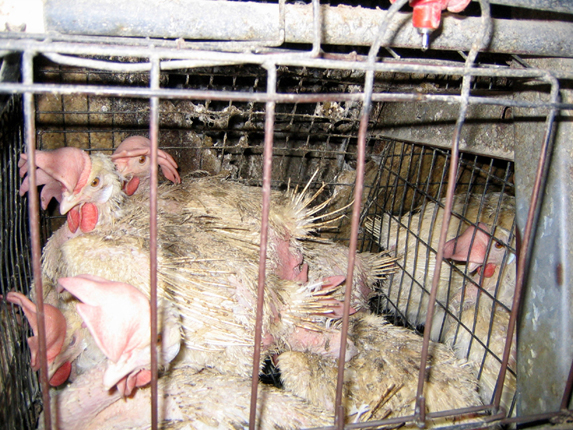
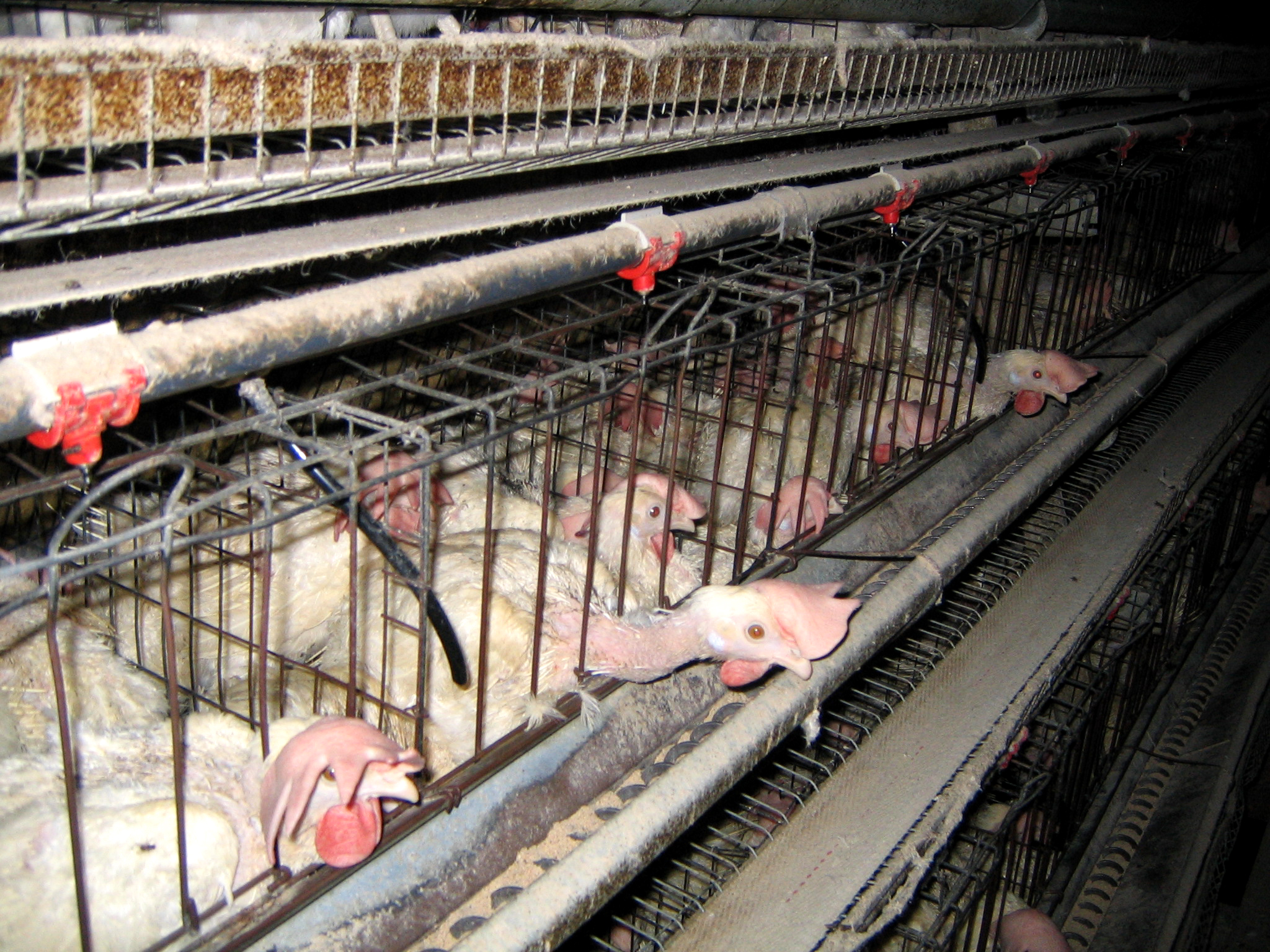
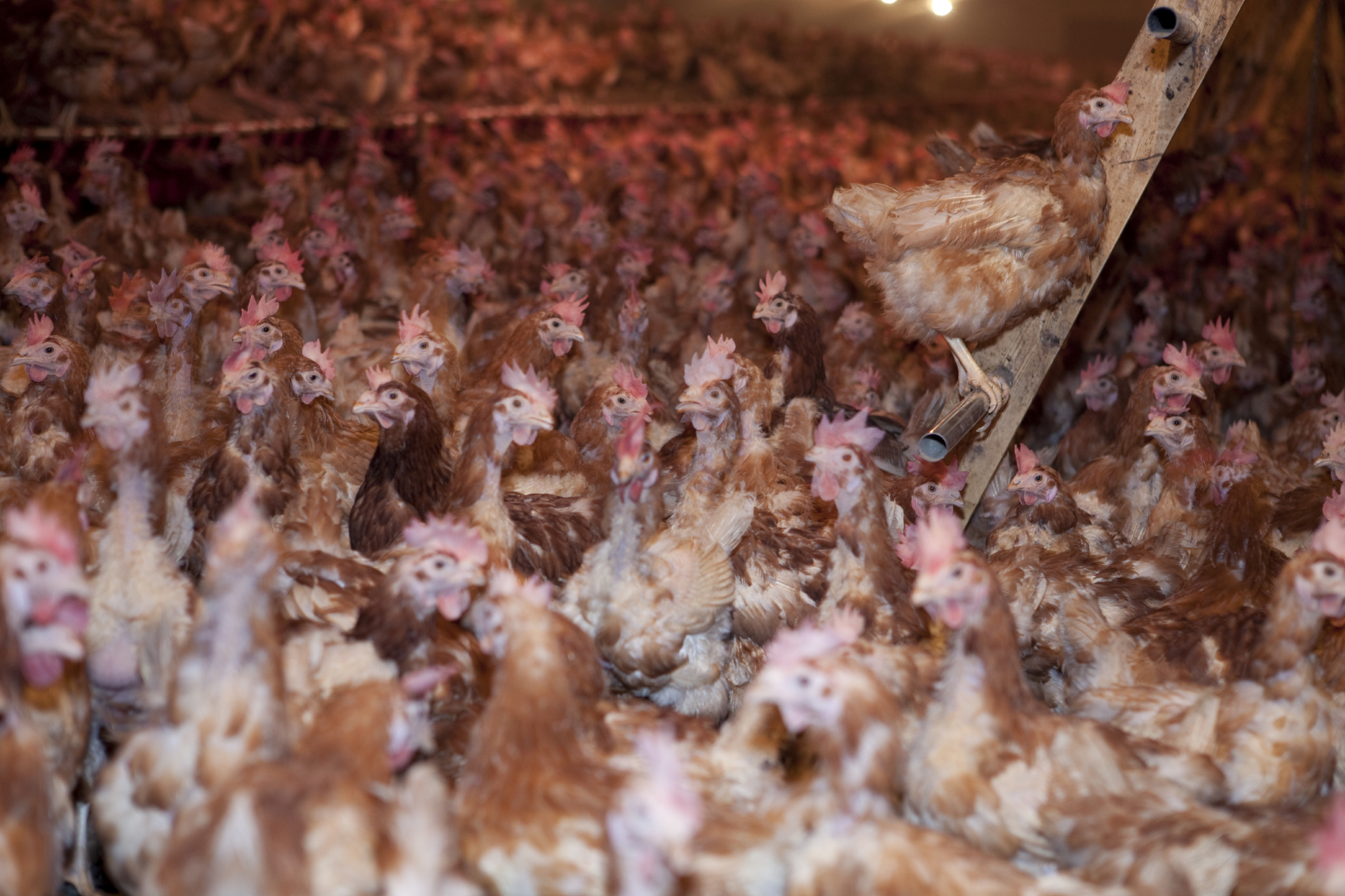
In Canada at any given time, there are approximately 28 million egg-laying hens. Most of them spend their short lives of 12 to 24 months in wire cages (called battery cages), with each hen having less room than a sheet of paper. The hens are crammed five to seven to a cage with no room to express any natural behaviours such as nesting, wing-flapping, dust-bathing or foraging. The frustration from such extreme crowding causes the birds to cannibalize each other. Industry’s answer to this problem is to cut off the hens’ beaks with a hot blade or a laser, which has been scientifically proven to cause extreme pain.
Until now, the bodies of hens that are no longer considered productive (spent hens) have been worthless, so much so that even transporting them to slaughter was uneconomical. On-farm killing and composting has been encouraged, using methods such as gassing, macerating and electrocution.
There are significant welfare problems with both transport and on-farm slaughter. Transportation of farm animals is poorly regulated in Canada for any species, and the vulnerability of spent hens means they are particularly at risk. Their bones are fragile due to excessive egg production and lack of exercise – between 24% and 29% of laying hens have broken bones by the time they reach the processing plant, according to a 1989 study. The battery cages in which they spend their lives are poorly designed, so even removing them from the cages can cause painful injuries, including fractures. Because of their low economic value, each bird is not treated with care and ‘catchers’ can be extremely rough when removing hens from cages and cramming them into transport drawers.
The trip to the slaughterhouse is fraught with yet more misery, including inclement weather, long transport distances, vehicle vibration, etc. Once there, stressed and suffering, they are again pulled from the containers and hung upside down to have their heads dragged through an electrified water bath (called stunning). Too many birds survive the stunning and are fully conscious as their throats are slit.
While on-farm slaughter addresses the problems with transport, welfare is still a serious issue. Because farms are away from the city, the public, including authorities tasked with oversight of animal welfare, does not see what’s happening. All of the killing methods, including gassing, maceration, and electrocution, can cause terrible suffering.
An improvement in economic value is not likely to result in increased welfare. Spent hens will continue to suffer until the public accepts the painful reality of their lives and deaths. Their suffering can be reduced by purchasing only cage-free eggs or by cutting out eggs altogether.