Categories
animal welfare News/Blog plant-based diet Promoted

Happy Herd: connecting with animals

11873419_964998560228909_3312407588980154109_n

Stephen Wiltshire and Diane Marsh are living proof that connecting with farmed animals can profoundly influence someone’s life. They didn’t set out to become vegan and they certainly didn’t set out to start a farm sanctuary, but life—and the animals—had other plans.
 

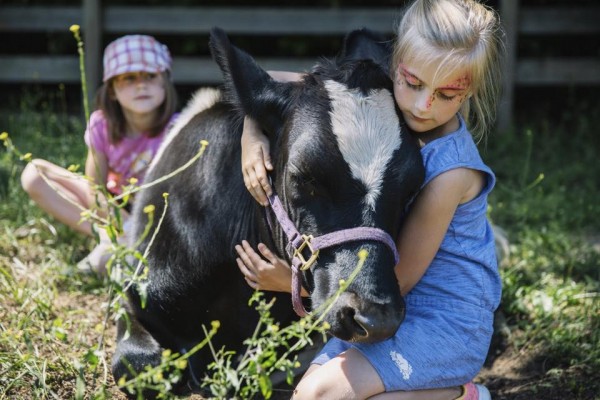
10978626_863955536999879_358044572848752196_nWith an idyllic rural property and a few animals already running around, it didn’t take long before they started rescuing animals in need of care and a home.


Diane says she has a special connection with a young steer named Scooter. When he was just a day or two old, he was in a livestock auction pen destined for slaughter when, she says, he called out to her. “He was scared and came up to me immediately when I went in their pen,” she says. Both Scooter and his friend Sparky went home with Diane that day.


They were sickly calves, a byproduct of the dairy industry that literally discards the males. Mother cows need to keep giving birth in order to lactate, but their babies are taken away immediately so that the milk can be bottled and sent to supermarkets. Calves like Scooter and Sparky typically end up as veal.


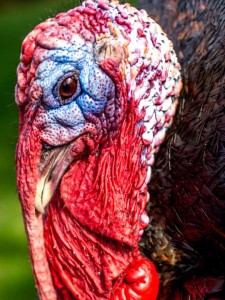
One day, Stephen went with Diane to an auction and came across a large male turkey crammed into a small cage at an auction. His sadness was palpable, says Stephen, and Thomas the turkey came home with them. According to Stephen, “Thomas loved people. He would always greet everyone when they drove in the driveway and follow everyone around the property.”
10408547_933104643418301_8109825281139676931_n


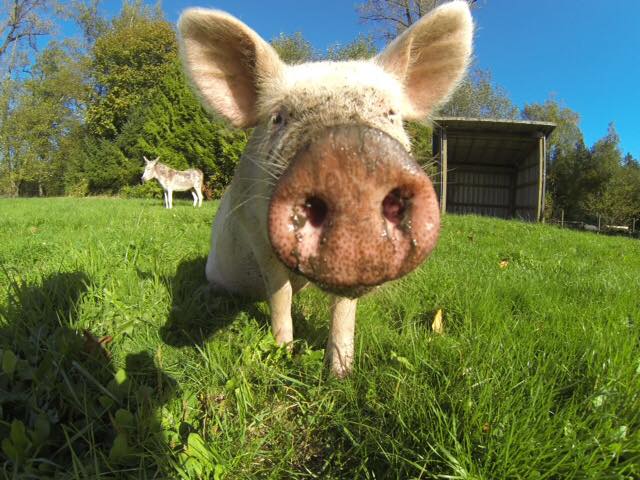
Even though Stephen and Diane only live with a few animals, giving them the care they need is a big undertaking. The day starts with breakfast and cleaning. Lunch is hay for the three cows, fruits and veggies for the donkey and the pigs, and sometimes apples for the goats. Lunch is followed by more cleaning, then dinner. At dusk, the animals need to be “tucked in” for the night. Stephen and Diane both contribute to the feeding, cleaning, and facility maintenance.


On weekends, volunteers often help with various tasks around the property and, of course, get to know the animals. It’s clear that the animals all thrive in the fresh air, ample space, and clean environment. The animals are friendly and calm—the mark of trust that results from loving caregiving.
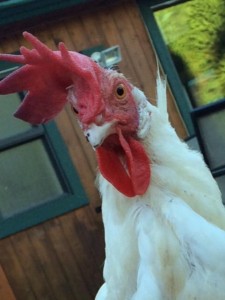
 

10406873_817219841673449_2898160627586922887_nStephen and Diane know they can’t save all of the animals who are casualties of our food system, but that doesn’t mean it’s not hard. Diane still thinks about an elderly pig who connected with her at an auction, and Stephen says he wishes they could help them all. He says, “Without a doubt, interacting with farm animals every day in a caring way will make you look differently at animal agriculture.”


To get in touch for a visit and see more pictures of the happy animals of the Happy Herd, visit their Facebook page here.

.

.
 

11825656_958389047556527_3437149757067025481_n

Categories
animal welfare compassion cruelty News/Blog Promoted

Facing jail for giving pigs water


torontopigsave
Photo: Toronto Pig Save

Media in Ontario are reporting that an animal activist, Anita Krajnc, is willing to go to jail rather that face fines or a conditional sentence for giving water to pigs being transported to slaughter.

Krajnc is a co-founder of Toronto Pig Save, which holds vigils outside slaughterhouses to draw attention to the plight of pigs and other animals who endure cruel transport and slaughter. She was charged under the Criminal Code with mischief under $5,000 for trying to give water to pigs in a transport truck.  The incident was described by the Burlington Post:

“Krajnc squirted water from a bottle into a transport truck that was stopped at a traffic light at Appleby Line and Harvester Road, just outside the Fearman’s pork plant. A load of hogs inside the truck was being taken to the plant for slaughter.

“Krajnc, the co-founder of Toronto Pig Save, had a member of the organization videotape the incident, which escalated when the truck driver got out of the rig and confronted Krajnc.

TO Pigsave pic
Photo: Toronto Pig Save

“On the video, posted to Facebook, the driver tells Krajnc to stop squirting the liquid inside the truck. She tells him it is water and to be compassionate, that the pigs are hot and thirsty. She continued to give water to the animals. The driver said he was calling the police and got back in his rig. There was no physical confrontation.”

It is a sad day for justice in Canada when a harmless act of compassion can land someone in court, and possibly in jail.  It is no secret that farmed animals in Canada endure horrific conditions when being transported to slaughter. Trying to bring a small measure of relief to suffering animals is something that should be rewarded, not punished.

Toronto Pig Save is to be commended for its efforts to bring attention to this issue and we hope Anita Krajnc receives public support for her courageous and compassionate dedication to helping animals.

Categories
Media Release

Why no charges in dairy cruelty case?

Why no charges in dairy cruelty case?

VANCOUVER, June 8, 2015 – The Vancouver Humane Society (VHS) is calling on B.C. Crown Counsel to explain why it has not laid charges in the case of alleged animal cruelty at a dairy farm in Chilliwack last year.

It will be a year on June 9 since the BC SPCA recommended charges against eight employees of Chilliwack Cattle Sales, after an investigation by animal rights advocates revealed alleged acts of extreme cruelty to dairy cows. Video taken at the farm, which showed cows being beaten, kicked and abused, was broadcast by media across the country and provoked widespread public outrage.

VHS contacted Crown Counsel about the case in January but received no response.

VHS spokesperson Peter Fricker said the unusual delay by Crown Counsel was worrying. “We hope the Crown is taking this case seriously and will move forward on charges soon.”

-ends-

Categories
News/Blog Uncategorized

Not just a chicken

Earlier this year, a rather obscure gathering of scientists took place at the University of Prince Edward Island.  The “Poultry Welfare Conference September 2012” was never going to make big headlines but in its own small way it just might help alleviate the suffering of billions of animals.

As animal advocates will tell you, it’s hard to get the public to care about chickens.  To most people they are good for dinner and not much else.   Cats and dogs, zoo animals and wildlife all attract a degree of human empathy or sympathy, but farm animals, especially poultry just don’t rate. 

Perhaps it’s because people don’t think (or prefer not to think) of their drumsticks or nuggets as having once been a living, breathing animal.  And even if they do, well, it’s just a chicken.

But of course chickens are more than just food.  In fact, as scientists are discovering, they are not only smarter than anyone thought – they’re also capable of feelings such as frustration, distress and even empathy.

Dr. Ian Duncan, Canada’s foremost poultry welfare scientist, told the P.E.I. conference that there is now an acceptance that it is feelings that govern animal welfare and “therefore feelings that should be measured when assessing welfare.”  Duncan has designed experiments that “ask” animals how they feel by measuring how hard they are willing to work to obtain or avoid certain stimuli.

For example, he has shown that hens will work just as hard to find a secluded nesting place as they will to get food, suggesting that the frustration of being denied a nest is as powerful a feeling as hunger.  In Canada, 95 per cent of laying hens are kept in cages that deny them the opportunity to nest.  Science now supports the common sense contention that those caged hens, about 26 million of them, are suffering.

Duncan’s work is underpinned by a broader scientific rethink on animal intelligence and sentience.  In July of this year, a prominent group of neuroscientists gathered at the University of Cambridge to reassess consciousness in human and non-human animals.  The result was the Cambridge Declaration on Consciousness, which, among other things, declared that “Mammalian and avian emotional networks and cognitive microcircuitries appear to be far more homologous than previously thought.”  In other words, birds think and feel more like us than we had supposed.

The declaration has moral and cultural implications, as Dr. Christof Koch, a renowned neuroscientist and signatory to the declaration made clear: “The belief in human exceptionalism, so strongly rooted in the Judeo-Christian view of the world, flies in the face of all evidence for the structural and behavioural continuity between animals and people.”

Some specific studies on chickens have suggested that they possess “primitive self-consciousness.”  Others have found evidence that chickens have “one of the essential underpinning attributes of ‘empathy’; the ability to be affected by, and share, the emotional state of another.”

Even the social behaviours of chickens (in natural settings) indicate they are perhaps not so different from “higher animals” as previously thought. One Australian study found that roosters who lost out to dominant males when it came to attracting hens found alternative routes to romantic success by “being nice” and finding food for hens.  (Human males who never made the football team but still wanted to get dates will be familiar with such strategies.)

But should chickens’ welfare depend on how intelligent or more “like us” they are?  Philosophical debates rage over granting animals moral consideration based on their levels of sentience, intelligence and self-consciousness.  Some would argue that the capacity of an animal to feel pain should be enough to make inflicting such pain morally wrong.

It could also be argued that having intelligence hasn’t saved millions of pigs suffering in factory farms, or whales who continue to be slaughtered, or dogs and primates still used in laboratory research.

Nevertheless, making science-based arguments when advocating compassion for animals does carry weight with those suspicious of mere sentimentalism (although one wonders why the simple concept of mercy isn’t morally persuasive enough).  Proving animals are more intelligent and emotionally capable will, in the long run, make it harder for industries and authorities to justify making them suffer or killing them for human benefit.

Even changing chickens’ image will help.  Science is showing that they are not “bird-brained” “dumb clucks” but sentient, clever birds with unique personalities and interesting social behaviours.  That’s who is suffering on factory farms.  That’s who is being slaughtered by the millions.  That’s who is on your plate – not “just a chicken.”

Categories
News/Blog Uncategorized

VHS responds to Tim Hortons announcement on animal welfare

VHS issued the following news release in response to Tim Hortons’ announcement of an animal welfare initiative:

May 4, 2012

Tim Hortons responds to customer demands for more humane eggs and pork

Under mounting pressure from animal welfare organizations and consumers, Tim Hortons announced today it will call on its pork suppliers to eliminate the gestation confinement breeding sows and that it plans to purchase at least 10 per cent of its eggs from enriched caging systems by the end of 2013.

The Vancouver Humane Society (VHS) still feels Tim Hortons’ initiative falls short of making necessary improvements to animal welfare, particularly in regards to egg-laying hens. Through VHSs online petition* on Change.Org, more than 30,000 people have urged Tim Hortons to stop the use of cages and crates for hens and sows.

VHS is pleased that Tim Hortons is sending a strong message to the pork industry that change is needed to get animals out of tiny crates,” said Leanne McConnachie, Director of the Vancouver Humane Societys Farm Animal Programs. “Like many consumers nationwide, we are disappointed that the company still refuses to use any cage-free eggs though.”

Approximately 26 million hens produce Canada’s egg supply, and Tim Hortons 10 per cent commitment will only affect about 35,000 hens – the equivalent size of the average battery cage barn. In B.C. alone, more than 300,000 hens are raised in cage-free systems such as free-run, free-range and organic free-range.  Most of Tim Hortons’ competitors have opted to purchase eggs from farms using cage-free systems.

www.change.org/petitions/tim-hortons-stop-supporting-farm-animal-cruelty

Categories
News/Blog Uncategorized

Please sign petition before Tim Hortons AGM

Conventional battery hens

UPDATE:  Tim Hortons has announced an animal welfare initiative. Details here.  Stay tuned for VHS reaction.

On May 10th, Tim Hortons will hold its annual general meeting in Toronto. A shareholder resolution will be proposed asking Tim Hortons to stop buying eggs and pork from hens and pigs confined in cramped metal cages.

Add YOUR voice to the discussion. Sign our petition here and TELL TIM HORTONS TO STOP SUPPORTING FARM ANIMAL CRUELTY. We have collected more than 23,000 signatures so far – AT LEAST 10,000 is even better.

Please sign and share today. We have only A FEW DAYS LEFT!

Categories
News/Blog Uncategorized

Canada’s factory farms exposed

VHS’s contribution to the report concerns Canada’s supply management system and cruelty to caged hens like these ones on an Ontario battery farm.

Report is a must read

The World Society for the Protection of Animals (WSPA) has released some alarming findings about the impacts of Canada’s animal agriculture practices.

What’s On Your Plate? The Hidden Costs of Industrial Animal Agriculture exposes the destructive impacts of intensive livestock operations on our health, the environment, animal welfare and rural Canada.

The report also exposes the real costs of our food, including tax-funded subsidies to agriculture, and the costs borne by our health care system for public safety and food borne illnesses. Our “cheap” food isn’t so cheap after all!

VHS co-wrote a section on supply management and Canada’s egg industry (pages 101-105). Read the report here and take action to help address the issue.

Categories
News/Blog Uncategorized

Big Ag and Calgary Stampede target school kids

Rosy image of factory farming promoted

Conventional egg farm

The corporate power of Big Agriculture and the Calgary Stampede is being used to paint a rosy picture of factory farming to Calgary schoolchildren – with no dissenting voices allowed.

The Stampede’s ‘Aggie Days’ (April 21-22) is an annual event “celebrating” agriculture in Alberta – as long as it’s conventional, intensive agriculture.  Up to  30,000 local schoolchildren visit the promotion each year.

Paul Hughes, a local food activist who promotes small-scale urban agriculture, has been denied a booth at the event for the past four years. Hughes says that his booth would focus on how to grow food in an urban environment, providing information on preparing plots, choosing plants and starting school gardens.   Yet despite such innocuous activities and a pledge not to engage in any political activity, Hughes was again denied a booth.

Other exhibitors, like Alberta Chicken Producers and Alberta Egg Producers, will have booths at the event.  But Hughes, who is president of the Calgary Liberated Urban Chicken Klub (CLUCK), is not welcome.  CLUCK is opposed to factory farming, including battery-cage egg operations. Perhaps the big conventional chicken operations don’t want schoolchildren to hear that hens are happier when they’re not crammed six to a cage.

While VHS has concerns about unregulated urban chickens, CLUCK’s proposals are about responsible urban husbandry that’s subject to regulation that will protect animal welfare.  It’s hard not to admire CLUCK’s fight for a traditional form of small-scale agriculture that respects animals and the environment.  It’s just one more small voice trying to stand up to the overwhelming power of corporate agriculture.

And it’s that corporate power that is being used to silence any voice that questions factory farming.  Meanwhile, Aggie Days will ensure that schoolchildren see a one-sided view of agriculture that suits Big Ag and the Calgary Stampede.


Categories
News/Blog Uncategorized

Hear great new music and help farm animals!

We’re excited to launch our newest and most musical endeavour today!

With the help of Vancouver Film School students we’ve created a great new music album featuring 10 up-and-coming alternative-indie artists, both local and international. There is even a forward by renowned animal advocate Bob Barker of “The Price is Right” fame.

The album, titled Alternative for Animals, can be downloaded from CDBaby.com for only $7.99, and 100% of the proceeds will go to VHS’s farm animal programs. Preview the tracks and purchase the album here.

The album is meant to raise awareness about the animal cruelty issues in the farming industry and give you a chance to help. See www.raisingthebarn.ca for more details.

Alternative for Animals will serve as a powerful reminder to people of how our choices and actions can either contribute to or alleviate animal suffering.  We are certain that when consumers are informed about the facts, they will be encouraged to reduce or eliminate their consumption of meat, dairy and eggs or at least choose products from certified organic farms. These options offer higher welfare for the animals and are better for the environment and human health.

Please spread the word about this fantastic project and support the movement towards improving farm animal welfare.

Categories
News/Blog Uncategorized

Hens to end miserable lives as glue

The sticky problem of making money from old hens finally has a solution. They’re going to be turned into glue.

According to a story in the Western Producer, researchers at the University of Alberta say spent hens, which are seen as waste in the industry, can be used to produce wood glue. There’s a “big market” say the researchers.

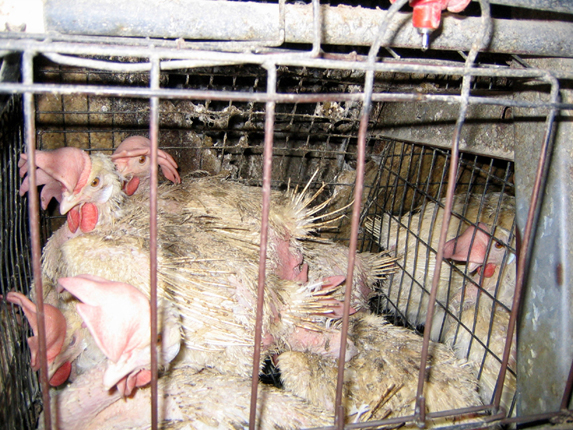
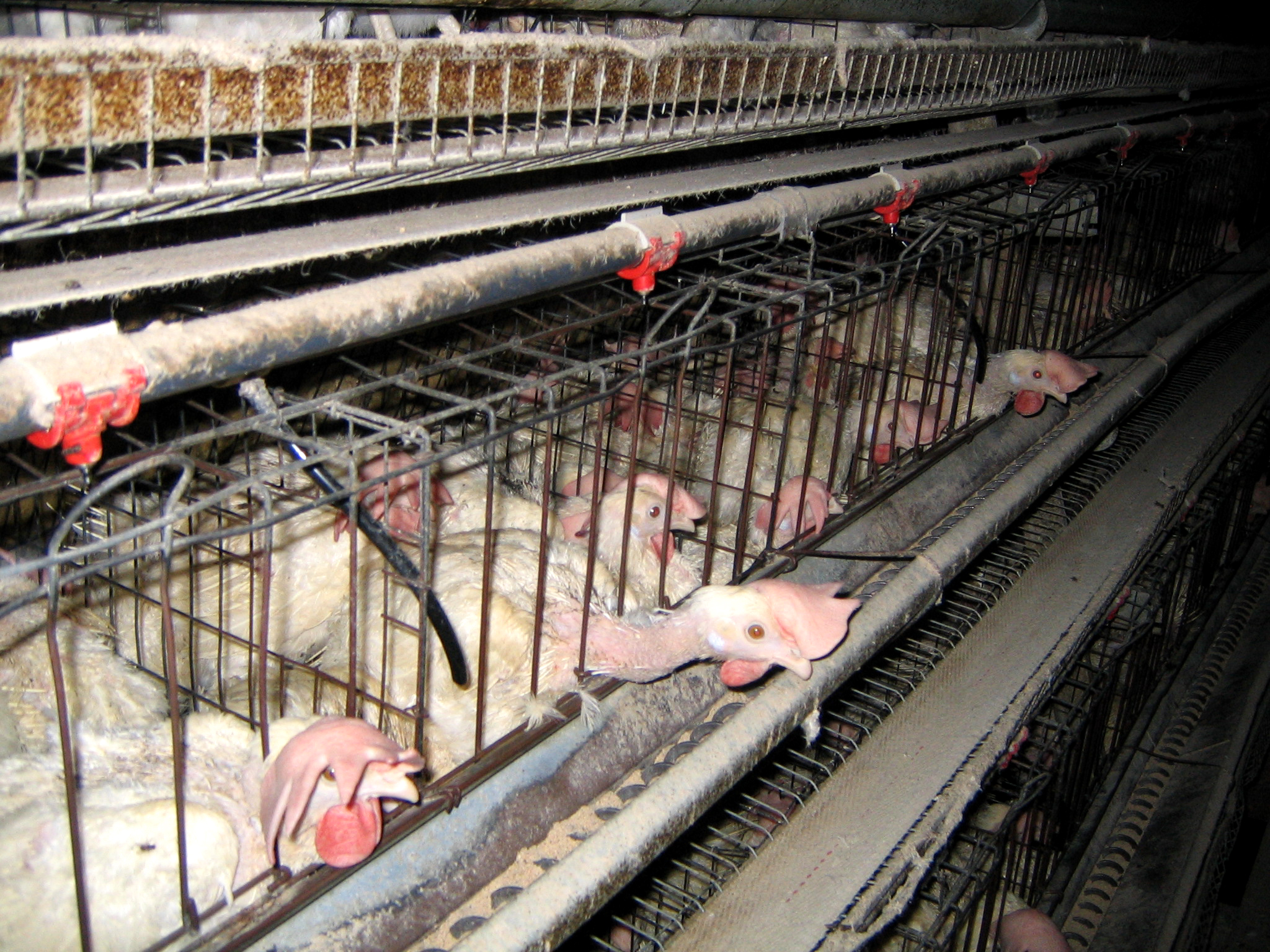
In Canada at any given time, there are approximately 28 million egg-laying hens. Most of them spend their short lives of 12 to 24 months in wire cages (called battery cages), with each hen having less room than a sheet of paper. The hens are crammed five to seven to a cage with no room to express any natural behaviours such as nesting, wing-flapping, dust-bathing or foraging. The frustration from such extreme crowding causes the birds to cannibalize each other. Industry’s answer to this problem is to cut off the hens’ beaks with a hot blade or a laser, which has been scientifically proven to cause extreme pain.

Until now, the bodies of hens that are no longer considered productive (spent hens) have been worthless, so much so that even transporting them to slaughter was uneconomical. On-farm killing and composting has been encouraged, using methods such as gassing, macerating and electrocution.

There are significant welfare problems with both transport and on-farm slaughter. Transportation of farm animals is poorly regulated in Canada for any species, and the vulnerability of spent hens means they are particularly at risk. Their bones are fragile due to excessive egg production and lack of exercise – between 24% and 29% of laying hens have broken bones by the time they reach the processing plant, according to a 1989 study. The battery cages in which they spend their lives are poorly designed, so even removing them from the cages can cause painful injuries, including fractures. Because of their low economic value, each bird is not treated with care and ‘catchers’ can be extremely rough when removing hens from cages and cramming them into transport drawers.

The trip to the slaughterhouse is fraught with yet more misery, including inclement weather, long transport distances, vehicle vibration, etc. Once there, stressed and suffering, they are again pulled from the containers and hung upside down to have their heads dragged through an electrified water bath (called stunning). Too many birds survive the stunning and are fully conscious as their throats are slit.

While on-farm slaughter addresses the problems with transport, welfare is still a serious issue. Because farms are away from the city, the public, including authorities tasked with oversight of animal welfare, does not see what’s happening. All of the killing methods, including gassing, maceration, and electrocution, can cause terrible suffering.

An improvement in economic value is not likely to result in increased welfare. Spent hens will continue to suffer until the public accepts the painful reality of their lives and deaths.  Their suffering can be reduced by purchasing only cage-free eggs or by cutting out eggs altogether.