Categories
animal welfare compassion Cruelty-free Food and Drink News/Blog plant-based diet Promoted vegan vegetarianism

Erin Ireland’s plant-based journey

BMlW8PsCAAAuwwG

Erin Ireland is a food journalist, blogger, entrepeneur and animal-lover who has been on a personal journey to discover and understand the principles and practices involved in ethical eating. In a recent blog post (reprinted below with her kind permission) she describes her transition to a plant-based diet.  


It’s Sunday morning and I’m sitting here on the couch in pyjamas drinking an almond milk latte. I’m crying after re-reading some of the 831 comments on Jillian Harris’ blog post, “How This Alberta Meatatarian Became so Vegan-ish”, in which she opens up about her transition to a plant-based diet.

In the days following her post, I texted Jillian to say how impressed I was by her written words—how I envied her ability to get thoughts ‘on paper’ so effortlessly. What she wrote would have taken me months. She has drawn me to my computer today to share the unedited story of my own journey. I usually stick to sharing my ‘plant-based messages’ on social channels because they are short and easy to write. I definitely prefer talking over writing, which is why I gave this speech. But Jillian’s post (which broke jillianharris.com website traffic records) inspired me to go deeper and share some of the factors the inspired my personal decision to go vegan.

Like Jillian, I used to be a ‘meatatarian’. I was proud of it. As a college athlete training twice a day, I was the type to order double meat at Subway. I thought eating nothing but ‘lean animal protein’ would help me achieve a healthier, more fit, muscular body. I often said that I was “just not the type who would ever become a vegetarian”.

Wow, how things have changed…


WHAT DOES “VEGAN” MEAN?

My introduction to the word vegan came when I asked my parents what the term meant. My memory is a bit fuzzy, but I believe they alluded to the fact that veganism was some super-extremist lifestyle that was more-or-less unachievable and mainly adopted by ‘extreme hippies’. I never thought twice about learning more.

Looking back, I don’t blame my parents. 25 years ago things were different. Factory farming wasn’t in the media spotlight like it is today. Baby-Boomers were raised in a time when meat and dairy was fully embraced. National meat and dairy councils were (and still are) supplying nutritional information to schools in North America. Despite the conflict of interest, teachers believed what they were teaching and young, impressionable students ate it up, literally.

THE FIRST ANIMAL PRODUCT I REMOVED FROM MY DIET

My first step towards cutting animal products out of my life came during sophomore year of university. For most of my life, I’d felt a little bit stuffed up, as if I had a constant cold. My dad suffered the same symptoms and told me that cutting milk out of his diet seemed to alleviate the stuffiness. I switched to soy milk. Immediately my sinuses felt better and I never went back to milk (note: this isn’t a professional opinion and I’m not saying this can work for you, just that it worked for me). I’ll admit, I still ate cheese and chocolate from time to time …how could I resist? I thought it was worth a bit of congestion.

The other reason I cut milk out of my life was acne. My skin issues began around the age of 19. I often got blemishes after big doses of dairy. Cutting milk out of my diet helped, but it was also a hormonal thing for me—going on the pill was the only thing that finally resolved my skin problems completely. Ironically, at the time my reasons for cutting dairy out had nothing to do with environmental or animal welfare issues. I didn’t know the truth about the lives of so many dairy cows. Today, in my heart, our planet and the animals are the main reasons I am passionate to seek dairy alternatives.

MEAT OBSESSION DURING MY VOLLEYBALL YEARS

As an NCAA Div. 1 volleyball player, I thought I needed a ton of protein. I thought I needed a meat heavy diet. Not a single girl on my volleyball team ate vegetarian—if any teammate, classmate or teacher raised the topic of vegetarianism during my four years of school, I don’t remember it. At my peak, I weighed 155 lbs and was the second strongest female in my athletic department.  Always looking to take things a notch further, I wanted to gain more muscle and I thought eating meat would help. Sometimes for dinner, I’d eat a whole rotisserie chicken. Nothing else. Even worse, my teammates and I would go to the Golden Corral buffet (which my mom nicknamed, ‘the pig trough’) for all-you-can-eat steak.

My small university town in South Carolina revolved around the one Walmart, and I loved going there to buy their cheapest lean ham. Another regular purchase was extra lean ground beef that for Hamburger helper that my roommate and I used to love to make. We thought we were making healthy choices. My mom would sometimes ask if I knew where this meat was coming from. I always dismissed her questions thinking she was being a paranoid mom. I remember telling her that the FDA / governing bodies wouldn’t allow unsafe food on the shelves…was I ever wrong. My mom had been right to question.

THE DOCUMENTARIES THAT GOT ME THINKING

My transition to a plant-based diet slowly started with the documentary, ‘Forks Over Knives’. The movie presented facts that a vegan diet not only stops disease from forming in the body, but actually reverses it. The evidence was convincing to say the least. I started to realize the impact animal-based foods were having on our health. I couldn’t believe this was the first time I was hearing such important information. The more I learned, the fewer animal products I ate.

Earthlings was another documentary that had a huge impact on me. It introduced me to the term, speciesism: the prejudice or bias in favour of the interests of members of one’s own species and against those of members of other species. The documentary is graphic, filled with undercover footage shot inside factory farms and the odd slaughterhouse. I shut my eyes and cried through much of it, but I felt strongly that I needed to know what was going on behind closed doors. How could I make decisions about my food choices unless I knew the consequences of my actions? Now, I had seen those consequences and I simply couldn’t have anything to do with it. Farming is not what it was 100 years ago and the vast majority of the time, animals are not leading the happy lives, as depicted on food labels.

At this point in my life, I was still eating cage-free organic eggs from time to time, and if I was in a dining situation where the only option was seafood, I’d take it. But gradually, as I continued to read and watch, I lost all appetite for anything animal-based, including leather.

WHERE I AM TODAY

Three years into my plant-based journey, there are a couple recurring questions friends and family often ask. The first is which animal product I miss the most? The answer is: none. Since learning the true impact of animal agriculture, my cravings for animal products has completely disappeared. Anyone who knows me can vouch for the fact that I love GOOD food, and today, my plant-based options leave me dreaming about my next meal every single day.

The second question is whether my energy or training has suffered since quitting animal protein. Today, I’m more energetic and satiated than I ever was in university. I’m up at 5:30am for a 10K run about five days a week. I can’t imagine having the energy to do this back in the day — I remember always feeling hungry and tired during my school years. Another important driver for me was learning that the fear of not getting enough protein from plants…is a myth. As long as we consume our daily recommended intake of calories (from whole foods), it’s nearly guaranteed we will also get our daily recommended dose of protein. Our bodies can’t even process extra protein (just like vitamins) so they are eliminated from our systems, into the sewage system.

The last thing I’m often asked, is whether veganism requires more work. Ironically, I find it requires less (less stress too!). It’s really the little things that start to add up: no more racing home to get groceries refrigerated. No more obsessive washing of the cutting board for fear of e-coli or salmonella. No more finicky fat trimming. No more stressing over timing and temperature for the perfect steak, roast, or chicken. No more fear of meaty leftovers going bad if I forget to refrigerate right away.

Remember there’s always a learning curve when transitioning to any new diet. If the thought of vegan meal planning is daunting, know that, unlike generations before us, we are spoiled by the amount of amazing resources out there. For starters…

Before hitting publish I reread the post that inspired this note. Jillian received 831 comments on her blog and Instagram post—almost all filled with love, encouragement and acceptance. They bring tears of happiness to my face when I read them. What’s even more heartening are the actions of her following that I’m certain will be inspired from the conversation she has just begun.

Thanks to leaders like Jillian, a word I associated with ‘extreme hippies’ 25 years ago, is now well on it’s way to becoming a mainstream movement. This gives me so much hope.


Categories
Food and Drink News/Blog plant-based diet Promoted Recipes vegan

A Vegan Valentine’s Day

VHS volunteer Miles Linklater reveals the secrets of making a perfect vegan dinner for Valentine’s Day.

My partner travels a lot for his work, and we have rarely been together on the actual date of February 14. This year is no different, but we will be together February 13 and will make a great meal together. If we have any single friends without plans, we’ll invite them over as well.

I like to have a ‘theme’ when I cook for people. The courses should complement each other, so this year I’m choosing to look at recipes containing ingredients considered to be aphrodisiacs (it is Valentine’s Day after all). Not surprisingly, most foods that fall into this category are either fruits or vegetables; animal products are almost never considered ‘sexy’!

Let’s start with Asparagus

asparagus Asparagus is best served on its own, either lightly steamed or roasted, with just a touch of lemon juice, olive oil and sea salt. You can make it even fancier by using truffle salt or a tiny bit of balsamic vinegar (don’t use too much or you’ll overpower its unique flavour), but DO NOT overcook the asparagus. This will cause it to go limp and sometimes mushy. Always taste while it’s cooking and stop just before you think it’s ready. It will continue to cook (as all foods will) even after you take it away from heat.
Here are some dishes you can make using asparagus

And now onto Avocados

avocadoNot just for salads or guacamole, avocados are a vegan’s secret weapon when it comes to desserts! They impart a creaminess when used in desserts, whether as a main ingredient or as decorative frosting. Naturally they also work well in salads and are the perfect base for a creamy pasta dish.
Some recipes.


Bananas

Always popular in the dessert category, bananas are full of potassium, a nutrient key to muscle strength. Similar to avocados, bananas add texture and smoothness to any dish when they are ripe, and also be the base for an ‘instant’ ice cream.
Recipes containing bananas


Chocolate

chocolateFull of phenylethylamine, a stimulant that conjures feelings of well-being, plus it’s delicious! It’s easier than ever to find high-quality chocolate which doesn’t contain any dairy ingredients. Try some of these recipes for a decadent dessert.
Recipes using chocolate


Pomegranates

pomegranateFull of antioxidants, these exotic fruits add a unique taste and visual appeal when used in salads or desserts.
Pomegranate recipes


Red Wine

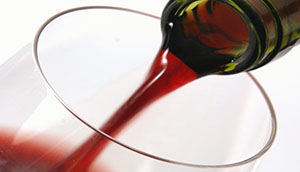
redwineIn addition to relaxing you faster than a neck rub, red wine contains resveratrol, an antioxidant that helps boost blood flow and improves circulation. If you’re looking for a vegan-friendly red wine, check out Barnivore’s list of red wines from Canada


Walnuts, Pumpkin seeds and Flaxseeds

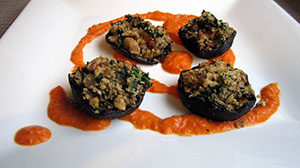
walnutsAll packed with omega-3 fatty acids, which just happen to keep sex hormone production at its peak! Walnuts are perfect for adding texture to stuffed mushrooms, and also great in pesto recipes and desserts
Great recipes incorporating walnuts


Vanilla

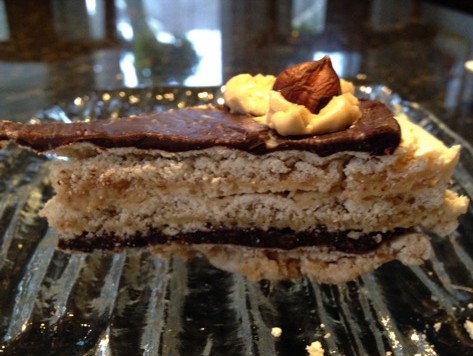
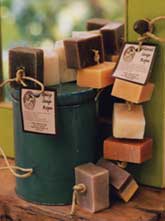
vanillaVegan desserts and ice creams made with this sweet bean will help stimulate your senses. Why not spoil yourself, your loved ones, and your guests with a dessert full of vanilla?
Recipes containing vanilla


Given all these choices, what will I make for my Valentine’s dinner? I will include red wine, start with a Colombian avocado soup, a delicious salad with broiled hearts of romaine, a lovely pasta dish with roasted vegetables and avocado, and end with a fruit tart or dessert of some kind.

As you can see, there are so many vegan recipes available to try (thank you Internet) that there’s no excuse not to make a caring and comforting dinner for those you love.

Categories
Food and Drink News/Blog plant-based diet Promoted vegan vegetarianism

How I impressed fussy foodies with a gourmet vegan dinner

Dessert
Hazelnut Almond Dacquoise with Espresso Buttercream and Chocolate Ganache – Vegan version!


.


VHS volunteer Miles Linklater loves to cook vegan meals but he had a challenge on his hands when some Gallic, gourmet guests came to dinner.

Two of my good friends are world travellers and very snobbish about their food. Whenever I visit them for dinner, they ‘deign’ to provide me with some kind of boring bean dish or uninteresting pasta, but serve all the other guests various forms of meat and cheese.


It is always a challenge I love when it’s my turn to cook for them. As a vegan I consider it my ‘job’ to show non-vegans how delicious and easy it is to create a wonderful meal without animal products. I always start with the idea of serving them something which they will find familiar and tasty and then proceed to ‘veganize’ it. I often take non vegan recipes and find a way to make them animal-free.


For appetizers I simply prepared some dips (hummus and tapenade) served with bread sticks and vegetables, and then created some ‘cheese’ toasts using a mixture of chopped tomatoes and vegan cheese (Daiya or Earth Island) mixed with some vegenaise and grilled on slices of baguette until bubbling and browned. No one misses the cheese.


For my first course I cooked a traditional onion soup. Onion soup is normally not made with animal stock; the deep colour and richness of the soup is obtained from slow cooking of large numbers of onions for 1-2 hours until they have browned. I made the base of the soup a mixture of dried portobello mushrooms soaked in boiling water and then puréed in the blender, with a little sherry. I didn’t want to repeat the ‘cheese baguettes’ I’d served as an appetizer so I made some tarragon dumplings. Nothing is easier than making vegan dumplings for soups and stews. Simply a mixture of flour, baking powder, salt, pepper, whatever herb you wish to use (I usually use fresh dill), and then the ‘buttermilk’ (which is nothing more than soy or other nut milk with a teaspoon or two of vinegar added to it which causes it to thicken and sour like buttermilk). Most dumplings are cooked on top of the soup/stew, but I prefer to ‘steam’ mine over water as you would Chinese dim sum. This makes it more likely that they will turn out nice and fluffy and dry.


The main course was a vegan shepherd’s pie. This was the easiest thing to veganize as one just has to use vegan mince (Yves ground or Gardein) in place of the ground beef. Mix that with some pre-cooked vegetables and mushroom gravy and top it with puréed mashed potatoes and you’re set. I served the pie with Brussels sprouts stir-fried in garlic and olive oil.


The dessert was where I knew I would impress them the most. I decided to make a Hazelnut Almond Dacquoise with Espresso Buttercream and Chocolate Ganache. I’d never worked with the new vegan ‘miracle meringue’ replacer aquafaba (bean water), but I found a recipe to use this leftover liquid from a can of chickpeas as the replacement for the egg whites normally called for in a meringue, and the base for the multi-layered dessert and I couldn’t have been happier with the results. After only 40 seconds in my stand mixer the chickpea ‘liquid’ had already begun to form beautiful white stiff peaks. The coffee buttercream was just a mixture of Earth Balance, icing sugar and espresso. The chocolate ganache made from vegan chocolate chips and soy creamer. It was a time consuming dessert as the ‘meringue’ had to be piped into circular shapes, baked for two hours at a low temperature and completely cooked before assembly, but the result was really impressive and my guests said they could not tell the finished dessert was any different from what they would purchase and consume in any French pastry shop! I’m looking forward to experimenting with aquafaba again soon, trying my hand at macarons and other ‘meringue’ desserts.

Recipes:

Hazelnut Almond Dacquoise with Espresso Buttercream and Chocolate Ganache

Traditional onion soup

Tips for a gluten-free version of this meal:

Use rice flour for thickening the onion soup
Use Gardein ‘ground’ in the shepherd’s pie, with rice flour to thicken gravy
The dessert is gluten-free (but has LOTS of sugar)


Categories
compassion Cruelty-free News/Blog Promoted

Cruelty-free and smells heavenly!

Kama soap 1 15_16Last night when I arrived home after a long day at the VHS office, I was met with the most delectable aroma! A parcel from my favourite soap company, Kama Natural Soap, had arrived.


This company, based on Salt Spring Island, has been in business for over 17 years, and once you experience the products, you’ll understand why. My sense of smell is acute and some odours can trigger my migraine headaches. However, I find the natural ingredients used to scent these products to be soothing and never overpowering.

.


In addition, all products (except the lip balm, which has beeswax) are completely vegan and ingredients are sourced ethically. Plant oils like exotic ylang ylang from Madagascar, eucalyptus and tea tree oils from Australia, lavender oil from France and bergamot from Italy are combined in imaginative ways, creating the most interesting and delicious fragrances. Shea butter is ethically sourced from the Takpo widows group of Northern Ghana. And palm oil is no longer used (although it might be listed on the old labels that need to be used up!) as it was just too difficult to determine how it was produced.


My favorite soaps: Lavender/comfrey, Licorice bar, Orange spice and Flowers and spice with shea nut butter and hemp seed oil (organic and Canadian). Other bath products include comforting mineral baths to die for (Lavender, Restorative and Flowers ‘n spice) and bath oils.


Kama soap 3Unique products include hand and foot balms, Belly/baby balm, body powder, lovely scented soy candles, soap-on-a-rope and baby soap.


What more could you ask for at Christmas when you’re looking for the perfect gift? My biggest problem is that I want to keep everything for myself! Products are available at select retail locations or you can order online. Check out Kama’s website or email for more information.


Categories
Cruelty-free Food and Drink News/Blog plant-based diet Promoted Uncategorized vegan vegetarianism

Buddha-Full Fresh Juice & Smoothies: Building a cruelty-free community on the North Shore

buddhafull
Geremie Voigt and Kyla Rawlyns of Buddha-Full Fresh Juice & Smoothies. photo: Stephen Hui, the Georgia Straight

Buddha-Full Fresh Juice & Smoothies represents an ethical, 100% animal friendly, community-based environment. Geremie Voigt and Kyla Rawlyns opened the café in North Vancouver five years ago. Buddha-Full proudly serves organic fresh juices & smoothies, raw organic cuisine, organic gluten-free baked goods, a full local retail section, and locally roasted coffee from Moja.

VHS supports the growth of cruelty-free businesses and we were interested to find out more about Buddha-Full. Here’s our Q&A with Geremie and Kyla.

VHS: What inspired you to open Buddha-Full Fresh Juice & Smoothies?

G&K: We both have been vegan for many years and have always been inspired by educating our community, family and friends on veganism and a conscious living dynamic.

VHS: How have you found the reaction from the community?

G&K: Our community tells us Buddha-Full is a staple in the lower Lonsdale area.  People tell us every day it is like going to their church!

VHS: What do you enjoy most about running Buddha-Full?

G&K: Standing by our initial mission of educating our community and holding a space where people can come and feel welcome. It’s important to us that our customers feel comfortable and know they are taken care of.

VHS: What do you find is the hardest part?

G&K: Challenges will always come up. The hardest part is having some customers coming in and asking for dairy products or meat products and educating them on why we choose to maintain our animal friendly selection.

VHS: How do you stay positive in a world where animal-based products are still so predominant?

G&K: Considering that veganism has doubled since 2009 in the U.S., we know things are changing and we are making a difference in the world.  We are proud to be standing by our ethics.

VHS: What is your most popular menu item?

G&K: The Lobo Smoothie (hemp protein, dates, peanut butter, banana and almond milk), it’s a Buddha-Full staple.  Also, the Pesto Vegan Sausage wrap is one of our absolute favourite items and we make it all in house!

VHS: Who are your customers? Is there a predominant demographic?

G&K: Upwards of 60% of our customers are female. The majority of our customers are not vegan, however they are interested and curious about veganism and feel welcomed in our space!

VHS: What do you think is the best way to encourage consumers to make more ethical choices? 

G&K: Leading by example is a great way to encourage ethical choices by others.  Be the change you want to see in the world!

VHS: Do you think veganism is becoming more mainstream?

G&K: We think the world is becoming increasingly educated about and involved with animal liberation.  Everyone we meet seems to have one at least one person in their family who is vegetarian, if not vegan.  Half of Kyla’s family is now vegetarian – Now that’s progress!

VHS: What are some of the lessons you’ve learned about running a vegan business?

G&K: Having a space where everyone feels welcome is crucial. People want some sort of familiarity and seem to frequent spaces that provide that on a consistent basis.

bfull collage


Buddha-Full is located at 106 West 1st Street – Suite 101, North Vancouver.

Tel: (604) 973-0231

Email: bfulljuice@gmail.com

Categories
Cruelty-free News/Blog plant-based diet Promoted

The five best places to get vegan ice cream in Vancouver

Warm weather is here, and with it an excuse to indulge in a scoop or three of ice cream. Although supermarket freezers are exploding with delicious vegan ice cream choices (Luna & Larry’s salted caramel & chocolate is a personal favourite), sometimes we all want to let someone else do the scooping while we enjoy a new flavour with friends.

Fortunately, there’s no shortage of mouthwatering, cow-approved vegan ice cream options in Vancouver. Here are five of our favourites:

1. Chau Veggie Express, 5052 Victoria Drive

chauveggieexpress

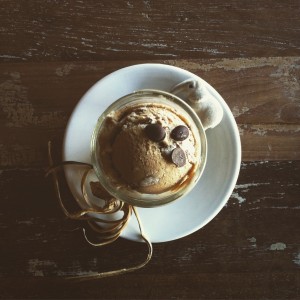
Caramelized Banana and Chocolate Chunk Cookie Dough; Image Chau Veggie Express

Chau Veggie Express offers a wide variety of ice creams by the scoop and pint, all of which are vegan. Current flavours include: coconut vanilla bean, Vietnamese coffee chocolate, Thai iced tea, chocolate hazelnut praline, caramelized bananas and cookie dough, coconut vanilla bean and lemongrass, and coconut pandan leaf and kale.

Andrew, Chau’s pastry chef and the genius behind Chau’s innovate vegan ice cream offerings, says: “I developed the recipes based on my favourite childhood memories. The ice creams are salted. The ice cream base is seasoned to reflect a very traditional Vietnamese style preparation of coconut cream used in Vietnamese desserts as well as savoury dishes, and I love it. It gives the ice cream another dimension and depth of flavour, and this is the way I grew up eating desserts at

Vietnamese shops and cafes.”

.

2. Earnest Ice Cream, Multiple Locations

earnesticecream

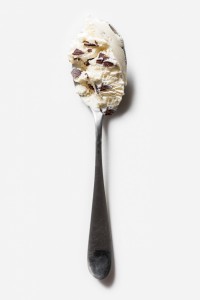
Mint Chip; Image Earnest Ice Cream

Earnest Ice Cream serves up rotating, seasonal flavours alongside classics. Scoops and pints are available in their two shops, while their pints can be found at distributors all over the city.

Earnest Ice Cream says, “We change our vegan flavours weekly. We try to have two offerings, but depending on popularity sometimes one sells rather quickly.” Past vegan offerings have included coconut-lime sorbet, café au lait, chocolate, cookies + cream, lemon, maple walnut, and mint chip. Check out their website for what’s currently available in their scoop shops!

.

3. Rain or Shine, 1926 West 4th; 3382 Cambie

rainorshine

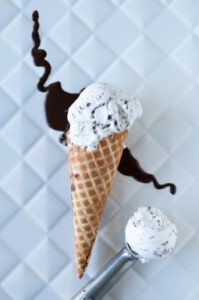
Coconut Chocolate Chunk; Image Rain or Shine

Rain or Shine has on its regular menu a vegan sundae: the Yumaste! It’s made with coconut chocolate chunk ice cream, seasonal berry compote, chocolate sauce and candied hazelnuts. All of their sundae toppings are made in house; other vegan offerings include fig balsamic reduction and eureka lemon olive oil.

While the coconut chocolate chunk ice cream, made with organic coconut milk, is always available, Rain or Shine also rotates through seasonal offerings. Josie from Rain or Shine says, “Currently we have an organic cucumber lime sorbet but we will be making a mint strawberry sorbet soon. We may also do a grapefruit IPA sorbet for craft beer week.”

.

4. Bella Gelateria, Yaletown and Coal Harbour

bellagelateria

Orange & Vanilla Creamsicle and Chocolate Sorbetto; Image VHS

While sorbet is typically vegan and can be found at gelato joints all over town, Bella Gelateria is worth a special visit. In 2014, its proprietor won “International Gelato Master of the Year.” What does this mean? We have no idea, but Bella Gelateria’s array of sorbettos—ranging from the familiar to the exotic—are smooth, creamy, and flavourful.

On a recent visit, their Yaletown location featured eight non-dairy sorbetto flavours: cantaloupe, chocolate, creamsicle (orange & vanilla), faloodeh (rose water & rice noodles), lemon & basil, mango mango mango, rambutan, and yuzu citrus (Japan).

.

5. What’s Shaken Milkshake Bar, 586 Davie Street

whatsshaken

Banana, peanut butter, and chia protein shake; Image What’s Shaken

Okay, so this one is shakes, not ice cream, but it’s too good not include.

What’s Shaken generally carries a non-dairy base of almond or coconut ice cream. You can design your own drink from the many offerings, or choose from the menu.

Xiomara at What’s Shaken says, “A few favorite non dairy shakes are Oreo, Chocolate Peanut Butter, Mango, Strawberry, Creme Latte, Blueberry, Coconut Nutty and Kale Colada. Our protein and superfood shakes can also be made with Vegan protein powder and we carry almond milks and coconut water.”

What’s your favourite vegan ice cream in Vancouver? Did we miss anything great? Let us know in the comments!

Categories
animal welfare compassion Cruelty-free News/Blog Promoted

Nice Shoes: a pioneer in cruelty-free, compassionate shopping

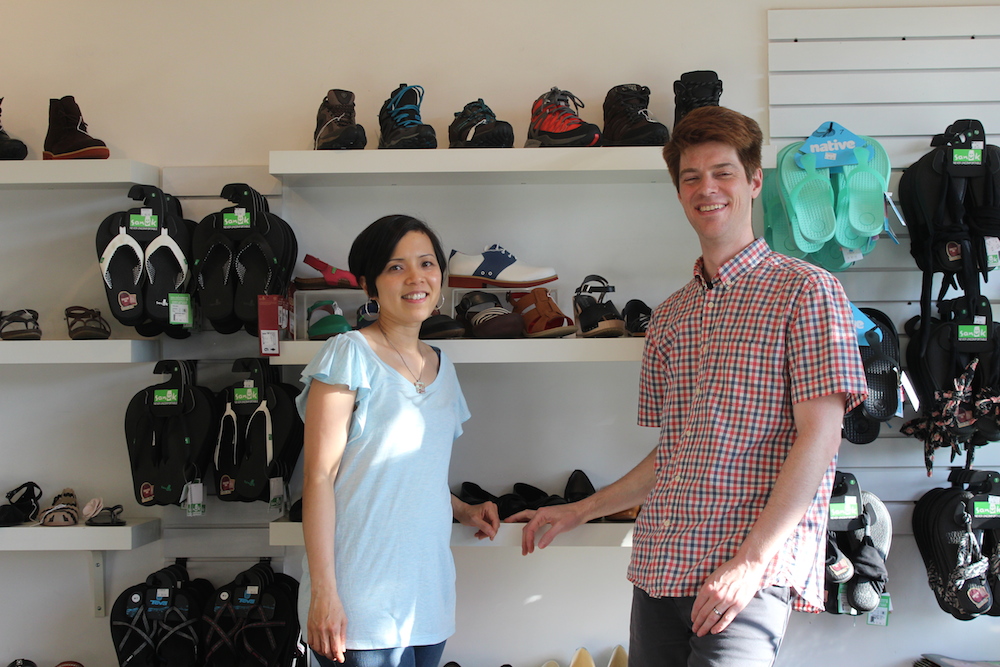
Joanne Chang and Glenn Gaetz of Nice Shoes

.


Nice Shoes, Vancouver’s only vegan shoe store, was opened in 2011 by animal advocates Glenn Gaetz and Joanne Chang. The store carries 100% vegan shoes as well as purses, bags, belts, wallets and other cruelty-free products.

VHS supports the growth of cruelty-free businesses and we were interested to find out more about how Nice Shoes is faring in Vancouver’s competitive retail market. Here’s our Q&A with Glenn and Joanne.

.


VHS: Can you say a bit about what motivated you to open Nice Shoes?

G&J: As shoppers, we were motivated by the anxiety and frustration we felt every time we walked into a shoe store knowing that the salesperson couldn’t answer our questions about materials – or even cared to try. As activists, we were motivated by our desire to normalize the vegan lifestyle.

VHS: How difficult was it to start a business that was the first of its kind in Vancouver?

G&J: Starting a business was the easy part! Vancouver has a vibrant vegan and animal rights community and everyone is excited when a new vegan business opens. The challenge comes in maintaining a profitable business and growing our customer base.

VHS: How is the business going now and how do you feel about the future of Nice Shoes?

G&J: We think there’s a bright future for Nice Shoes as veganism seem to be going through a growth spurt. We know this because a large portion of our customers are new vegans who have only made the transition within the last couple of years.

VHS: Who are your customers? Is there a predominant demographic?

G&J: Our main customers are vegans and vegetarians, but that in itself encompasses a huge range of people. We see vegans of all ages and professions. We also get quite a few non-veg customers who simply like the styles we carry.

VHS: Some vegan shoes are not cheap. Is affordability an issue?

G&J: Since our main goal is to normalize veganism, we are very thoughtful in selecting brands that are familiar and affordable to most people. We do carry some exclusive vegan brands (which tend to be pricier), but they are a small percentage of what we carry. Most of the shoes in our current spring/summer collection range from $30-$150. We also have great sales throughout the year and a student discount program.

VHS: Do you think the market is growing for cruelty-free products?

G&J: Absolutely! We find that “vegan leather” is now a popular term used proudly by mainstream brands to sell products. And a lot of these brands are rolling out vegan product lines and marketing them as such.

VHS: What do you think needs to happen to encourage consumers to make more ethical choices?

G&J: Consumers want nice looking things that are decent quality at a reasonable price. If the products can match what they are looking for, they will switch without even trying. We have a few loyal non-veg customers who might not even know that our products are vegan. By offering alternatives that look great and are equal to, if not better than, their animal product counterparts, we are lowering the barrier of entry to a vegan lifestyle. All things being equal, who wouldn’t choose the cruelty-free option?

VHS: How do you stay positive in a world where animal-based products are still so predominant?

G&J: We’ve been vegan for 18 & 20 years. In that time we’ve seen a lot of change. Twenty years ago, vegan shoes were horrible plastic things that looked atrocious and felt like cardboard. When we look at the selection and the quality of products available nowadays, we can’t help but smile. Animal products may still be predominant, but the alternatives are gaining ground every day.

VHS: What’s your most popular product?

G&J: Since the weather is getting nicer, women’s sandals are flying off the shelves. And hiking shoes are in high demand as people are starting to hit the trails.

VHS: What do you find most rewarding or satisfying about running Nice Shoes?

G&J: Nothing makes us happier than getting a positive feedback from our customers – it really makes all the hard work worth while. And of course, all the adorable dogs who visit us in the store.

Nice Shoes is located at 3568 Fraser Street (between E 19th & 20th) in Vancouver.
Tel: 604-558-3000
info@niceshoes.ca

Categories
News/Blog Promoted Uncategorized

The times they are a changin’

Eat less meat

Back in 2008, VHS had an opinion piece published in the Globe & Mail, calling for a reduction in meat consumption for animal welfare, environmental and health reasons.

At the time, we weren’t hopeful that governments, mainstream media or other power brokers were likely to take the issue seriously, despite the overwhelming evidence of the problems caused by meat production and consumption.

But last week, there was a hopeful sign of change when the foremost nutrition advisory panel in the United States officially called for Americans to eat less meat to protect their health and the environment.  (Animal welfare is not in the panel’s mandate, but its advice, if heeded, would likely save many animals from suffering and slaughter on factory farms across the U.S.)

Another welcome sign of the times was an amazing article in the Globe & Mail this week by nutritionist Leslie Beck.  Quoting celebrated Canadian scientist Dr. David Jenkins, the article laid out the compelling reasons why a vegan diet benefits human health, the environment and animal welfare.

So far, there is no indication that Health Canada, which produces Canada’s Food Guide, will follow the U.S. example of recommending a cut in meat consumption.  But with more articles like Leslie Beck’s it may only be a matter of time before Canada catches up.

See our our Eat Less Meat page for more information on this issue.

Categories
News/Blog Promoted Uncategorized

From margins to mainstream: meat-free eating is on the rise

According to a recent Globe & Mail article, vegan cuisine has moved into the mainstream.  Certainly, no one can fail to notice the emergence of vegan and vegetarian restaurants (along with more meat-free options in conventional restaurants) and the availability of meat and dairy substitutes in supermarkets.  While the overwhelming majority of people are still carnivores, adopting a plant-based diet is no longer on the freakish fringe of lifestyle choices.

Using Google books Ngram Viewer, a digital tool that can track the historical frequency of words in a database of about six million books, it’s possible to see how the concept of meatless diets has advanced in our culture in recent decades. The charts below are roughly indicative, tracking several relevant terms:


Ngram veg track


Although “vegetarian” appears to dip after 2000:


Ngram Vegetarian to 2008

Rising concerns about the impact of meat consumption on animal welfare, the environment and health have no doubt played a role in increased public interest in plant-based diets. But despite this trend, global consumption of meat is accelerating because of increased demand in Asia.

Animal activists, environmentalists and health advocates promoting lower meat consumption have their work cut out for them.

VHS is committed to encouraging a plant-based diet and lower meat consumption to help end factory farm cruelty and reduce animal suffering and slaughter.

Check out our Eat Less Meat program.

.


Categories
animal welfare compassion cruelty Food and Drink News/Blog

VHS bus ad now on Metro Vancouver routes

087Our ad “Food, Friend, Why?” is now on Translink diesel buses throughout Metro Vancouver.  The ad raises an important and provocative moral question: why do we eat one animal and befriend another? Most of us wouldn’t dream of eating a cat or a dog, but when one considers the intelligence and sentience of farmed animals, it doesn’t make sense to consider cows or pigs or chickens as somehow so different.

VHS-bus-ad-295x300

Thank you to the generous donors who made this ad possible.