Categories
Media Release

Abbotsford newspaper refuses to publish anti-rodeo ad

July 17, 2015

Humane society says free speech denied

Vancouver – The Abbotsford News has refused to print a full-page ad from the Vancouver Humane Society (VHS) that raises concerns about the treatment of animals at the upcoming Agrifair rodeo (July 31-Aug 3) in Abbotsford. VHS says the rejection is a denial of free speech.

The ad shows a photo of steer-wrestling taken at the Agrifair rodeo in 2008 with a caption asking: “That’s entertainment?” It states that rodeo animals are subjected to fear, pain and stress and urges people who care about animals not to attend the event.

VHS spokesperson Peter Fricker says the ad has been checked by VHS’s lawyers and contained nothing that should preclude publication.  “This is simply fair comment on a public issue but it appears the Abbotsford News has a problem with freedom of expression,” said Fricker.

Fricker said VHS had offered to consider amending the ad to meet the newspaper’s concerns but had received no response.

The ad can be seen here.

-ends-

Categories
Media Release

VHS says public must urge halt to chuckwagonrace

Fourth horse dies at Calgary Stampede

VANCOUVER, July 13, 2015 /CNW/ – The Vancouver Humane Society (VHS) is calling on the Canadian public to express its outrage at the death of four horses in the Calgary Stampede chuckwagon races, following the death of yet another horse in the event on Sunday.

“The Stampede has made endless excuses about the continued loss of chuckwagon horses and has failed to stop these deaths,” said VHS spokesperson Peter Fricker.

“The race is fundamentally unsafe and horses just keep dying,” said Fricker. “People need to let the Stampede know that this is unacceptable.”

VHS has repeatedly called on the Stampede to suspend the race and establish an independent panel of experts to determine if anything can be done to make the race safer.

Meanwhile, more than 10,000 people have signed a VHS online petition calling for CBC Sports to stop television coverage of the Calgary Stampede rodeo: http://tinyurl.com/pebwa5t

SOURCE Vancouver Humane Society

Categories
Media Release

Stop the chuckwagon race now

Stop the chuckwagon race now

Second horse dies at Calgary Stampede

VANCOUVER, Juy 8, 2015 – The Vancouver Humane Society (VHS) is repeating its call for the immediate suspension of the Calgary Stampede chuckwagon race, following the death of a second horse in three days at the event.

“People across Canada are outraged and they are sick of hearing about the needless death of horses at the Stampede,” said VHS spokesperson Peter Fricker.

VHS says the Stampede should suspend the race and establish a panel of independent equine experts to determine if anything can be done to make the race safer.

SOURCE Vancouver Humane Society

Categories
Media Release

VHS calls on Stampede to suspend chuckwagon race

Vancouver Humane Society calls on Stampede to suspend chuckwagon race

VANCOUVER, July 5, 2015 – The Vancouver Humane Society (VHS) is calling for the suspension of the Calgary Stampede chuckwagon races after yet another death of a horse in the event. More than 60 horses have died in the race since 1986.

“Horses keep dying in this event and the Stampede is running out of excuses,” said VHS spokesperson Peter Fricker. “It should be suspended immediately.”

VHS is calling on the Stampede to establish an independent panel of equine experts to determine if anything can be done to make the race safer.

-ends-

ACTION ALERT: Please sign our petition calling on the CBC to stop covering rodeo cruelty at the Calgary Stampede.

ACTION ALERT: Please email the Abbotsford Agrifair to ask them to stop rodeo cruelty.

Categories
animal welfare Dairy News/Blog Promoted

Still no charges in dairy cruelty case

It has now been one year since the BC SPCA recommended criminal animal cruelty charges against eight employees at Chilliwack Cattle Sales, Canada’s largest dairy producer, and many months since provincial animal cruelty charges were recommended against the company itself. Yet, Crown prosecutors have still yet to come to a decision about laying charges.

For its part, the BC SPCA responded quickly, conducting a raid on the facility and recommending animal cruelty charges within days of receiving video and written evidence covertly obtained by an employee over the course of four weeks last spring.

The delay is unusual and concerning. Prosecutors have been presented with incontrovertible evidence of animals being routinely whipped, kicked, and punched in their faces, bodies, and testicles. Still more animals were documented on video suffering from untreated gruesome injuries and infections.

Internationally respected bovine expert and veterinarian Dr. James Reynolds commented that the video depicted “the most severe cases of animal abuse I have ever seen in 32 years.”

Worse, the company itself appears to have been complicit in the abuse and neglect, despite attempting to distance itself from the employees during the public outcry that followed the footage’s release. The whistleblower stated that he repeatedly brought his concerns to management, which failed to act; several more fired employees came forward to say that they were unfairly taking the fall for a company that created and condoned the apparent widespread culture of cruelty.

Yet, Chilliwack Cattle Sales continues to operate with impunity, milking a staggering 3500 cows three times each day.

It did not take long for the BC Milk Marketing Board to act. By last September, the regulator had made the standards in the national dairy code of practice mandatory, effective virtually immediately. Such actions by provincial regulators are all the more important in Canada’s supply-managed dairy industry, where milk is pooled and dairy processors cannot set animal welfare standards for their suppliers—a tactic commonly used in other countries.

This case presented a unique opportunity for prosecutors to take farmed animal cruelty as seriously as it ought to be. We killed 740 million animals for food in 2014, making farmed animals by far the largest population of animals under human care (by contrast, there are about 15 million pets in Canada). However, these pigs, chickens, turkeys, and cows are kept largely in windowless sheds on private property, entirely shielded from the scrutiny of law enforcement, which is unable to inspect farms without first receiving a complaint from the public.

Unsurprisingly, on the rare occasion that complaints about farmed animal cruelty are received, they come from neighbours concerned about neglect on small operations, where animals may be visible. Employees at factory farms are unlikely to report abuse when their livelihood is at stake, or when they may be reporting on their friends—or themselves.

In the case of Chilliwack Cattle Sales, however, not only was an employee able to obtain evidence of illegal animal cruelty, he was able to actually document malicious abuses while they were being committed, rather than simply after-the-fact conditions of neglect.

Although animal cruelty laws in this country are regularly criticized for being weak, the reality is that provincial and federal law are clear that animal abuse and neglect are illegal. National codes of practice, created with government funding, set standards of care that arguably form a part of the law.

However, these laws are meaningless without adequate enforcement. Barriers to enforcement admittedly do exist—farmed animals are out of sight, law enforcement only acts in response to public complaints, and cruelty laws are mostly enforced by private bodies that are underfunded (the BC SPCA, for example, receives no government funding and must fundraise for all of its operating expenses, from sheltering animals to investigating cruelty).

But when a robust file of evidence virtually falls into prosecutors’ laps along with charge recommendations from law enforcement, farmed animals at last have an opportunity for swift justice.

Let’s hope the concerning one-year delay ultimately results in meaningful prosecutorial action against Chilliwack Cattle Sales. Anything less sends the message that illegal animal cruelty is a permitted ingredient in Canada’s food supply.

Categories
News/Blog Promoted rodeo

A helpful tip for CBC Sports

baseball iStock_000016962575_smalltextcalf roping040522Rodeo082cropresize

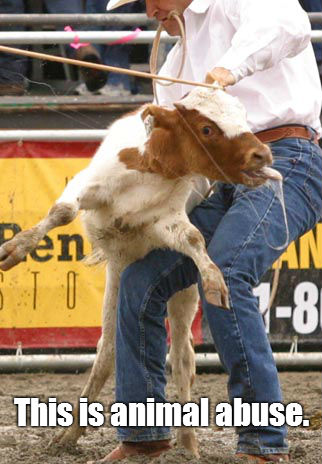
Rodeo animals are exposed to fear, pain and stress to make them perform.

That’s not sport.  That’s violence toward animals.

Please sign our petition asking CBC Sports to stop broadcasting rodeo cruelty at the Calgary Stampede.

Categories
News/Blog Promoted rodeo

Tormenting animals is always outrageous

The harassment of a moose has rightly provoked shock and anger but rodeo animals face routine abuse and it’s considered entertainment.


text2 mooseVideo of several men tormenting a moose in northern B.C. has gone viral and caused outrage around the world. Conservation officers have launched an investigation and the perpetrators could face heavy fines if caught and charged.


.

.


.


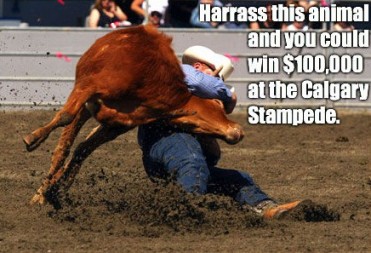
textdead-steer1-040523Rodeo0461Meanwhile, rodeos routinely torment animals and hand out prize money to reward the abuse. Just because an animal is “livestock” doesn’t mean it can’t feel the same fear and stress that other animals do.  Cruelty is cruelty.
.


Please sign our petition asking CBC Sports to stop broadcasting animal cruelty at the Calgary Stampede.


Categories
News/Blog Promoted rodeo

Is CBC being honest about calf-roping?

B&W Stampede calf roping
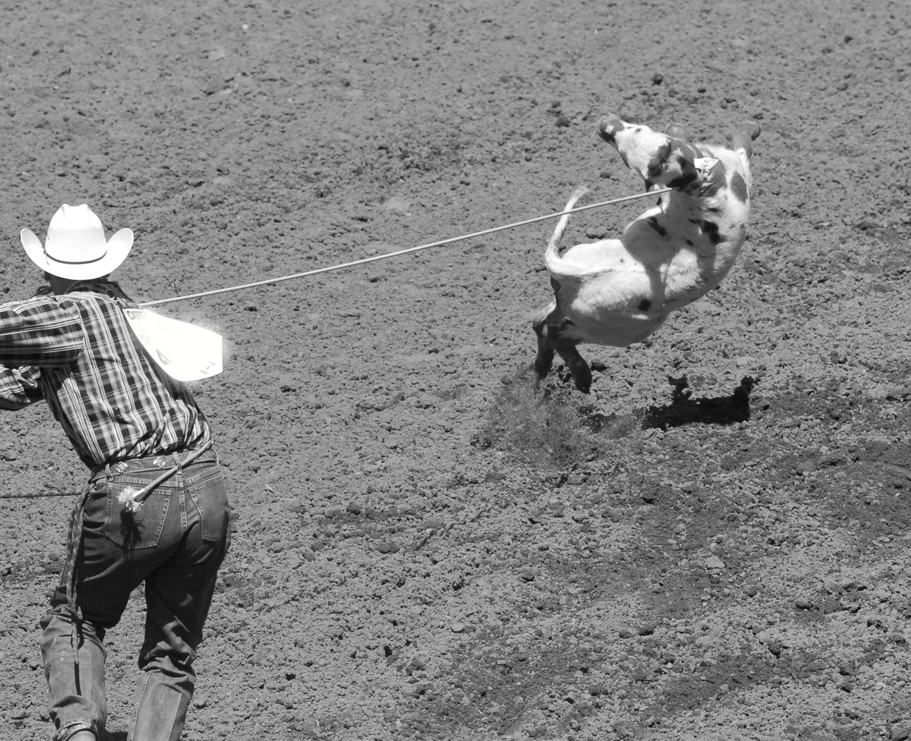
Calf-roping at the Calgary Stampede. Is this what CBC Sports is afraid viewers might see?         Photo: Jo-Anne McArthur

Anyone who watches CBC Sports coverage of calf-roping at the Calgary Stampede will notice that the moment the rope is tightening around the calf’s neck the camera will pan back to the rider and horse.  It has long been suspected that this is to avoid showing the calf being brutally jerked to a sudden halt, which might upset viewers.

This issue came up in a VHS interview with CBC Radio’s As it Happens program, which asked the head of CBC Sports if it was true that the camera deliberately panned away from the calf the moment it hit the end of the rope.  His answer was that CBC Sports: “will follow an event from start to finish and make quick in-the-moment decisions as necessary, as we do with all live sports coverage.”

Watch this CBC coverage of calf-roping (which in public relations double-speak they call tie-down roping) and you will note that the camera pans away every time.  Another example here.

If what happens to rodeo calves has to be hidden from the wider public, doesn’t that show how wrong and unacceptable their treatment is?

Please sign our petition against CBC Sports coverage of rodeo cruelty at the Calgary Stampede.

Please share this post.


Categories
News/Blog Promoted Scotiabank

Hates running but loves animals


Debra Probert loves animals
VHS executive director Debra Probert, with Nat.

There are two things in this world that I dislike more than any other. Getting up early in the morning, and running.

Somehow I’ve remained suspended in that teenage phase that most people grow out of – being ready and willing to sleep until noon. And as far as exercise, well, I’ve never much liked it. I’m the more introspective, quiet type and have always preferred sitting down with a good book to running a few miles and getting all sweaty and breathless. Not to mention, ruining my hair.

So why, you may ask, am I getting up at 6:00 AM on Sunday, June 28th, 2015 to travel all the way from my home in Surrey to Stanley Park and run (mostly walk!) in the Scotiabank Charity Challenge?

Because I love animals and I can’t bear to see them suffer. I’ll be participating in the event to raise money for and awareness about the most effective animal protection organization I know – the Vancouver Humane Society. (Okay, I’m biased.)

Although awareness of animal issues has never been higher, especially in developed countries, it’s also the case that more animals are subjected to more abuse at the hands of humans today than ever before. Why? Since 1960 most animals reared for food in North America have been raised on cruel factory farms. As the number of animals raised increased, the price for meat, dairy and eggs declined and these products became available to more people than ever before. Consumption of animal products became a symbol of status and wealth and was no longer an occasional luxury. At the same time, animal products were touted as being ideal protein.

Even worse, we have exported factory farming to other, less developed countries, replacing more traditional ways of raising and consuming animals. Demand for animal products goes up as the standard of living rises.  It’s estimated that globally 40 percent of meat was produced on factory farms in 2005.

Don’t get me wrong. I don’t condone any raising and slaughtering animals for food.  As far as I’m concerned, ‘humane meat’ is an oxymoron – it just isn’t in an animal’s best interest to have its throat slit so humans can unnecessarily consume its flesh. But I also realize that I can’t talk everyone into becoming vegetarian or vegan tomorrow.

However, there are lots of things everyone can do to mitigate the suffering of animals raised for food. One quick and easy way is to join the global initiative called ‘Meatless Monday’ (MLM). VHS has started a project to help post-secondary and secondary schools feature MLM in their cafeterias. So far, we have three post-secondary and two high schools committed for fall, 2015. And you can join by signing VHS’s Meatless Monday pledge.  Once you’re signed up, you’ll receive a delicious meatless recipe every week!

There’s another way you can help animals:Sponsor me or another member of the VHS Team. Scotiabank covers all the administration costs, so your entire donation goes towards fighting animal abuse. We are their voice! Please help us help animals today!

Thank you for everything you do for animals!!

Debra Probert


Categories
Media Release

Why no charges in dairy cruelty case?

Why no charges in dairy cruelty case?

VANCOUVER, June 8, 2015 – The Vancouver Humane Society (VHS) is calling on B.C. Crown Counsel to explain why it has not laid charges in the case of alleged animal cruelty at a dairy farm in Chilliwack last year.

It will be a year on June 9 since the BC SPCA recommended charges against eight employees of Chilliwack Cattle Sales, after an investigation by animal rights advocates revealed alleged acts of extreme cruelty to dairy cows. Video taken at the farm, which showed cows being beaten, kicked and abused, was broadcast by media across the country and provoked widespread public outrage.

VHS contacted Crown Counsel about the case in January but received no response.

VHS spokesperson Peter Fricker said the unusual delay by Crown Counsel was worrying. “We hope the Crown is taking this case seriously and will move forward on charges soon.”

-ends-