Categories
animal welfare compassion Food and Drink News/Blog plant-based diet Promoted vegan vegetarianism

Cruelty-free holiday gifts


Looking for that perfect, cruelty-free Christmas gift?  We’ve got a few suggestions!


Books   
             

How to Create a Vegan World: A Pragmatic Approach by Tobias Leenaert


Captive by JoAnne McArthur


The Animals’ Agenda by Jessica Pierce and Marc Bekoff


Veganism in an Oppressive World  by Julia Feliz Brueck


Beyond Beliefs by Melanie Joy


What a Fish Knows by Jonathan Balcombe


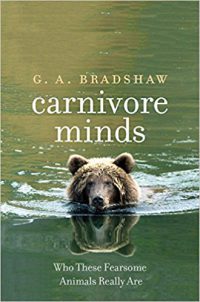
Carnivore Minds: Who These Fearsome Animals Really Are by G. A. Bradshaw


Clean Meat: How Growing Meat Without Animals Will Revolutionize Dinner and the World by Paul Shapiro


Cookbooks

Vegan for Everybody  by America’s Test Kitchen


Frugal Vegan  by Katie Koteen & Kate Kasbee


Vegan Richa’s Everyday Kitchen  by Richa Hingle


No Meat Athlete Cookbook by Matt Frazier & Stephanie Romine


Products & Services


Nice Shoes all vegan shoes, bags, wallets, socks, chocolates


Vegan Yarn all vegan, hand-dyed, ethically sourced yarn


LUSH (fresh, handmade cosmetics) easily identifiable as vegan or vegetarian


Vegan Supply  all vegan food


Pureology  all vegan, sulphate-free hair care products


Kama Natural Soap – essential oil scented vegan soap, bath salts and candles (beeswax in balms and ointments)


Sephora –  makeup and accessories, identifiable as vegan on website


Bioethique Spa On 4th –  100% natural and vegan spa


Zimt Chocolate – all vegan chocolate bars and other goodies


Kiss My Face – mostly vegan (some products have beeswax) personal care products, available at many local retailers


Matt & Nat – vegan handbags and other goodies


Emani Vegan Cosmetics – available at London Drugs


Arbonne – plant-based health and beauty products


Of course, gift cards to any of the wonderful array of vegan/vegetarian restaurants in Metro Vancouver (check out Earthsave Canada’s veg directory) are a great stocking stuffer.

And who doesn’t gift a bottle of wine or some craft beer? Check Barnivore to see if your favorite wine or beer is vegan! Here are a few that are:


Wines


Sandhill Wines


50th Parallel Estate Winery


Cedar Creek Estate Winery


Hester Creek


Red Rooster Winery (everything but Bantam)


Stag’s Hollow Winery


Sumac Ridge Estate Winery (2015 and forward)


Tinhorn Creek Vineyards


Beer

Russell Brewing Company


Big Rock Brewery (all but Honey Brown)


Okanagan Spring Brewery


Vancouver Island Brewing (all but Honey Brown)


Bridge Brewing Company


Happy Holidays!


Categories
animal welfare compassion Cruelty-free News/Blog Promoted

Vegan Yarn: comfort and beauty without cruelty

As knitting and other needlework becomes more popular every day, new stores (especially online) are sprouting – including exciting companies like Vegan Yarn! We caught up with vegan owner Heidi Braax, who, as she became more interested in knitting, got tired of being shuffled over to the “Acrylic Wall of Shame” (I’ve been there, Heidi!) The result is her own cruelty-free, ethically sourced and hand-dyed yarn company.


What led you to start Vegan Yarn?

I started Vegan Yarn after realizing there was really no artisan dyed yarn available that was also vegan-friendly. There were some basic, commercially dyed yarns, some of which were ok quality-wise, but none that really got me very excited, especially compared to my knit night friends who had all kinds of beautiful, one of a kind yarns. My background is in costuming for theatre and film, and I had some experience dyeing fabric, so it was a natural step to me to try dyeing my own yarn.

How do you differentiate yourself from other yarn businesses?

Being plant-based and sustainably-minded is already pretty unique, but even as more people are starting plant-based yarn businesses, which are still currently super rare, I think there’s plenty of room for more. After all, if you go to a yarn show like Fibres West, or Knit City, the place is full of hand dyed animal fibre yarn businesses, and they all find a way of making themselves stand out in their own way and do very well. Every dyer has their own way of seeing colour, and their own techniques. If you put two dyers to work with the same yarn, and the same dyes, you’d still probably get very different results. This is something I love about dyeing yarn, the individual artist really shows in their work.

What are your biggest challenges?

One is simply knowing when to stop. I could easily work non-stop, and still be overwhelmed with work to do and orders to fill. Since more and more people are discovering that they can bring fibre arts into their vegan lifestyle (or vice versa), demand is becoming much higher. Since I’m still working solo at the business, it can get a bit crazy over here. So, its a challenge, but it’s a good one.

The other challenge is managing to keep yarn in stock, while managing to keep a free path through our living room! This summer we received a shipment of sock yarn that was about 220 kilos! Like most small businesses that work with physical products, parts of the growth phase can be awkward.

How do you ensure your materials are ethically sourced?

Some of them are easy. All of our cotton yarn is certified organic and fair trade, and the company definitely puts the growers and workers first. With other companies that aren’t certified, its important to ask questions. Luckily there is a growing trend towards transparency, and businesses are getting better at this. I’ve realized that the more questions we ask, as business owners and as individuals, the more people who have the power to make decisions realize what’s important to their clients. If a mill owner realizes that their clients see ethical sourcing and sustainability as important, they will take an interest, even if only out of a sense of improving their product’s perceived value.

Tell us about your products. Which is your favourite?

I hand-dye all of our yarn in-house in New Westminster, BC with the exception of the Pakucho Original yarn and fibre, which is naturally pigmented organic, fair trade cotton. I’m definitely inspired by anime (Japanese animated film and television), which I’m a big fan of. I’m also a natural dyer, so some of the yarns I dye using plants and natural extracts and minerals. I’ve been starting a bit of a dye garden over the last few years, where I grow indigo, madder, marigold and dyer’s chamomile. I also collect black walnuts at the park by my house (don’t worry, I always make sure to leave plenty for the squirrels). To be honest, my favourite yarn is typically the yarn I’m currently working with, which, right now is Bellatrix, a fingering weight bamboo. I’m making a tank top.

Who are your customers? Is there a typical demographic?

Vegans, long time knitting enthusiasts who have tried just about everything and are looking for something new and fun, people with sensitivities or allergies and anime fans. Sometimes, we’ll get someone who is a combination of all or most of these, and they’re a ton of fun to meet! We actually get (seriously, for real) fan mail from people like that sometimes! Its hilarious to watch people at yarn shows. Sometimes we’ll hear, “VEGAN!” above the crowd, and someone will hustle over and they’ll fill their arms with yarn and have a huge grin on their face. People with severe wool allergies get to TOUCH EVERYTHING! YESSSS! Occasionally, a quiet, shy person will hover noiselessly over a specific colour that they clearly found on the website ahead of time, and bring it over to buy; they might have Totoro leggings, a Princess Mononoke backpack covered in buttons, purple hair and a secretive smile. Most likely they have plans to watch Princess Jellyfish or Kuro Mukuro later (subbed, not dubbed of course) while knitting their new Chieko, Mayaya or Ayame colourway yarn. If you ever thought knitters were strange, anime-knitters are next level! Luckily I’m one of them, so I speak from experience. Haha!

As knitting and other needlework continue to grow in popularity, do you think plant-based yarn is becoming more mainstream?

Yes! Since both fibre arts and veganism are both on the rise, and social media is bringing these two out of the closet, I think plant-based crafting is definitely only going to increase. Since starting out, I’ve personally witnessed many small yarn stores start to have (or increase the size of) plant yarn sections. Also, larger, big name suppliers adopt ‘vegan’ tags in their categories and searches online, which is proof that people are using those search terms, and the yarn businesses are paying attention. As demand for vegan-friendly yarn increases, yarn store owners are making a bigger effort to supply it.

Vegan Yarn can be contacted at: info@veganyarn.com

Categories
animal welfare compassion cruelty Food and Drink News/Blog plant-based diet Promoted Uncategorized vegan vegetarianism

Helping animals on Giving Tuesday

Garth is one of the newest (and youngest!) animals at The Happy Herd Farm Sancturary. He’s someone, not something. That’s why VHS promotes a plant-based diet and cruelty-free living.


Making life better for animals now and in the future

On November 28, the Vancouver Humane Society (VHS) and The Happy Herd partnered for Giving Tuesday to raise $10,000 to help rescued farmed animals and to fight factory farming by promoting cruelty-free living. 

Thank you to everyone who donated toward our campaign, to our generous matching gift sponsors, Lisa Kramer and Mark Kamstra, and for each of the partner businesses who supported us by raising funds for this campaign. Be sure to check out our complete list of Giving Tuesday partners and show your support for these compassionate businesses that give back to our community!

At The Happy Herd Farm Sanctuary in Aldergrove, B.C., animals are treated with compassion, not as the exploitable commodities we see on industrialized farms.  When animals are seen as valued, sentient beings it’s clear each one is  “someone, not something.” So shouldn’t we treat them accordingly?

That’s the question that underpins VHS’s campaigns for cruelty-free living. VHS volunteers are out on the streets and at events distributing our Go Veg booklet to thousands of people who want to live more compassionately.  More people are joining our Go Veg Campaign and our Meatless Monday program every day and we’re helping schools, hospitals and businesses increase their offering of humane, sustainable and healthy plant-based dishes. Every year our bus ads prod the consciences of Vancouverites, asking why we treat some animals as friends and others as food.  Together we are changing hearts and minds. Thank you for your support!


Categories
animal welfare compassion Cruelty-free Food and Drink News/Blog plant-based diet Promoted vegan

Help promote the plant-based revolution in Canada

Petition urges federal government to lead the way with compassionate, sustainable food choices

It’s time for food services in Canada to provide more vegan options and a new Parliamentary petition is urging the Canadian Government to lead the way.

The petition, initiated by concerned citizen Fée Lehouiller and sponsored by Member of Parliament Nathaniel Erskine-Smith, calls on the federal government “to require public canteens under federal jurisdiction to provide a vegan option, and to raise this issue and work with provincial and territorial counterparts to require the same at all levels of government.”

We were pleased to see the petition cite a poll commissioned by VHS in 2015, which found that 33 per cent of Canadians are either already vegetarian or eating less meat. The petition also cites evidence from health and medical organizations, the United Nations, environmental organizations and academic researchers to make the case that overconsumption of meat is bad for our health and the planet, as well as for animals.

A major shift toward a plant-based diet is taking place and Canada should be in the forefront.  We urge you to support this petition!

Categories
animal welfare News/Blog Promoted Uncategorized wildlife

Call for a complete ban on BC’s grizzly bear hunt

Have your say on trophy hunting of B.C.’s grizzly bears

On August 14, 2017, the B.C. government announced that effective Nov. 30, 2017, it will end the trophy hunting of grizzly bears province-wide and stop all hunting of grizzly bears in the Great Bear Rainforest.

While VHS welcomes the effort to end B.C.’s notorious trophy hunt, we have serious concerns about a proposed regulation that would allow grizzlies to be hunted for meat throughout the rest of the province. This would create a loophole that would allow the trophy hunt to continue under the guise of a meat hunt.  

Grizzlies are considered a vulnerable species and a new report from B.C.’s auditor general found that the provincial government has not fulfilled long-standing commitments for managing grizzly bears. This report underscores the importance that now, more than ever, we need to end the grizzly bear hunt in its entirety if we want to help alleviate the pressures facing this keystone species. 

The province is seeking feedback from the public regarding the proposed grizzly bear hunting regulations. Comments can be sent to grizzly.bear@gov.bc.ca and the deadline is Nov. 2, 2017.

VHS is calling for a complete ban on all grizzly hunting across the province, as outlined in our submission to the Fish and Wildlife Branch. Please feel free to use our submission to guide your own.

Categories
Cruelty-free Food and Drink News/Blog plant-based diet Promoted vegan vegetarianism

Chickpea: plant-based comfort food with a Mediterranean twist

Photo: Hanna McLean


The Chickpea food truck has been a big hit with Vancouverites, who have been lining up for its Mediterranean-inspired vegetarian food since it opened for business in 2016.  Now, owners Rotem Tal and Itamar Shani have opened a restaurant on on Main Street that’s attracting diners with its popular plant-based comfort food.  VHS asked Rotem and Tal about their new venture and about their thoughts on plant-based dining in Vancouver.


The Chickpea food truck has obviously been popular and successful.  What made you decide to open a restaurant?

Having a brick and mortar shop was always our dream. We decided to start with a food truck so we could try out our recipes and gauge the public’s response. We were blown away and really excited by the immediate positive reactions to our food and the Chickpea culture. So moving to a restaurant happened sooner than expected. 


You recently announced on your website that the restaurant had “gone vegan” and removed all eggs from the menu. What prompted the change?

We both grew up in households where meat was a main ingredient. Individually, through our own personal experiences we each became vegetarian, however. As our business began to grow, so did our research into ethical and sustainable practices. Months ago we removed dairy from our truck’s menu, so it seemed only natural to remove all animal products and by-products from Chickpea before opening the restaurant. We care very much about how our business impacts our community and the world as a whole.


You describe Chickpea’s cuisine as “delicious vegetarian comfort food with a Mediterranean twist.” How have Vancouver diners reacted to your menu?

Now we’re vegan comfort food 😉 

The responses have always been positive. There was a bit of an uproar when we removed eggs from our Shakshuka (a dish that traditionally is made with eggs). But overall, people like our food regardless of their dietary restrictions, preferences or practices. In fact we hear a lot of meat-eaters telling us that they didn’t even notice that our meals are all plant-based. 


Are there any dishes that have proven to be particularly popular?

Our Falafel Pita is a truck and restaurant favourite, and our chickpea fries seem to be taking Vancouver by storm. If you’re at the restaurant we’re currently obsessed with the Shakshuka Chickpea fries. 


How would you describe the typical Chickpea customer?  Is there a predominant demographic?

One thing we love about Chickpea is that both our truck and restaurant see customers of all different walks of life. We feed adorable children, serious business people, colourful hippies, cute old couples, proud vegans, and everyone in-between. Our customers are united by their desire for delicious food and good vibes. 


Do you think vegan and vegetarian food is becoming more mainstream in Vancouver?  If so, why?

Globally, we are becoming more aware of our impact on the world and how we’ve lost touch with our roots. As we move together as a community to reduce our carbon footprint, our eating habits play an important role. Vancouver is constantly working towards becoming more environmentally conscious, so it makes sense that more people are reducing or eliminating their animal product/by-product consumption.


What have you enjoyed most about launching and building Chickpea as a business?

Chickpea is more than just food. We’ve worked hard to create a business that reflects our desire to promote love, joy and creative inspiration. As a result, it’s been an absolute pleasure meeting new people who also care deeply about our planet and connecting with one another. Also, through the truck we’ve been exposed to some really cool local initiatives and events. In addition, we continue to love creating a family with our staff, customers and community members.


What have the biggest challenges been?

Anyone who’s started a business knows how all encompassing it is. Before Chickpea, we were both really good at taking time for ourselves and spending time with our family and friends. We’re working hard to regain that balance. 


Do you have plans to expand Chickpea further?  What are your goals for the future? 

We are always discussing Chickpea’s future and new goals for the business. However, going back to our biggest challenges, for now we’re quite focused on having more quality time spent in nature with family and friends. 


What would you say to skeptical carnivores to convince them to try Chickpea?

Carnivores regularly eat at Chickpea. So instead of trying to convince them, we’re happy that we can show how accessible and delicious meat-less meals are. 


Chickpea is located at 4298 Main Street, Vancouver.
(604) 620-0602
info@ilovechickpea.ca

Photo: Hanna McLean


Categories
animal welfare compassion cruelty News/Blog Promoted rodeo

Chilliwack Fair agrees to review rodeo events


Calf-roping and steer-wrestling are two of the worst rodeo events


In response to VHS’s campaign and the release of photos raising concerns about steer-wrestling and calf-roping at the Chilliwack Fair rodeo, the Fair has agreed to review the two rodeo events, including potentially cancelling them for the 2018 rodeo.

VHS has issued the following news release in response to the Fair’s announcement:


Media release
July 31, 2017

Vancouver Humane Society welcomes Chilliwack Fair decision to review rodeo events

Review to determine whether calf-roping and steer-wrestling should be canceled

Vancouver – The Vancouver Humane Society (VHS) has welcomed a statement issued today by the Chilliwack Fair that it will review the calf-roping and steer-wrestling events at its annual rodeo “to determine whether such events are suitable to continue in the 2018 Chilliwack Fair.”

“We are pleased that the Chilliwack Fair has listened to our concerns and the concerns of many people who object to these inhumane events,” said VHS spokesperson Peter Fricker.  “We urge the Fair’s board to cancel these events when it votes on this matter in September.  “It would be a major step forward in the evolution of rodeo toward a more acceptable form of entertainment.”

Fricker said VHS remains opposed to rodeo in principle but welcomes the Chilliwack Fair’s willingness to at least address concerns over these highly controversial events. 

-ends-


Categories
animal welfare News/Blog Promoted zoo

A Whale Sanctuary in BC?

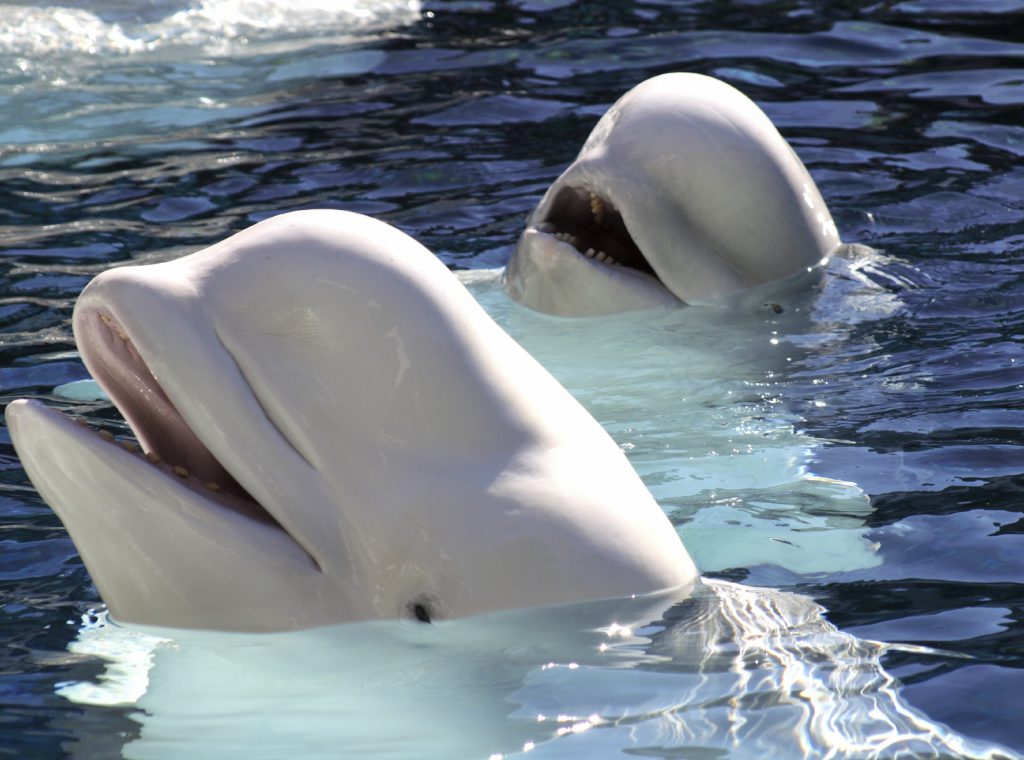
Renowned neuroscientist Dr. Lori Marino spoke to the public about the Whale Sanctuary Project at an event presented by the Vancouver Humane Society and the BC SPCA on July 11th. She and the executive director of the project, Charles Vinick, were in British Columbia looking at possible sites for the sanctuary.

The theme of the evening at the Roundhouse in Vancouver was “Reconciliation”, which was introduced by Bob Chamberlin, Chief Councilor of the Kwicksutaineuk Ah-kwa-mish First Nation. Chief Chamberlin discussed the reconciliation between Canada and its First Nations people, and how this should expand towards a reconciliation between all humans and the natural world. Recognition of this planet as a living being, and respecting the animals and nature, is a necessary step towards this reconciliation.

Dr. Marino continued on this theme by describing the Whale Sanctuary Project, which aims to create a seaside sanctuary for formerly captive cetaceans (whales and dolphins) that maximizes the well-being and autonomy of its residents. It will create an environment as close as possible to their natural habitat.

Other sites under consideration are along the coasts of Washington State and Nova Scotia.  There is a thorough list of requirements that a site must meet and Dr. Marino and her team have been working closely with First Nations communities to ensure that the project is adopted rather than tolerated. They hope to complete the site selection portion of this project by the end of the year. 

Once the sanctuary site has been selected they will begin a three-phase process to ensure it is ready for its first resident by 2019. They will first focus on development of infrastructure and veterinary facilities, followed by administration and housing. The final phase will develop educational and visitor programs. The sanctuary will allow the public to see cetaceans in a natural setting and will focus on education and conservation, not entertainment. Dr. Marino and her team believe a sanctuary is about the animals, not about the people, and they will work to create a better life for these highly intelligent animals.

Learn More!


Categories
animal welfare compassion cruelty News/Blog Promoted rodeo

Newspaper refuses to print ad opposing rodeo

This is the ad the Williams Lake Tribune refused to print.


So much for freedom of speech in Williams Lake


Earlier this year, a tiny community newspaper in Iowa won a Pulitzer Prize for taking on big agriculture companies over factory farm pollution.

The Storm Lake Times, which investigated the effects of nitrogen from farm drainage on drinking water in the state, was praised for its “editorials fuelled by tenacious reporting, impressive expertise and engaging writing that successfully challenged powerful corporate agricultural interests in Iowa.”

The family that owns the newspaper reportedly lost a few friends and a few advertisers, but never doubted they were doing the right thing.

“We’re here to challenge people’s assumptions and I think that’s what every good newspaper should do,” said one family member.

It’s a great example of a community newspaper showing courage and tenacity in seeking the truth. Some newspapers still uphold the highest standards and values of a free press.

Then there’s the Williams Lake Tribune. In May, VHS tried to book a full-page ad in the Tribune. The ad, as we informed the Tribune’s publisher via email, would express VHS’s opposition to the Williams Lake Stampede rodeo.

After a couple of days of silence from the publisher, we emailed again and received this reply from an executive at Black Press, the Tribune’s corporate owner:

“In consultation with our lawyer we have determined that we are entitled to decline advertising in the circumstances.

“The Williams Lake Tribune is a sponsor of the Stampede because it is a significant community event that the paper supports. We appreciate that your society opposes the event and we respect your right to that opinion. You were wise to check with us before commissioning artwork and design.

“While we cannot say definitively that we will decline all possible advertising, we can say, from experience, that anti-Stampede type display advertising that suggests or argues gratuitous cruelty to animals by image or text is unlikely to be accepted by the Williams Lake Tribune at this time.”

Since the words “unlikely to be accepted” seemed to leave the door slightly open, we sent the executive the planned content of the ad to see if it would be acceptable. This included a photograph of the steer-wrestling event taken at last year’s Williams Lake Stampede, accompanied by text stating: “You know in your heart this is not right. Stop cruel rodeo events at the Williams Lake Stampede.”

The executive replied that this would not be accepted.

This is not the first time a Black Press newspaper has refused one of VHS’s anti-rodeo ads.  In 2015, the Abbotsford News rejected a full-page ad opposing the Abbotsford Rodeo (which was ultimately cancelled in 2016).  No reason was given for the rejection.

It’s perfectly legal for a newspaper to refuse an ad for any number of reasons.  The ad might be libelous or gratuitously offensive or misleading to readers.  VHS’s ad did contain a graphic image of a steer being wrestled to ground, but it only showed what a rodeo-goer would typically see at the Stampede – the very activity that the Williams Lake Tribune says it promotes and supports.  If the Tribune finds a photo of steer-wrestling offensive and unacceptable, how can it support the event?

It’s also perfectly normal for a newspaper not to agree with an ad it might carry. The Tribune could have made this clear with a disclaimer on the VHS ad or it could have run an editorial explaining its contrary position on rodeo.

But the Tribune chose instead to simply suppress a legitimate point of view on a matter of public interest.  It didn’t trust its readers to make up their own minds about rodeo.  Unlike the Storm Lake Times, it didn’t challenge assumptions, “like every good newspaper should do.”

The B.C. Community Newspaper Association, of which the Williams Lake Tribune is a member, says part of its mission is to: “Improve standards in the practice of the profession of journalism, and to promote a high standard of conduct and professional ethics in the business of newspaper publishing.”

The Canadian Association of Journalists’ ethics guidelines state that “Defending the public’s interest includes promoting the free flow of information, exposing crime or wrongdoing, protecting public health and safety, and preventing the public from being misled.”

Clearly, ethics matter to journalists and to the public they serve.  People still believe that a free press is vital to democracy, that diversity of opinion matters, that newspapers should be courageous defenders of free speech.

What isn’t clear is whether those things matter to the Williams Lake Tribune, which, to our knowledge, has not been nominated for a Pulitzer Prize.


TAKE ACTION: Help us fight rodeo cruelty at the Williams Lake Stampede


Categories
animal welfare compassion Cruelty-free News/Blog plant-based diet Promoted school vegan vegetarianism

Today is Meatless Monday in Metro Vancouver

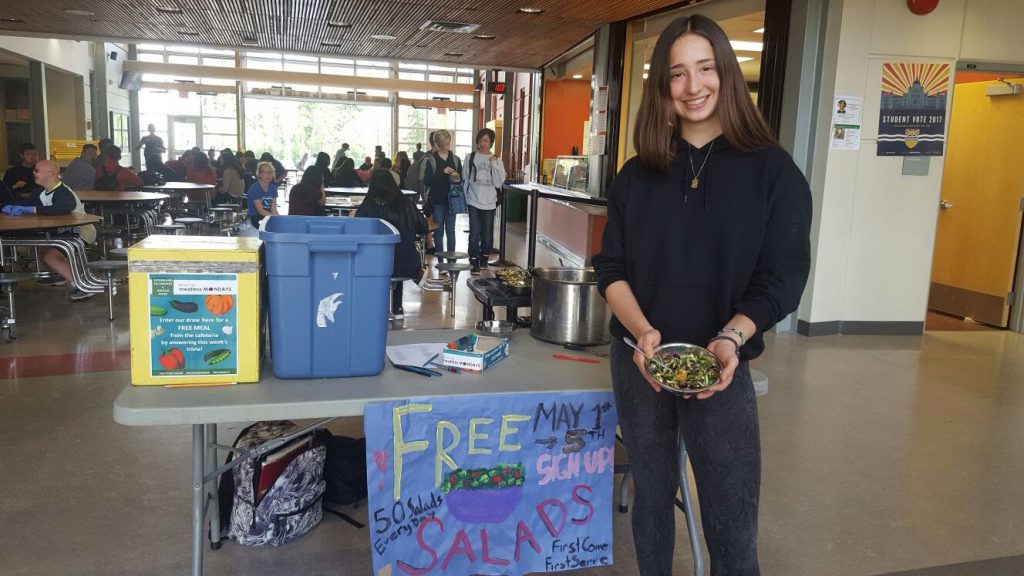
Sutherland Secondary’s Meatless Monday Club tabling for Meatless Monday and giving away free salads.

Schools lead the way, as more schools offer plant-based meals

In an effort to raise awareness of the links between diet and the environment, health and animal welfare, the Cities of Vancouver, New Westminster, North Vancouver and Port Moody have proclaimed today Meatless Monday. Students in Metro Vancouver are leading the way in introducing the concept, with a number of secondary and post-secondary schools offering plant-based meals in their food facilities on Mondays.

To mark the occasion Vancouver Councillor Adriane Carr will visit David Thompson Secondary at 1755 E 55th Avenue at 11:30 a.m. to congratulate students and staff on the success of their Meatless Monday initiative. Here are a few photos from today’s media and outreach event at David Thompson Secondary!

Eleven Metro Vancouver schools will be participating by offering at least one meatless dish on their menu in addition to their regular menu items. Two of these schools, Argyle Secondary and Lord Byng Secondary, are launching their initiatives today.

The Carnegie Community Centre, which serves the Downtown Eastside, will be offering a special Meatless Monday menu today. The centre aims to offer healthy, culturally diverse and delicious food on a daily basis for the community.

Meatless Monday is a global initiative, active in more than 30 countries and growing in popularity in Metro Vancouver. The campaign is aimed at increasing awareness about the impact of food choices and improving access to humane, healthy and sustainable food options. Reducing our overconsumption of animal products and increasing our consumption of plant-based foods helps fight climate change, protects individual/public health and reduces the demand for cheap meat that drives factory farming.