Categories
animal welfare News/Blog Promoted

Fort McMurray fire – animal rescue

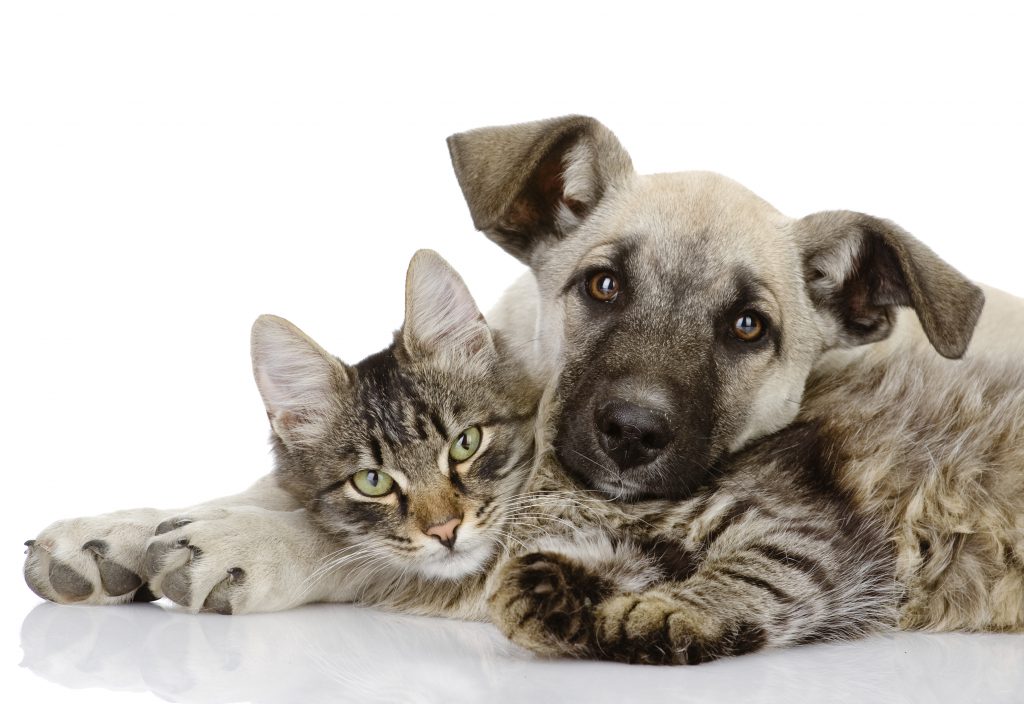
Dog cat iStock_000025076373Large

The fire and evacuation in Fort McMurray is, of course, having an impact on animals.

If you would like to help, donations can be made to the Fort McMurray SPCA along with the Alberta Spay Neuter Task Force, which are helping to coordinate an effort to keep pets and livestock with their families.

VHS has donated to each of these groups, whose efforts we appreciate in this challenging emergency. Our thoughts are with the people and animals who have had to leave their homes.

Categories
animal welfare compassion cruelty News/Blog Promoted rodeo

Why is the UBC alumni association promoting the Calgary Stampede’s cruel rodeo events?


DSC_0382
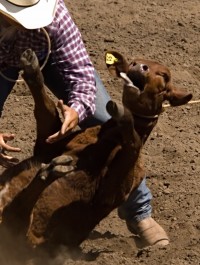
Calf-roping at the Calgary Stampede. Photo: Jo-Anne McArthur


It’s surprising and disappointing to learn that the University of British Columbia’s alumni association, Alumni UBC, is offering a trip to the Calgary Stampede rodeo to its members. It’s disappointing for obvious reasons – animals shouldn’t suffer for the sake of entertainment – but surprising because universities and their wider communities are often the agents of progressive social change.

calf roping040522Rodeo082cropresize

A number of UBC’s alumni who are associated with VHS (directors, former directors, staff) signed a letter to the association last year, urging an end to the promotion, but it’s being offered again this year.

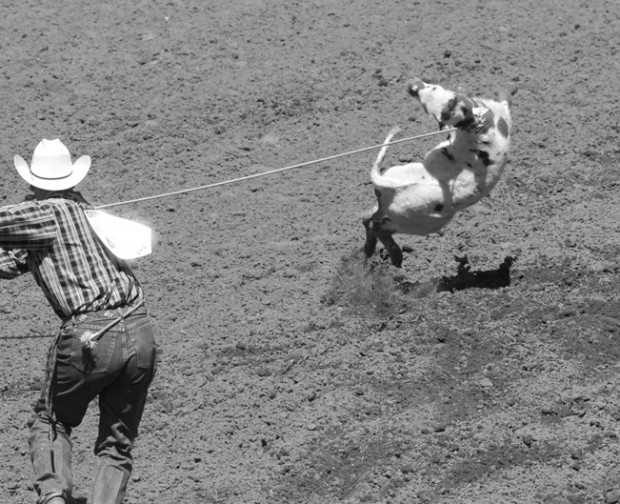
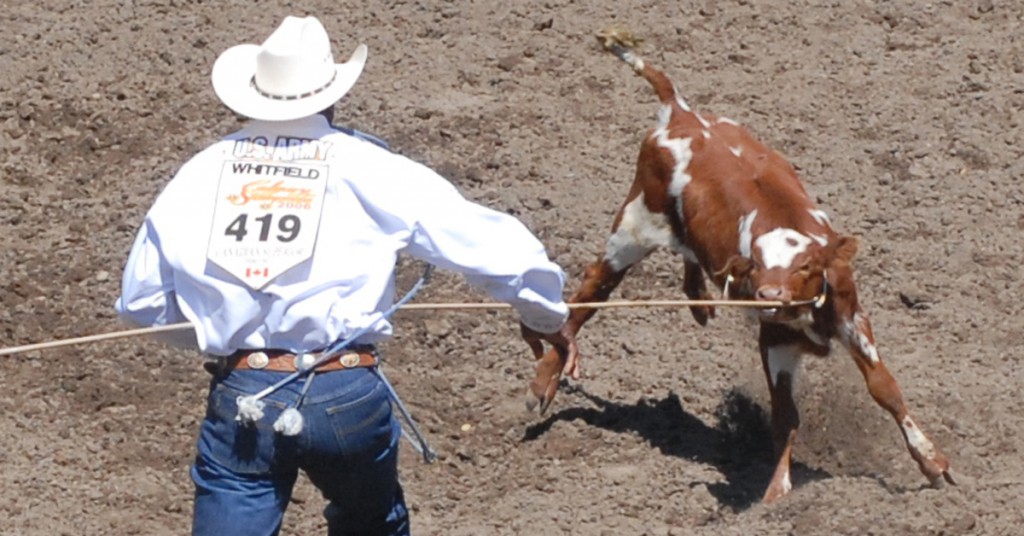
Presumably, Alumni UBC sees nothing wrong with tormenting animals.  Perhaps they find the photos on this page perfectly acceptable.  Most likely, they just see the Stampede as a tradition and see no reason to challenge it.

It’s a shame that when this issue was brought to the association’s attention, no one there had the intellectual curiosity to ask some questions about the ethics of rodeo.

Questions like this: When does an accepted tradition become unethical?

Sometimes you can put a date on it. Dog fighting, bear baiting, and bull baiting were outlawed in England by the Cruelty to Animals Act of 1835. But that doesn’t tell us when the critical mass was reached that allowed that change to take place. When did watching animals tear each other apart go from crowd-pleasing fun to socially unacceptable?

It’s even more difficult to determine when we’re approaching that critical mass on an issue in our own time. But sometimes there are clear signs.

VHS has been campaigning against cruelty to rodeo animals for a long time.  It’s still popular in a number of Canadian towns and, of course, at the Stampede. Nevertheless, cracks are appearing in public support for rodeo.

Calf roper at 2006 Russian River Rodeo, Duncans Mills, California

The most obvious indicators are polls showing most Canadians don’t support rodeos.  A December 2015 survey by polling company Insights West found that 63 per cent of Canadians are opposed to using animals in rodeos (66% in BC). Does Alumni UBC care that they are promoting something most Canadians think is wrong?

But polls are not the whole story. The cancellation of two professional rodeos in B.C. in the last two years (and half the events at Surrey’s Cloverdale Rodeo in 2007) signal a real lack of public support for rodeo on the West Coast. It’s no wonder the City of Vancouver banned rodeos in 2006.

Last year, the Vancouver Sun became the first daily newspaper in Canada to take an official editorial stance opposing rodeo.

In the same month, six other independent opinion editorials questioned the ethics of rodeo, including a piece by a member of the Calgary Herald’s editorial board, who wrote: “…the bottom line is these animals are still being used for sheer entertainment in events that can cause them traumatic injuries and death — and it is unnecessary for them to be subjected to this. Are we humans so hard up for entertainment that we must amuse ourselves by watching events that can cause animals to suffer and die?”

Most mainstream animal welfare organizations are opposed to rodeos, including our own BC SPCA, the Canadian Federation of Humane Societies and the national SPCAs of the United States, Australia, South Africa, the United Kingdom and New Zealand.

These are the institutions we entrust with the protection of animals and they think rodeo is inhumane. So do most British Columbians. So do most Canadians. So does the City of Vancouver. But not, apparently, Alumni UBC.

Back in 1835, there were few institutions to fight for the welfare of animals. But the compassion of enlightened Christian reformers brought about the critical mass necessary for profound change.

Today, our animal welfare organizations have made the case against rodeo. Now we need people of conscience, community leaders, educational institutions and civic organizations to recognize that it’s wrong to make animals suffer for the sake of human amusement.  Shouldn’t the alumni association of one Canada’s best universities be among them?

Please send a polite email to Alumni UBC asking them to stop promoting the Calgary Stampede rodeo.

More about rodeo here.


Ad calf
Photo: Jo-Anne McArthur
DSC_0345
Photo: Jo-Anne McArthur
Calf roping Cal Stamp J Mc
Photo: Jo-Anne McArthur

Calf being viciously roped at Calgary Stampede

JMDSC_0073crsmall

Wild cow milkingRodeo2

080802-Rodeo371

Bareback Riding

Calf face crop Rodeo-99


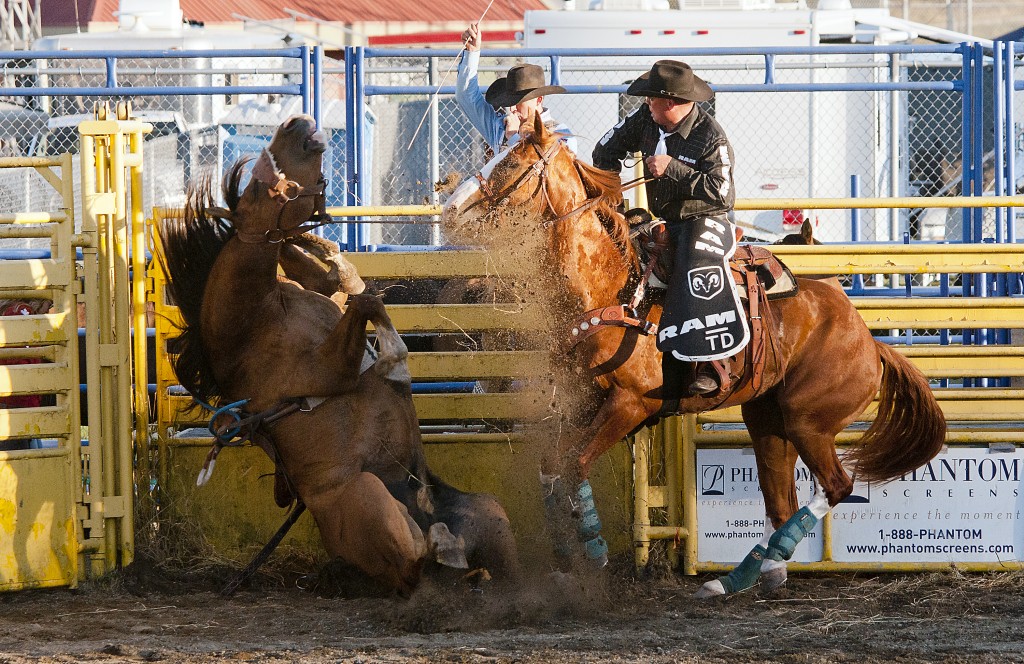
073115 - Abbotsford, BC Chung Chow photo 2015 Agrifair Rodeo in Abbotsford. Bronco riding Bronco refused to get up until motivated by the cowboy behind the fence.

Categories
animal welfare compassion Cruelty-free Food and Drink News/Blog plant-based diet Promoted vegan vegetarianism

Erin Ireland’s plant-based journey

BMlW8PsCAAAuwwG

Erin Ireland is a food journalist, blogger, entrepeneur and animal-lover who has been on a personal journey to discover and understand the principles and practices involved in ethical eating. In a recent blog post (reprinted below with her kind permission) she describes her transition to a plant-based diet.  


It’s Sunday morning and I’m sitting here on the couch in pyjamas drinking an almond milk latte. I’m crying after re-reading some of the 831 comments on Jillian Harris’ blog post, “How This Alberta Meatatarian Became so Vegan-ish”, in which she opens up about her transition to a plant-based diet.

In the days following her post, I texted Jillian to say how impressed I was by her written words—how I envied her ability to get thoughts ‘on paper’ so effortlessly. What she wrote would have taken me months. She has drawn me to my computer today to share the unedited story of my own journey. I usually stick to sharing my ‘plant-based messages’ on social channels because they are short and easy to write. I definitely prefer talking over writing, which is why I gave this speech. But Jillian’s post (which broke jillianharris.com website traffic records) inspired me to go deeper and share some of the factors the inspired my personal decision to go vegan.

Like Jillian, I used to be a ‘meatatarian’. I was proud of it. As a college athlete training twice a day, I was the type to order double meat at Subway. I thought eating nothing but ‘lean animal protein’ would help me achieve a healthier, more fit, muscular body. I often said that I was “just not the type who would ever become a vegetarian”.

Wow, how things have changed…


WHAT DOES “VEGAN” MEAN?

My introduction to the word vegan came when I asked my parents what the term meant. My memory is a bit fuzzy, but I believe they alluded to the fact that veganism was some super-extremist lifestyle that was more-or-less unachievable and mainly adopted by ‘extreme hippies’. I never thought twice about learning more.

Looking back, I don’t blame my parents. 25 years ago things were different. Factory farming wasn’t in the media spotlight like it is today. Baby-Boomers were raised in a time when meat and dairy was fully embraced. National meat and dairy councils were (and still are) supplying nutritional information to schools in North America. Despite the conflict of interest, teachers believed what they were teaching and young, impressionable students ate it up, literally.

THE FIRST ANIMAL PRODUCT I REMOVED FROM MY DIET

My first step towards cutting animal products out of my life came during sophomore year of university. For most of my life, I’d felt a little bit stuffed up, as if I had a constant cold. My dad suffered the same symptoms and told me that cutting milk out of his diet seemed to alleviate the stuffiness. I switched to soy milk. Immediately my sinuses felt better and I never went back to milk (note: this isn’t a professional opinion and I’m not saying this can work for you, just that it worked for me). I’ll admit, I still ate cheese and chocolate from time to time …how could I resist? I thought it was worth a bit of congestion.

The other reason I cut milk out of my life was acne. My skin issues began around the age of 19. I often got blemishes after big doses of dairy. Cutting milk out of my diet helped, but it was also a hormonal thing for me—going on the pill was the only thing that finally resolved my skin problems completely. Ironically, at the time my reasons for cutting dairy out had nothing to do with environmental or animal welfare issues. I didn’t know the truth about the lives of so many dairy cows. Today, in my heart, our planet and the animals are the main reasons I am passionate to seek dairy alternatives.

MEAT OBSESSION DURING MY VOLLEYBALL YEARS

As an NCAA Div. 1 volleyball player, I thought I needed a ton of protein. I thought I needed a meat heavy diet. Not a single girl on my volleyball team ate vegetarian—if any teammate, classmate or teacher raised the topic of vegetarianism during my four years of school, I don’t remember it. At my peak, I weighed 155 lbs and was the second strongest female in my athletic department.  Always looking to take things a notch further, I wanted to gain more muscle and I thought eating meat would help. Sometimes for dinner, I’d eat a whole rotisserie chicken. Nothing else. Even worse, my teammates and I would go to the Golden Corral buffet (which my mom nicknamed, ‘the pig trough’) for all-you-can-eat steak.

My small university town in South Carolina revolved around the one Walmart, and I loved going there to buy their cheapest lean ham. Another regular purchase was extra lean ground beef that for Hamburger helper that my roommate and I used to love to make. We thought we were making healthy choices. My mom would sometimes ask if I knew where this meat was coming from. I always dismissed her questions thinking she was being a paranoid mom. I remember telling her that the FDA / governing bodies wouldn’t allow unsafe food on the shelves…was I ever wrong. My mom had been right to question.

THE DOCUMENTARIES THAT GOT ME THINKING

My transition to a plant-based diet slowly started with the documentary, ‘Forks Over Knives’. The movie presented facts that a vegan diet not only stops disease from forming in the body, but actually reverses it. The evidence was convincing to say the least. I started to realize the impact animal-based foods were having on our health. I couldn’t believe this was the first time I was hearing such important information. The more I learned, the fewer animal products I ate.

Earthlings was another documentary that had a huge impact on me. It introduced me to the term, speciesism: the prejudice or bias in favour of the interests of members of one’s own species and against those of members of other species. The documentary is graphic, filled with undercover footage shot inside factory farms and the odd slaughterhouse. I shut my eyes and cried through much of it, but I felt strongly that I needed to know what was going on behind closed doors. How could I make decisions about my food choices unless I knew the consequences of my actions? Now, I had seen those consequences and I simply couldn’t have anything to do with it. Farming is not what it was 100 years ago and the vast majority of the time, animals are not leading the happy lives, as depicted on food labels.

At this point in my life, I was still eating cage-free organic eggs from time to time, and if I was in a dining situation where the only option was seafood, I’d take it. But gradually, as I continued to read and watch, I lost all appetite for anything animal-based, including leather.

WHERE I AM TODAY

Three years into my plant-based journey, there are a couple recurring questions friends and family often ask. The first is which animal product I miss the most? The answer is: none. Since learning the true impact of animal agriculture, my cravings for animal products has completely disappeared. Anyone who knows me can vouch for the fact that I love GOOD food, and today, my plant-based options leave me dreaming about my next meal every single day.

The second question is whether my energy or training has suffered since quitting animal protein. Today, I’m more energetic and satiated than I ever was in university. I’m up at 5:30am for a 10K run about five days a week. I can’t imagine having the energy to do this back in the day — I remember always feeling hungry and tired during my school years. Another important driver for me was learning that the fear of not getting enough protein from plants…is a myth. As long as we consume our daily recommended intake of calories (from whole foods), it’s nearly guaranteed we will also get our daily recommended dose of protein. Our bodies can’t even process extra protein (just like vitamins) so they are eliminated from our systems, into the sewage system.

The last thing I’m often asked, is whether veganism requires more work. Ironically, I find it requires less (less stress too!). It’s really the little things that start to add up: no more racing home to get groceries refrigerated. No more obsessive washing of the cutting board for fear of e-coli or salmonella. No more finicky fat trimming. No more stressing over timing and temperature for the perfect steak, roast, or chicken. No more fear of meaty leftovers going bad if I forget to refrigerate right away.

Remember there’s always a learning curve when transitioning to any new diet. If the thought of vegan meal planning is daunting, know that, unlike generations before us, we are spoiled by the amount of amazing resources out there. For starters…

Before hitting publish I reread the post that inspired this note. Jillian received 831 comments on her blog and Instagram post—almost all filled with love, encouragement and acceptance. They bring tears of happiness to my face when I read them. What’s even more heartening are the actions of her following that I’m certain will be inspired from the conversation she has just begun.

Thanks to leaders like Jillian, a word I associated with ‘extreme hippies’ 25 years ago, is now well on it’s way to becoming a mainstream movement. This gives me so much hope.

 

Categories
animal welfare compassion News/Blog Promoted Uncategorized

SeaWorld’s historic decision is lost on Vancouver Aquarium

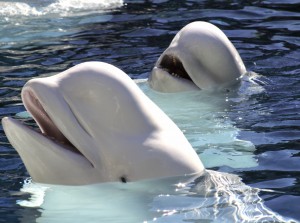
beluga whales iStock_000005049794MediumLast week, SeaWorld announced that, effective immediately, it is ending its orca breeding program and will be phasing out its theatrical shows involving orcas.

While this is certainly welcome news for the future generations of these whales who would have been born into a life of captivity, sadly, it amounts to little for the existing generation in SeaWorld parks, who will remain captive “for as long as they live.” Nor does it extend the same compassion to SeaWorld’s other captive cetaceans, including belugas and dolphins, who can continue to be bred in captivity and perform for audiences.

What does it mean for cetaceans in captivity at the Vancouver Aquarium? “It doesn’t change anything,” according to the aquarium’s general manager, who commented on SeaWorld’s announcement while in Spain, where the Vancouver aquarium has taken over operations of the L’Oceanografic aquarium. The marine park is the largest in Europe and has 13 bottlenose dolphins, 10 of which were caught in the wild. It also has a pair of belugas caught in Russian waters.

Despite growing criticism and a recent documentary on the subject, the Vancouver Aquarium defends its breeding programs and the keeping of cetaceans in captivity. Even Dr. Jane Goodall has voiced her opposition, calling captive breeding “no longer defensible by science.” She went on to argue that “the idea that certain cetaceans ‘do better’ in captivity than others is also misleading, as belugas, dolphins and porpoises are highly social animals which can travel in large pods and migrate long distances.”

Goodall is not alone in her opposition to the breeding and keeping of cetaceans in captivity. Senator Wilfred Moore has introduced a federal bill that, if passed, would prohibit the acquisition and captive breeding of cetaceans in Canada. We encourage you to sign and help circulate this potentially historic bill.

There is still much work to do in order to afford other animals the same freedom from exploitation, but we must recognize the SeaWorld announcement for the historical moment that it is. It serves as a testament to the power of compassionate people over corporations. Together, we can build on this momentum and work toward the inevitable day when the captivity industry is a thing of the past. Join the annual Empty the Tanks worldwide rally, taking place at the Vancouver Aquarium on Saturday, May 7th, 11am and voice your opposition to the captivity industry.

Categories
compassion Cruelty-free Dairy Food and Drink News/Blog plant-based diet Promoted vegan vegetarianism

Here’s the scoop on Vancouver’s Nice Vice Creamery

NiceVice_015

Nice Vice is Vancouver’s first ever 0% dairy, plant-based micro creamery, which opened in Yaletown in February. VHS talked recently to owner-operator Chris White about starting up a plant-based business. Here’s our Q&A with him:

.

1. What inspired you to open Nice Vice?

I opened up Nice Vice Creamery after visiting many of the fantastic artisanal ice cream and gelato establishments around the city and never having very many D-F options. When I was making so many different flavours at home, my sons inspired me to open up a dairy-free scoop shop.

2. How have you found the reaction from the community?

Absolutely fantastic! I believed that Vancouver was ready to support a 100% dairy-free, plant-based vice cream shop. I think the awareness of plant-based foods has become much more positive in the last few years.

3. What do you enjoy most about running the business?

I love working the front counter and interacting with people. We have received so much good energy from our patrons you can’t help but feel good behind there.

4. What do you find is the hardest part?

We opened up an ice cream store during the winter,with a new brand, with a new product, and in a new location! We made it as hard as possible to succeed. So, if we can get through this and become profitable then we will achieve success.

5. How do you stay positive in a world where animal-based products are still so predominate?

I focus on how aware society is becoming about the positive aspects of choosing a plant-based product over the negative realities of animal-based products. After all, that is one of the motivating factors behind Nice Vice – the ability to participate in change through positive vibrations of consuming vice cream.

6. What is your most popular menu item?

Besides several of our classics, our Instagram @nicevicecream has our new flavours which regularly sell out within a day or two. (Buzz’d Coffee or Strawberry Lychee anyone?)

7. Who are your customers? Is there a predominate demographic?

When I wrote the marketing plan, I assumed that health conscious females between the age of 15-35 would be our predominate SHUs (Super Heavy Users). However, we have been surprised to see an equal number of male customers as well and, pleasantly, we seem to be catching on in the Asian community where over 70% of that ethnic group is lactose intolerant.

8. What do you think is the best way to encourage consumers to make more ethical choices?

This is a good question. At Nice Vice I tell our employees not to judge anyone for any choices they make. We believe that education and awareness of the ethical benefits of a plant-based diet are being portrayed by documentaries auch as Cowspiracy, Earthlings, and Forks over Knives. When the conversation comes up between a customer as to why I am plant-based, I point the customer to these three documentaries to guide them in their own decision making.

9. Do you think plant-based products and businesses are becoming more mainstream?

Absolutely! Plant-based food products and restaurants are the fastest growing sectors in their respective industries. The shift has happened because there is largely no where else to grow. Just look at Ben & Jerrys and the number of new vegan restaurants that have opened this year in Vancouver alone. We are at the beginning of a monumental shift in consumer choice. And thank God for that!!!

10. What are some of the lessons you’ve learned about running a plant-based business?

You can’t please everybody!! There is a wide variety of knowledge in society and we have experienced different levels of emotions from anger and anxiety to euphoria in our shop. Not everyone will believe in what we are doing as being positive – that is the reality and beauty of living in a free society. The other lesson is that dealing with the government can be challenging and requires patience and perseverance. The residual benefits of business are numerous and exciting! No matter what happens with Nice Vice, I can honestly say, I have never had a such a roller-coaster of emotions with this small business and the period of personal growth has been phenomenal.

Nice Vice Creamery is located at 1022 Mainland Street, Yaletown and is open 12-10 daily.

Tel: 778.379.6423

Email: info@nicevicecream.com

Categories
animal welfare compassion fundraising News/Blog Promoted Uncategorized

Lola & Susie receive help through VHS’s McVitie Fund

There are few options available for good pet owners who fall on hard times. Sometimes all it takes is an unexpected circumstance, like an injury at work or being laid off, which can make covering an equally unexpected vet bill for your pet overwhelming.

That’s where the Vancouver Humane Society’s McVitie Fund comes in. It’s our goal to help animals and people in need and to keep cherished pets in already loving homes, instead of being unnecessarily euthanized or surrendered to already crowded shelters.

Through donations to the McVitie Fund, VHS has been able to help provide emergency care for close to 1500 animals to date. We’ve also helped spay/neuter over 4200 animals, in an effort to address the pet overpopulation issue.

lola and susie2Lola and Susie are just two of the many animals helped through your generous donations. These two mean the world to their guardian, who tells us they are not only important members of his family, but play a crucial role in his mental health. So when Lola and Susie both developed a chronic skin issue, he worked tirelessly with the vet to resolve the problem. It seemed the source was likely environmental and due to issues with the building he and the dogs lived in. After little was done to rectify the situation on the part of the landlord, the three moved to a new home. Due to his limited income, their guardian reached out to VHS for help in getting Lola and Susie’s skin issues cleared up once and for all. Thanks to VHS’s supporters, Lola and Susie were able to get the treatment they needed and are now on the mend. Their caregiver is beyond grateful for the support of complete strangers during a tough time.
lola and susie

This is just one example of the many cases we assist with through your support. An incredible VHS supporter has issued a matching gift challenge through which donations made to the McVitie Fund before April 30th, 2016 will be matched, up to $20,000! This means we can help even more animals in need of emergency care.

Please, donate today, double your impact and encourage others to contribute to this much-needed fund. Help us help animals in need, like Lola and Susie.

Categories
animal welfare compassion Food and Drink News/Blog Promoted

Working together for animals

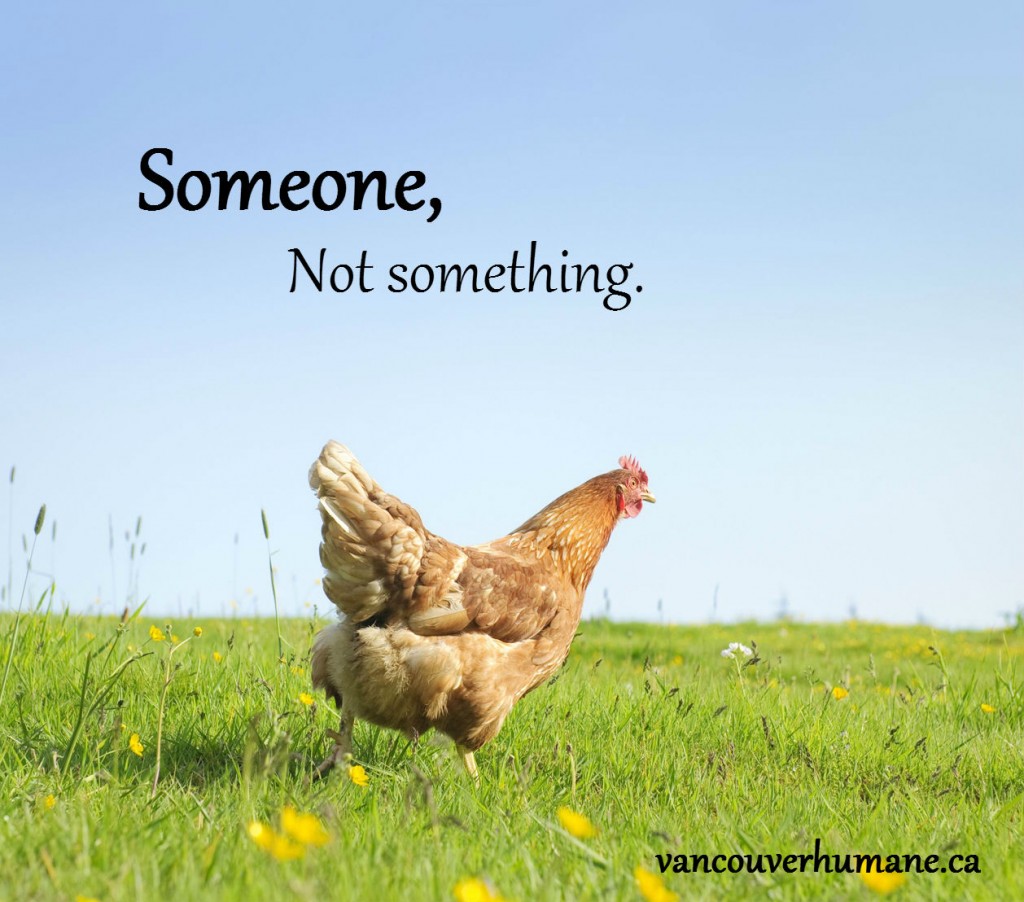
Photo 7 PF Someone not something

VHS would like to thank all the organizations listed below who signed on to the group letter that we sent to A&W asking them to go cage-free. Not only did A&W listen, but they plan to be cage-free within two years, ahead of most other companies. Nicely done, everyone!


Animal Justice Canada

“Commercial animal agriculture is essentially an unregulated industry. The absence of government oversight has created a race to the bottom, with animals paying the ultimate price of physical and psychological torment. Companies and consumers have the power to demand better for animals through their purchases and food choices.” Anna Pippus, Director of Farmed Animal Advocacy


Canadian Coalition for Farm Animals

“We applaud companies like A&W that are showing genuine leadership in animal welfare, not simply by committing to buying cage-free eggs, but also by doing so in a reasonable timeline of two years — millions more hens will live better lives because of it.”  Edana Brown, Director


Humane Society International/Canada

“HSI/Canada welcomes another of Canada’s largest restaurants joining the growing list of companies demanding a cage-free future for hens. A&W’s commitment to improve the welfare of hens in its supply chain by moving to 100 percent cage-free eggs sends a clear message to the egg industry that confining chickens in cages simply has no place in our nation’s agricultural future.”  Sayara Thurston, Campaign Manager


Mercy for Animals

“We praise A&W for swiftly addressing this important issue on the minds of conscious consumers across Canada. The company’s new cage-free egg policy is a crucial step that will reduce the suffering of countless hens.”  Krista Hiddema, Managing Director


Vancouver Humane Society

“A&W thought they were doing the right thing by sourcing eggs from ‘enriched’ cages. Kudos to them for hearing us when we told them that enriched cages severely restrict  key behaviours like running, full wing-flapping and flying and do not permit unrestrained perching and dustbathing. A cage is a cage.” Debra Probert, Executive Director


Canadians for the Ethical Treatment of Farmed Animals

(no comment available)


Categories
animal welfare compassion cruelty News/Blog Promoted

A&W promises to go cage-free


Chicken_small


A&W has announced that it will serve only cage- and antibiotic-free eggs within two years.

The announcement follows a campaign by VHS and other Canadian animal protection groups, which urged the fast-food chain to join the many other food companies that have gone cage-free.

A VHS online petition had gained more than 6700 signatures asking A&W to stop using eggs from caged hens.

VHS applauds A&W for listening to the concerns about caged hens and responding in a positive and timely manner.

Categories
News/Blog Promoted Uncategorized

VHS Helps More Schools Join the Meatless Monday Movement

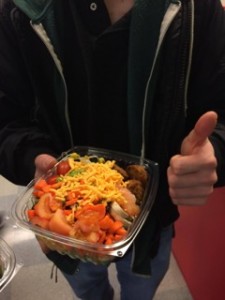
Thumbs up for Meatless Monday!

More and more people are looking for ways to eat humanely, healthfully and sustainably. Reducing or eliminating our meat consumption are both effective ways of doing just that! Our society’s overconsumption of meat condemns farm animals to a life of suffering in unnatural and inhumane conditions; increases our risk of heart disease, stroke, cancer, diabetes, obesity and other preventable conditions; and is a significant contributor to climate change and environmental degradation.

The good news in all of this is that every meatless meal helps to tackle these crucial issues, which is why we’re excited to launch our new Meatless Monday toolkit. This guide is intended to help students in BC schools join the ever growing Meatless Monday movement, with resources and tips for starting your own school campaign.

VHS’s Meatless Monday project has already helped several secondary and post-secondary schools kick start their own cafeteria initiatives, the most recent being Eric Hamber Secondary. After learning about the impact of meat consumption on the environment, animals and our health, Eric Hamber’s Environmental Club worked with VHS, school administrators and the school’s food services provider, Canuel Caterers, to introduce and promote delicious meatless meals every Monday.

The Environmental Club reports that cafeteria sales have increased, as students enjoy the exciting new menu items, including a salad bar, chickpea curry rice bowl, hummus wrap, mushroom burger and pasta primavera.

If you’re a student, download our Meatless Monday toolkit to get started on your campaign today. Remember that every time you sit down to eat, you have the opportunity to help create a more humane, healthy and sustainable society!

Categories
Dairy Food and Drink News/Blog plant-based diet Promoted vegan

Veggemo: A new plant-based alternative to dairy milk

Veggemo Product Line-Up Image

By Amy Balcome

It’s always exciting when a new plant-based company pops up on our radar and right in our own backyard. This local start-up is a first-of-its kind, offering people with nut, seed, soy and gluten allergies a chance to enjoy a plant-based milk beverage made from veggies. Introducing Veggemo with three fantastic flavours to choose from: Original, Unsweetened, and Vanilla.

Over the years, studies have shown a decline in dairy milk sales and more consumers have been leaning towards plant-based milks, whether it be for clean eating, a cruelty-free approach or because of allergies/sensitivities. Whatever the reason, choosing a plant-based milk is better for you, the animals and the environment.

There are many types of plant-based milks, which are mostly derived from nuts, seeds and grains. Veggemo says it did a great deal of research to create a creamy milk beverage using a blend of pea protein, tapioca from cassava root and the starch from potatoes to reach its satisfying taste, which can be enjoyed in smoothies, cereal, creamy entrees or desserts. They appear to have gone to great lengths to ensure their product is sourced from non-GMO suppliers and their peas are processed by a Belgian company instead of being shipped to China for processing, as many other companies do.

Along with Veggemo’s naturally occurring nutrients from vegetables, this product is fortified with important vitamins to contribute to a balanced plant-based beverage. It’s also carrageen-free. Veggemo offers low calories and sugar per serving and is high in protein, allowing it to be nutritionally on par with other non-dairy milks. It’s hard to miss their eye-catching containers on supermarket shelves. On your next grocery shop outing be on the lookout for Veggemo in a store near you.

More on the growth of plant-based industries in B.C.

Vancouver Sun article on growth of local plant-based companies.