Categories
animal welfare compassion cruelty News/Blog

Bearing witness to factory farm cruelty

Sow Puratone 2012

This month, Mother Jones Magazine ran a harrowing account of animal cruelty on an American pig farm. The article, an excerpt from a new book on factory farming by journalist Ted Genoways, focuses on an undercover investigation by People for the Ethical Treatment of Animals (PETA), which exposed farm workers meting out savage beatings to helpless pigs.

The story and an accompanying PETA video are, of course, deeply disturbing. They are much like other factory farm exposés by many animal rights groups over the years.  The recent investigation of an Alberta hog facility by Mercy for Animals Canada found similar cruel beatings by employees.  The humane community believes these and other cruel practices are widespread in animal agriculture here and around the world.

The media coverage of these investigations is vital in bringing these horrific abuses to light, but there is a nagging question in the minds of animal advocates: Are the people who need to see this paying attention?  After all, articles like the one in Mother Jones make for unpleasant reading and the video is stomach turning.  We’ve all heard the refrain from meat-lovers: “Don’t tell me.  I don’t want to know.”

Here at VHS, we wonder how much factory farm horror people can take.  Will the endless repetition of these accounts ultimately encourage people to just stop listening?  The answer, most likely, is to balance the horror stories with positive information about progress and practical advice, such as how and where to find alternatives to meat.

Yet, we are convinced of the importance of bearing witness to the suffering of animals on factory farms.  Yes, the stories are hard to read, and the videos hard to watch, but if they are not produced, distributed and shared who will know the truth?

That’s why we urge our supporters to read and watch at least some of the disturbing evidence of cruelty emerging from factory farming.  More importantly, we urge people who care about animals to share this evidence with friends, colleagues and family members who don’t know (or say they don’t want to know) the truth about what happens on factory farms.

Ted Genoways’ article is a compelling example of that truth. We urge you to share it widely.


Categories
animal welfare cruelty News/Blog Promoted

Appalling cruelty in animal transport

VHS demands action from government


Undercover footage taken by Mercy for Animals/Canada revealed that Canadian Food Inspection Agency inspectors failed to stop blatant abuse of pigs being transported to slaughter in Red Deer, Alberta. VHS is calling for enforcement of existing laws and updated legislation to protect these vulnerable animals (see our letter below).

Please contact Minister of Agriculture and Agri-Food, the Honourable Gerry Ritz and tell him Canadians will not tolerate this cruelty

You can also sign this petition (scroll down this link’s page to sign the petition)


October 16, 2014

The Honourable Gerry Ritz
Minister of Agriculture and Agri-Food
1341 Baseline Road
Ottawa, Ontario K1A 0C5

Dear Minister Ritz,

I was appalled to see undercover video footage exposing brutal animal abuse in Canada’s livestock transportation sector. The video shows animals overcrowded in transport trucks without protection from extreme weather or access to food and water; pigs who are so sick or injured they are unable to walk being painfully shocked with electric prods; workers using bolt cutters to break the tusks of male pigs without any painkillers; and animals who were so sick they died during transport.

To see this kind of cruelty under the watch of government inspectors and sometimes even in flagrant violation of existing laws, as weak as they are, is shocking, to say the least. The video captured a CFIA inspector stating, “If anybody has a camera, this will be on the internet” and another offering to get an electric prod for an employee. It’s clear that they know that what they are doing is wrong. CFIA inspectors are there to not only protect public health, but also to enforce animal welfare legislation. I find it shameful that these kinds of atrocities could take place in a civilized country such as Canada.

Canada needs to bring itself in line with other countries with much more progressive protection for farmed animals in transport – countries like the European Union, Australia, New Zealand and the US. Legislation to protect farmed animals, who are raised, transported and slaughtered with little or no oversight, should be fast-tracked in order to ensure not only the humane community, but the public, that the government takes farmed animal welfare seriously. Lastly and most importantly, CFIA inspectors need to be properly trained to do the job they are supposed to be doing.

Judging from the number of investigations done in recent months at farms and slaughterhouses chosen at random, this seems to be the culture of these industries, rather than an anomoly. I look forward to hearing the steps the Canadian government will take to address these issues.

Sincerely,

Debra Probert
Executive Director
Vancouver Humane Society

Categories
animal welfare News/Blog Promoted zoo

No new zoo for Surrey, BC

Great news! The City of Surrey has informed the Vancouver Humane Society that in spite of news reports that the city is considering providing property at little or no cost to Cinemazoo and the Urban Safari Rescue Society for a new exotic animal zoo in Surrey, there have been no plans submitted for consideration. At this time, the concept has not been advanced as a formal proposal and even if it was, there would be a full public process before any decisions were made whether or not to support the plan.

We’ll keep you posted. Thank you for all your emails and support on this issue!

Zookeeper Gary Oliver, who has met with the City, has been keeping and renting out exotic animals like alligators and iguanas in the Lower Mainland for many years. He operates a business called Cinemazoo and claims to be concerned about conservation and habitat. Cinemazoo not only rents out animals to the entertainment industry, but takes exotic animals to private homes for birthday parties, as well as holding parties at the facility.

They also take exotics into classrooms referring to it as ‘education’, encouraging children to handle the animals. This only teaches children that animals are here for our entertainment. In 2004 and 2010 Oliver was investigated by the BC SPCA and the provincial Ministry of the Environment for concerns relating to the welfare of the animals in his care.

VHS is opposed to the keeping of exotic animals because it is impossible to provide them with a natural environment in which they can perform natural behaviours. Whether or not they were captive-bred, they have still evolved to a very specific set of environmental circumstances which is impossible to replicate in captivity. The Vancouver Humane Society contacted the City of Surrey to oppose the establishment of yet another zoo.

Categories
animal welfare News/Blog

VHS presentations to Park Board on whale and dolphin captivity at Vancouver Aquarium


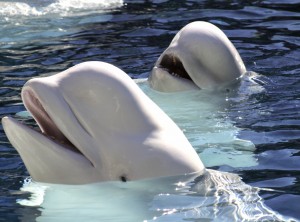
belugaiStock_000012952067Smallsmall

Below are two VHS presentations made at the Vancouver Park Board meeting on captive whales and dolphins at the Vancouver Aquarium on July 26, 2014.

.


Presentation by Leanne McConnachie, VHS Director, Farmed Animal Programs.

My name is Leanne McConnachie. I have a master of animal science degree from UBC’s Animal Welfare Graduate Program, I served on the BCSPCA’s Board of Directors, I am currently on the Vancouver Foundation’s Animal Welfare Committee and I’m on the Board of the Animal Welfare Foundation of Canada. Finally, for the past 7 years, I have been the Director of Vancouver Humane Society’s Farmed Animal Programs, and VHS is opposed to the keeping of cetaceans at the Vancouver Aquarium.


In my work with farm animal issues, the biggest moral and animal welfare concern today is the cruel confinement of animals in cages and crates for economic benefit. It is the consequences of confinement that is at the heart of the issue being discussed today. It is NOT about who is among the best of all the confinement facilities, as the Gaydos report concludes.


There are a multitude of scientific papers from some of the world’s leading animal welfare scientists that prove animals suffer when confined and denied their natural behaviors.


The Aquarium says they need more animals to conduct more research. Now yes, there is a place for science, and science has proven that cetaceans do not thrive in captivity. Furthermore, science and the Vancouver Aquarium have certainly proven they cannot be successfully bred in captivity, based on their abysmal baby cetacean death toll. (Note: At San Antonio Aquarium, they have had 13 beluga deaths since 1995, five under 5-years old, and three deaths at the Georgia Aquarium, and these are the aquariums to where they’ve loaned their other belugas).


So thank you, cetacean researchers, for teaching us that. Now let’s put the research findings into action and phase out the keeping of these animals in captivity.


Fortunately, public sensibilities are evolving. With farm animals, consumers and retailers are demanding an end to cages and crates, demonstrating it is not ok to confine farm animals in this way just to pleasure our palates. Similarly, it is not ok to confine cetaceans in small concrete tanks, for what we all know, is really just to entertain us.


And remember, no one here is saying close the aquarium or stop the great rescue and rehab work. We are saying stop the cetacean “shows”, and stop the breeding.


Now, those who support captivity will attempt to discredit the voices of the citizens and small organizations that oppose it. But there is a group that is not here today – the BC SPCA. They are the largest animal protection organization in Canada, with provincial statuatory powers protect animals, and they oppose it too.


They submitted a proposal to the Park Board suggesting 8 key changes to the Parks Control By-Law, including a phase out of the cetacean programs, and prohibiting the breeding and loaning of cetaceans.


VHS agrees with the BC SPCA’s recommendations, but we would also like to submit 2 amendments:

  1. prohibit the exchange of cetacean DNA for artificial insemination purposes; and
  2. appoint a voting representative from the BC SPCA to the committee that determines which animals are brought in, and for how long, and make these minutes public.


The BC SPCA’s recommendations, together with VHS’s proposed amendments, appear to be a workable compromise.


Thank you.

.


Presentation by Liberty Mulkani, President, VHS Board of Directors

Hi, I’m Liberty Mulkani and I’m here as a concerned resident of Vancouver and also as a humane educator. I hold a Masters of Education with a focus on humane education and I have been planning educational events across North America for the past 10 years.


The Vancouver Aquarium trumpets the importance of their educational programming, but on a recent visit I found the content to be unimpressive. I attended the beluga whale and dolphin shows —and they were clearly and rightly billed as “shows,” not educational talks—and the crowd watched as these highly intelligent animals performed tricks for their dinner. Making animals perform in public is incongruent with true rescue work.


Neither the show’s announcers nor trainers had any concrete suggestions for how the audience could help the wild populations of these marine mammals. At one point, for example, they put forward the flimsy idea that people could curb their personal oil use to help belugas.

Why did the aquarium not explain how people could oppose increased tanker traffic or the shipping of Enbridge’s oil through BC’s coastal waters? This seemed a bizarre omission until I read that the aquarium is working to raise funds from sources including possibly the oil and gas industry. And why was there no mention of reducing or eliminating our fish consumption? These were missed opportunities for meaningful education.


Trainers gushed about their relationships with the individual animals, but there was no consideration given to the complex social relationships these animals are denied in captivity, the calves that are stolen from their mothers through largely unsuccessful breeding programs, or the fraction of their natural lifespan they experience. Comprehensive studies such as the one conducted by the Sun Sentinel have illustrated the morbid rate of survival for captive marine mammals.


I also heard repeatedly about their three pillars of Rescue, Rehabilitation and Release, but the current Parks Control By-Law states that the aquarium may take in injured cetaceans “whether or not the intention is to release [them] back to [their] natural wild habitat.”

At the aquarium, these animals are forced to live their lives in incomprehensively small spaces and cetacean experts have explained that the sensory and social deprivation these acoustic animals endure in captivity is similar to putting a person in solitary confinement for their entire lives.

As “Blackfish” made crystal clear, this leads to psychological distress and permanent damage. Premier orca expert, Paul Spong, has said he’s disappointed that the aquarium continues to exhibit belugas and dolphins and thinks, “that it is a very inappropriate thing to do in this modern age.”


The first time I saw wild whales in Tofino I was 13. I had been to the Vancouver Aquarium and other Marine Parks as a child, but these shows certainly didn’t give me the sense of awe and wonder that seeing free whales did. Our curiosity about a species does not make it okay to hold them as captive slaves, deprived of their natural environments and behaviours. There is no excuse for this and we’re teaching people the wrong lessons about these intelligent, social and sensitive beings.

We live in one of the most beautiful places in the world, with wild marine mammals at our doorstep—it seems absurd that we should continue to hold them captive. True reverence comes when we see an animal in their natural habitat, where they belong.

Park Board Chairman and Commissioners; please work to end the captivity of cetaceans at the Vancouver Aquarium.


Categories
animal welfare News/Blog

Park board meeting: Your chance to speak on captive whales & dolphins at the Vancouver Aquarium

beluga whales iStock_000005049794Medium

The Vancouver Park Board is holding a special public meeting this Saturday, July 26 at 9 a.m. to discuss the keeping of whales and dolphins at the Vancouver Aquarium.

The meeting will be at the Park Board offices at 2099 Beach Avenue.

A VHS staff member and one of our board members are registered to speak at the meeting. Their presentations will be available on our website on Monday.

Anyone interested in speaking at the meeting must register by noon on Friday, July 25. To register, call 604 257 8158, email pbmeetings@vancouver.ca or sign up online.

More information here.

.


Categories
animal welfare compassion cruelty Cruelty-free fundraising News/Blog

Buy an Animal Cruelty Awearness Band and support VHS

Awearness bandVHS is partnering with Animal Rescue Crusade (ARC) in its effort to bring attention to animal issues through International Animal Cruelty Awearness Bands – cool wristbands with a message.

Just visit the ARC/VHS partner page to purchase a band.  For every awearness band purchased, VHS will receive $5.00 toward our work to help animals.

The mission is to bring awareness to all animal cruelty issues. These bands were created to inspire others to speak up and be a voice for animals by wearing awearness bands wherever they go.  By purchasing a band you’ll help VHS and animals everywhere.

Categories
animal welfare Cruelty-free News/Blog vegetarianism

Overwaitea first in North America to introduce store-wide Cage Eggs signage


OFG Egg Labels
New labels at Save-On-Foods, at Cambie & 7th Avenue in Vancouver

BC’s Overwaitea Food Group (OFG) has just become the first grocery chain in North America to feature ‘Cage Eggs’ signage on all of its stores’ shelves. OFG operates 140 stores in B.C. and Alberta under the banners Overwaitea Foods, Save-On-Foods, Urban Fare, PriceSmart Foods, Coopers Foods and Bulkley Valley Wholesale.

The labels will also clearly indicate which eggs are free-run, free-range and certified organic, and how the label relates to the hens’ housing and welfare.

VHS initiated the first pilot of the improved egg labels in 2011, and thanks to the ongoing support of our donors, we have been working with OFG ever since to improve the labels’ wording and format.

“Polls have shown the majority of Canadians want more humane treatment for farm animals, with 78 per cent saying they would support a requirement to label eggs as “eggs from caged hens,” said Leanne McConnachie, VHS’s Director of Farmed Animal Programs. “Placing VHS’s colour-coded, easy-to-read labels on the shelves in the egg display case will help consumers make more humane choices as they shop.”

Categories
animal welfare compassion News/Blog rodeo

Thank you to the compassionate people who stand against animal cruelty at the Calgary Stampede


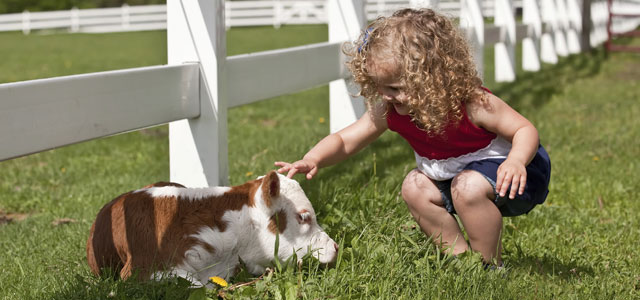
little girl and calf

VHS would like to thank everyone who has supported our ongoing efforts against cruelty to rodeo animals at the Calgary Stampede.

Another Stampede is over and two more animals are dead – a chuckwagon horse and a steer.  The steer is the third to die in the steer-wrestling event in the last five years. More than 80 animals have died at the Stampede since 1986.

It is frustrating for all those who care about the suffering of rodeo animals that the Stampede has refused our call to end calf-roping and suspend the chuckwagon race, pending a review by an independent panel of experts. These are reasonable requests that, if met, would help the Stampede evolve toward a more humane form of entertainment.  But they refuse to listen or compromise.  We are now also officially calling for an immediate end to steer-wrestling. Enough is enough.

While media reports focus on the deaths of rodeo animals, the other key issue is the blatant cruelty inflicted on them. They are subjected to fear, pain and stress for the sake of entertainment.  That is perhaps even more immoral that putting them at undue risk of injury or death.

The Stampede has made a number of changes aimed at improving the safety of the animals but these clearly have not gone far enough.  Animals are still dying every year.  It does show, however, that the Stampede feels the pressure of public opinion.  That pressure must be kept up until real, meaningful change happens.

This year, thanks to your support for our campaign, VHS was able to draw substantial media attention to animal cruelty at the Stampede.  More than 80 media outlets in Canada quoted VHS on the issue.  We also used social media to raise awareness of what really happens to rodeo animals and we enlisted the support of many more people in the fight against the abuse they suffer.  Our e-campaign encouraged more than 3300 people to email the Stampede directly to call for an end to calf-roping.

VHS is not giving up this fight.  Not as long as animals continue to suffer at the Stampede and in rodeos across the country.

We appeal to you to continue supporting our efforts, and the efforts of other animal groups, to keep the pressure on the Stampede. They must be held to account.  We can’t let the animals down.

Again, thank you to everyone who is standing with us against rodeo cruelty.


Categories
News/Blog rodeo

VHS member responds to Calgary Stampede

How one VHS member responded to the Calgary Stampede’s empty claims of animal welfare

Many VHS supporters took part in our e-campaign calling on the Calgary Stampede to end calf-roping.  Those who emailed the Stampede received this response, which did not satisfy many supporters.  One wrote back to the Stampede with the following answer to the Stampede’s explanations:

Thank you so much for your response. I do appreciate you taking the time to send out your comments.

However, if you want to work with facts you might want to update your information to show that MOST ranchers nowadays use other methods than roping calves for veterinary purposes. As you work closely with these ranchers and cowboys you will know, or should know, that most use corals and cattle squeezes. There is actually not as much roping going on as in the past. Most people have evolved and have thought of easier ways to do things. Of course, I say “most” because some are slow to change … or slow learners. It is also easier for the rancher to use these squeezes as they can attend to more cattle and calves in an assembly line rather than roping and catching each individual one. In fact, using a lasso is a bit of a dying art. But the people who have these roping skills could certainly come up with other ways of presenting their craft without using any animals, and I am sure an audience would enjoy that. But I do realize this means having to be creative instead of relying on old habits. Yes, change is hard sometimes.

And before you say I know nothing about ranching, you are right, I don’t know EVERYTHING about ranching, as I certainly have never run one because I’m a vegetarian, but I CAN speak about what I do know for a fact and what I have witnessed. Three years ago I moved from the Cariboo, which is very much a ranching area, where I did visit ranches. I can tell you with most certainty that every ranch that I had the pleasure of visiting, and sometimes sharing meals with some wonderful people who have run cattle for years, they will tell you that nobody has roped and slammed a calf to the ground since they’ve owned the ranch, despite some of them inheriting it from family. Now I am not saying NOBODY does it, but very few large ranches do it that way anymore. So, ah, I know this is embarrassing for you, and I truly do hate to point fingers, but this again proves how much you are behind the times. But that’s okay, we can move forward now that you have this information. I say that respectfully because maybe you just don’t know all the different ways things have changed.

Also — and I don’t have the actual figures in front of me but I’m sure with some work I can get them — if you’re talking about science, then knowing anything about speed, velocity and torque, which is studied a lot in the car/truck industry for safety standards for vehicles, you will know that anything traveling at a high rate of speed (a calf or steer running) and then suddenly being pulled back by their necks or even a rope around their bodies with force, enough force to knock them off their feet, DOES indeed cause pain. This is why there are seat belt laws. If you have a veterinarian who tells you differently, then he/she is either a lousy veterinarian or is being paid to say this for you. I would love it if you could give me his/her name so I can contact them directly. I think this is very serious that there are veterinarians out there who would openly say this doesn’t cause them any harm. I would like to follow up on this and would be happy to do a demonstration for them if them like.

In addition, cinching up on sensitive areas on bulls and horses to make them buck does cause pain, which is evident by them bucking. As I stare out at my two horses right now as I’m writing this, who are peacefully standing in the shade under a tree, I don’t see them bucking around the yard. So that certainly isn’t something natural that they do. So this bucking is something that is visible to everyone and anyone involved in this so called “sport” will tell you, “Yes, we inflict this pain to make them buck and then we release the strap,” as if relieving them of the pain that you wilfuly inflicted makes everything okay. So again, if a veterinarian is telling you differently, then truly I want to speak to these veterinarians as I believe that goes against the Veterinarian Association’s Code of Conduct about willingly inflicting pain and suffering on an animal. This is intentional harm to an animal and I am hopeful that with how hard some people are working to change the laws in Canada that every time this is done these people can be charged with animal cruelty. People are also working hard on getting these laws amended to be written in more “layman’s terms” so there won’t be any misinterpretation.

Now, I don’t want to end this without giving you some great suggestions moving forward. How about instead of spending so much time justifying cruelty to animals for money, how about you try to evolve and think of new ways to have a festival. You can still have your parades with horses in them. You can keep all the wonderful food, drinks and rides. You could have some beautiful animals that are well taken care of that kids can see and pets that are kept in shady areas and offered plenty of food and water. You can have fun events like having a bunch of these so-called “cowboys” pulling around wagons with guys or girls on them. You could have people running and then another person roping them and pulling them to the ground. Hmm, somehow I think there could be human rights issues there. But honestly, if it’s okay to treat animals that way without being charged then why not do it to people? More seriously, though, how about having some bulls running around and the object is, with sticky tape, a person runs up to the bull and tries to pin as many of their team’s ribbons to the bull’s body. That was a suggestion made by a friend of mine and I think it’s brilliant! Now there’s one with an element of danger for the guy that needsto prove something, yet no harm comes to the bull.

So I will end by saying your Stampede is outdated and this is why we’re trying to change things. The world is evolving. That’s what the human species does … or should do anyway. There is a huge drop in circuses with animals and rodeos WILL be next. While I am sure there are still people out there that think sweat shops or slavery is still okay as long as it is for someone’s entertainment and/or profit, there are more people that are working hard to change this. It took a while for the Civil Rights Movement, and in some areas, people are STILL struggling with this, but kindness and compassion are winning and will always win. I personally dedicate my life to ending cruelty to anything. So I can tell you that I am not going away and if all goes well you’re going to have me bothering you for years to come. But I would be more than happy to work with you rather than against you. Less stress for both of us.

If you would like any further humane suggestions for having fun please feel free to contact me as I can come up with a whole bunch more if you like. I’m always happy to help.

Oh, wait, one last thing, in case you didn’t know, nobody uses chuck wagons any more either.

Yours sincerely,
Jackie Thipthorpe

Categories
News/Blog Uncategorized

VHS news release on chuckwagon incidents

July 8, 2014

Vancouver Humane Society says chuckwagon race fundamentally unsafe
Man injured, horse dead in separate incidents at Calgary Stampede

Vancouver – The Vancouver Humane Society (VHS) says the Calgary Stampede should suspend its chuckwagon races after a man was injured and a horse was killed in separate incidents at the Stampede chuckwagon track today.

“We are extremely sad to hear about these incidents,” said VHS spokesperson Peter Fricker. “We hope the injured man makes a full recovery.”

VHS is calling on the Stampede to establish an independent panel of equine and veterinary experts to review the chuckwagon race to see if it can be made safer. “It’s clear that right now this event is fundamentally unsafe and should be suspended until a thorough review can take place,” Fricker said.

-ends-