Categories
News/Blog Promoted rodeo

Why does CBC Sports broadcast animal cruelty at the Calgary Stampede?


Ad calf
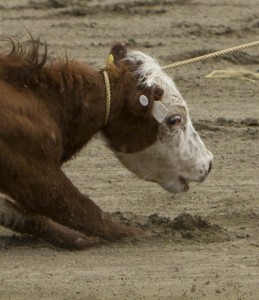
Calf being roped at Calgary Stampede. Photo: Jo-Anne McArthur

Tell CBC to stop broadcasting violence toward animals. Sign our petition!

CBC Sports has confirmed to VHS that it will once again broadcast the Calgary Stampede’s rodeo and chuckwagon races in July.  Despite severe budget cuts to its sports coverage, the CBC apparently is keeping its rodeo coverage intact.

VHS has explained to CBC Sports executives that rodeo is considered inhumane by virtually all major animal welfare agencies, including the Canadian Federation of Humane Societies and the national SPCAs of the United States, Australia, New Zealand and the United Kingdom (where it has been outlawed since 1934).

We have pointed out the obvious fact that roping animals to a sudden halt or twisting their necks until they are bent to the ground will cause fear, pain and stress.  We have asked them how this could possibly be considered entertainment.

Calf face crop Rodeo-99

We have also noted that the CBC’s television coverage of calf-roping ensures that the camera pans away from the calf as it hits the end of the rope.  That way, viewers will never see the calf violently jerked off its feet.  If what happens to the calf is not fit for the general public to see, how can the CBC condone the event by covering it?

We sent CBC Sports a link to this video showing a bull being kicked in the head at the Stampede.  We had no reply. Meanwhile, animals continue to be tormented for the sake of entertainment at the Stampede, like these ponies. The CBC doesn’t seem to want to face the truth about rodeo.

We’re asking Canadians who care about animals to let CBC Sports know how they feel about the Calgary Stampede broadcasts.  Please take a minute to sign our petition calling on Trevor Pilling, Head of Programming at CBC Sports, to stop broadcasting rodeo animal cruelty at the Calgary Stampede. 

More information on our Calgary Stampede campaign page.

Please share this post!

Categories
animal welfare compassion News/Blog rodeo

Thank you to the compassionate people who stand against animal cruelty at the Calgary Stampede


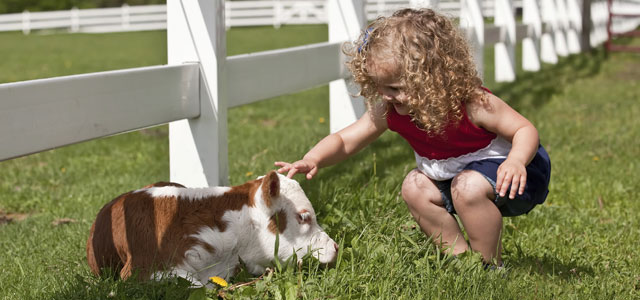
little girl and calf

VHS would like to thank everyone who has supported our ongoing efforts against cruelty to rodeo animals at the Calgary Stampede.

Another Stampede is over and two more animals are dead – a chuckwagon horse and a steer.  The steer is the third to die in the steer-wrestling event in the last five years. More than 80 animals have died at the Stampede since 1986.

It is frustrating for all those who care about the suffering of rodeo animals that the Stampede has refused our call to end calf-roping and suspend the chuckwagon race, pending a review by an independent panel of experts. These are reasonable requests that, if met, would help the Stampede evolve toward a more humane form of entertainment.  But they refuse to listen or compromise.  We are now also officially calling for an immediate end to steer-wrestling. Enough is enough.

While media reports focus on the deaths of rodeo animals, the other key issue is the blatant cruelty inflicted on them. They are subjected to fear, pain and stress for the sake of entertainment.  That is perhaps even more immoral that putting them at undue risk of injury or death.

The Stampede has made a number of changes aimed at improving the safety of the animals but these clearly have not gone far enough.  Animals are still dying every year.  It does show, however, that the Stampede feels the pressure of public opinion.  That pressure must be kept up until real, meaningful change happens.

This year, thanks to your support for our campaign, VHS was able to draw substantial media attention to animal cruelty at the Stampede.  More than 80 media outlets in Canada quoted VHS on the issue.  We also used social media to raise awareness of what really happens to rodeo animals and we enlisted the support of many more people in the fight against the abuse they suffer.  Our e-campaign encouraged more than 3300 people to email the Stampede directly to call for an end to calf-roping.

VHS is not giving up this fight.  Not as long as animals continue to suffer at the Stampede and in rodeos across the country.

We appeal to you to continue supporting our efforts, and the efforts of other animal groups, to keep the pressure on the Stampede. They must be held to account.  We can’t let the animals down.

Again, thank you to everyone who is standing with us against rodeo cruelty.


Categories
News/Blog rodeo

VHS member responds to Calgary Stampede

How one VHS member responded to the Calgary Stampede’s empty claims of animal welfare

Many VHS supporters took part in our e-campaign calling on the Calgary Stampede to end calf-roping.  Those who emailed the Stampede received this response, which did not satisfy many supporters.  One wrote back to the Stampede with the following answer to the Stampede’s explanations:

Thank you so much for your response. I do appreciate you taking the time to send out your comments.

However, if you want to work with facts you might want to update your information to show that MOST ranchers nowadays use other methods than roping calves for veterinary purposes. As you work closely with these ranchers and cowboys you will know, or should know, that most use corals and cattle squeezes. There is actually not as much roping going on as in the past. Most people have evolved and have thought of easier ways to do things. Of course, I say “most” because some are slow to change … or slow learners. It is also easier for the rancher to use these squeezes as they can attend to more cattle and calves in an assembly line rather than roping and catching each individual one. In fact, using a lasso is a bit of a dying art. But the people who have these roping skills could certainly come up with other ways of presenting their craft without using any animals, and I am sure an audience would enjoy that. But I do realize this means having to be creative instead of relying on old habits. Yes, change is hard sometimes.

And before you say I know nothing about ranching, you are right, I don’t know EVERYTHING about ranching, as I certainly have never run one because I’m a vegetarian, but I CAN speak about what I do know for a fact and what I have witnessed. Three years ago I moved from the Cariboo, which is very much a ranching area, where I did visit ranches. I can tell you with most certainty that every ranch that I had the pleasure of visiting, and sometimes sharing meals with some wonderful people who have run cattle for years, they will tell you that nobody has roped and slammed a calf to the ground since they’ve owned the ranch, despite some of them inheriting it from family. Now I am not saying NOBODY does it, but very few large ranches do it that way anymore. So, ah, I know this is embarrassing for you, and I truly do hate to point fingers, but this again proves how much you are behind the times. But that’s okay, we can move forward now that you have this information. I say that respectfully because maybe you just don’t know all the different ways things have changed.

Also — and I don’t have the actual figures in front of me but I’m sure with some work I can get them — if you’re talking about science, then knowing anything about speed, velocity and torque, which is studied a lot in the car/truck industry for safety standards for vehicles, you will know that anything traveling at a high rate of speed (a calf or steer running) and then suddenly being pulled back by their necks or even a rope around their bodies with force, enough force to knock them off their feet, DOES indeed cause pain. This is why there are seat belt laws. If you have a veterinarian who tells you differently, then he/she is either a lousy veterinarian or is being paid to say this for you. I would love it if you could give me his/her name so I can contact them directly. I think this is very serious that there are veterinarians out there who would openly say this doesn’t cause them any harm. I would like to follow up on this and would be happy to do a demonstration for them if them like.

In addition, cinching up on sensitive areas on bulls and horses to make them buck does cause pain, which is evident by them bucking. As I stare out at my two horses right now as I’m writing this, who are peacefully standing in the shade under a tree, I don’t see them bucking around the yard. So that certainly isn’t something natural that they do. So this bucking is something that is visible to everyone and anyone involved in this so called “sport” will tell you, “Yes, we inflict this pain to make them buck and then we release the strap,” as if relieving them of the pain that you wilfuly inflicted makes everything okay. So again, if a veterinarian is telling you differently, then truly I want to speak to these veterinarians as I believe that goes against the Veterinarian Association’s Code of Conduct about willingly inflicting pain and suffering on an animal. This is intentional harm to an animal and I am hopeful that with how hard some people are working to change the laws in Canada that every time this is done these people can be charged with animal cruelty. People are also working hard on getting these laws amended to be written in more “layman’s terms” so there won’t be any misinterpretation.

Now, I don’t want to end this without giving you some great suggestions moving forward. How about instead of spending so much time justifying cruelty to animals for money, how about you try to evolve and think of new ways to have a festival. You can still have your parades with horses in them. You can keep all the wonderful food, drinks and rides. You could have some beautiful animals that are well taken care of that kids can see and pets that are kept in shady areas and offered plenty of food and water. You can have fun events like having a bunch of these so-called “cowboys” pulling around wagons with guys or girls on them. You could have people running and then another person roping them and pulling them to the ground. Hmm, somehow I think there could be human rights issues there. But honestly, if it’s okay to treat animals that way without being charged then why not do it to people? More seriously, though, how about having some bulls running around and the object is, with sticky tape, a person runs up to the bull and tries to pin as many of their team’s ribbons to the bull’s body. That was a suggestion made by a friend of mine and I think it’s brilliant! Now there’s one with an element of danger for the guy that needsto prove something, yet no harm comes to the bull.

So I will end by saying your Stampede is outdated and this is why we’re trying to change things. The world is evolving. That’s what the human species does … or should do anyway. There is a huge drop in circuses with animals and rodeos WILL be next. While I am sure there are still people out there that think sweat shops or slavery is still okay as long as it is for someone’s entertainment and/or profit, there are more people that are working hard to change this. It took a while for the Civil Rights Movement, and in some areas, people are STILL struggling with this, but kindness and compassion are winning and will always win. I personally dedicate my life to ending cruelty to anything. So I can tell you that I am not going away and if all goes well you’re going to have me bothering you for years to come. But I would be more than happy to work with you rather than against you. Less stress for both of us.

If you would like any further humane suggestions for having fun please feel free to contact me as I can come up with a whole bunch more if you like. I’m always happy to help.

Oh, wait, one last thing, in case you didn’t know, nobody uses chuck wagons any more either.

Yours sincerely,
Jackie Thipthorpe

Categories
animal welfare cruelty News/Blog rodeo

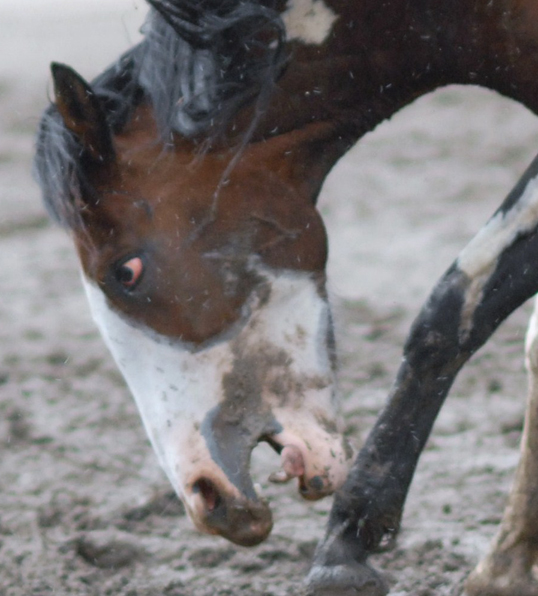
Does this horse look happy?

DSC_0073cr

The photo above is of a bucking horse at the Calgary Stampede. Look closely at the horse’s face in the photo below. 

JMDSC_0073crsmall

Can anyone honestly say they think the horse is enjoying the experience?

Rodeo promoters say that horses in the bareback and saddle-bronc events love to buck, that it’s natural, that the horses are “born to buck.”  It’s true that they are bred for a genetic predisposition to buck – an entire industry has been established to churn out horses that buck.  Yet it is still necessary to tighten a cinch strap around the horse’s flank area. If this kind of bucking is so natural to horses, why are special breeding programs and cinch straps necessary? 

Recently, a bucking horse died at an Alberta rodeo.  The rider described the horse as a “mean sucker.”  Who made him a mean sucker? Breeders and rodeo riders, that’s who.

And when horses still refuse to buck, watch what happens.

And when bucking horses are not good enough for the rodeo, this is what happens.

Why would real cowboys breed horses that are almost impossible to ride?  They wouldn’t be much use on a real ranch would they?  They are only useful for “entertainment” in the cruel circus called rodeo.


Photos: Jo-Anne McArthur


Categories
animal welfare cruelty News/Blog rodeo

Thank you to everyone who fought against cruelty at the Luxton rodeo

VHS - Victoria Times Colonist Ad -jpegcrop

The campaign against animal cruelty at the Luxton rodeo in Langford, B.C. has gained an unstoppable momentum thanks to the support of compassionate citizens

.


Many people on Vancouver Island and across B.C. supported the campaign against cruel rodeo events in Langford, near Victoria.  VHS would like to thank everyone who supported this effort.

VHS partnered with Victoria Citizens Against Rodeo Events (VCARE) and had the support of the BC SPCA, ensuring a strong message was sent to the rodeo, its sponsors, the public and Langford City Council.  We also gained some celebrity support from Island native Pamela Anderson, who tweeted her opposition to rodeo cruelty.

VHS - Victoria Times Colonist Ad - small
VHS’s full-page ad in the Times-Colonist

We reached many thousands of people with our message, using news media, social media and advertising (including a powerful full-page VHS ad in the Victoria Times-Colonist). VCARE campaigned hard locally and organized protests during the rodeo, attracting more media attention and getting further support.

Many hundreds of people sent emails and letters, signed petitions, attended demonstrations and used social media to voice their concerns for rodeo animals.

As a result, ten local businesses dropped their sponsorship of the rodeo and Langford City Council finally agreed to hear a presentation from VCARE organizer (and nearby Colwood resident) Melissa de Meulles, which called on the council to enact a bylaw banning cruel rodeo events.

The message has been heard and it is only a matter of time before compassion triumphs over cruelty.

VHS plans to keep campaigning on this issue.  We hope we can count on your support as we continue to fight for rodeo animals, who are subjected to pain, fear and stress for the sake of entertainment.

Again, thank you to all the compassionate people who helped us speak on behalf of these vulnerable animals.

Categories
animal welfare cruelty News/Blog rodeo

VHS ad targets cruelty at Luxton rodeo

VHS - Victoria Times Colonist Ad - small

This is the ad VHS ran in the Victoria Times-Colonist newspaper as part of our campaign against animal cruelty at the Luxton rodeo in Langford B.C., near Victoria.

Please take action to support our campaign.

.

Categories
animal welfare cruelty News/Blog rodeo

Does Heart have a heart for rodeo animals?

calf ropingcrop

Animal advocates in North America and around the world have been thrilled with the decision by a number of music industry artists to cancel concerts at SeaWorld, the controversial marine park in Florida.

The cancellations were sparked by the stunning impact of the film Blackfish, which exposed the suffering of captive Orca whales at marine parks.  Online petitions and social media postings targeted the acts who had signed on to play at the park.

One act that announced it would not appear at SeaWorld is the veteran rock band Heart. The decision, which came amidst online pressure from fans, was announced in a tweet stating that: “Heart has chosen to decline their forthcoming performance at SeaWorld on 2/9/14 due to the controversial documentary film ‘Black Fish’.”

However, Heart is currently set to appear at the San Antonio Rodeo, which, like all rodeos, will feature the inhumane treatment of animals for entertainment.  Can anyone spot the double standard?

It’s great if people in the entertainment industry are going to start including animal welfare concerns in decisions about where they will and will not perform.  But it would be nice if they were consistent.

Perhaps Heart fans who care about animals will make their feelings known to the band.

.

.


Categories
animal welfare cruelty News/Blog rodeo

If you hate this…

rodeo cruelty

… help us fight it.

.


The Vancouver Humane Society will be carrying its campaign against rodeo cruelty into 2014.  If you’re opposed to abusing animals for the sake of entertainment, we hope you’ll support us.  

Thank you to everyone who helped with our 2013 campaign.

.

.   VHS-login-logo   .

Categories
animal welfare compassion cruelty News/Blog rodeo

Majority of BC residents oppose rodeos, trophy hunts and killing animals for fur

Calf-roping is cruel

A majority of British Columbians are opposed to rodeos, according to a poll by research company Insights West.

The poll found that 56% of B.C. residents are opposed to rodeos, with only 38% in favour of them.

The poll also revealed that large majorities of people in B.C. are opposed to trophy hunting and killing animals for fur.

“Across British Columbia, only one-in-ten residents (10%) are in favour of hunting animals for sport, while 88% are opposed to the practice. Killing animals for their fur is endorsed by just 15% of British Columbians, and rejected by 81%,” said Insights West’s press release on the poll results.

Insights West has also published a more detailed report on the poll findings.

Categories
animal welfare cruelty News/Blog rodeo

VHS response to horse death at Stampede

July 13, 2013

VHS is extremely sorry to hear of the death of another horse at the Calgary Stampede chuckwagon races.

It is getting harder for the public to believe that these deaths are just coincidence or bad luck. There is something inherently unsafe about the race.

Nothing the Stampede has done has stopped horses dying.

VHS is reiterating its call for the Stampede to suspend the chuckwagon race and have an independent panel of experts review the event to determine if anything can be done to make it safe.

More than 50 horses have died at the Stampede since 1986.

-ends-