Categories
News/Blog Uncategorized

Hens to end miserable lives as glue

The sticky problem of making money from old hens finally has a solution. They’re going to be turned into glue.

According to a story in the Western Producer, researchers at the University of Alberta say spent hens, which are seen as waste in the industry, can be used to produce wood glue. There’s a “big market” say the researchers.

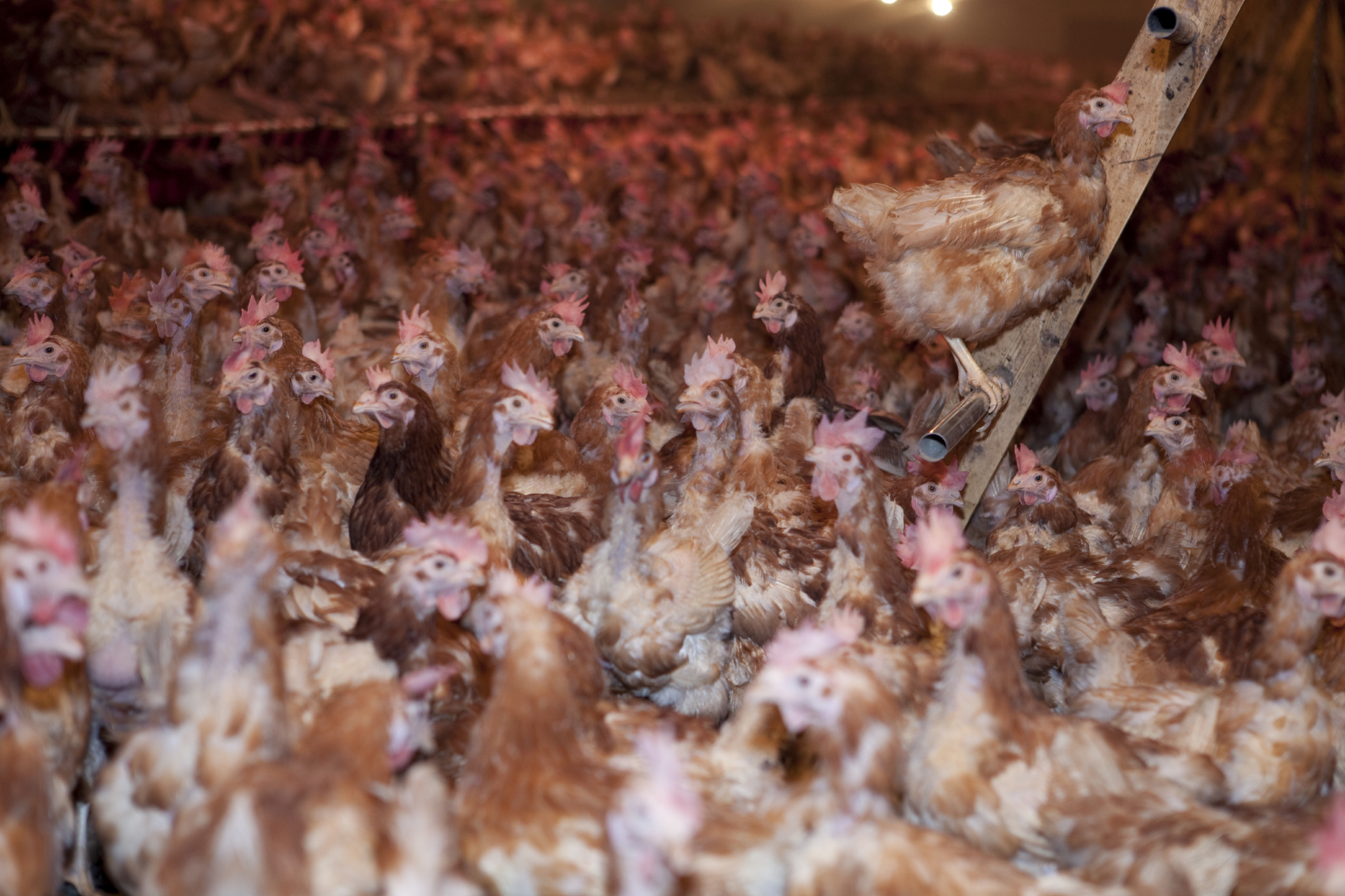
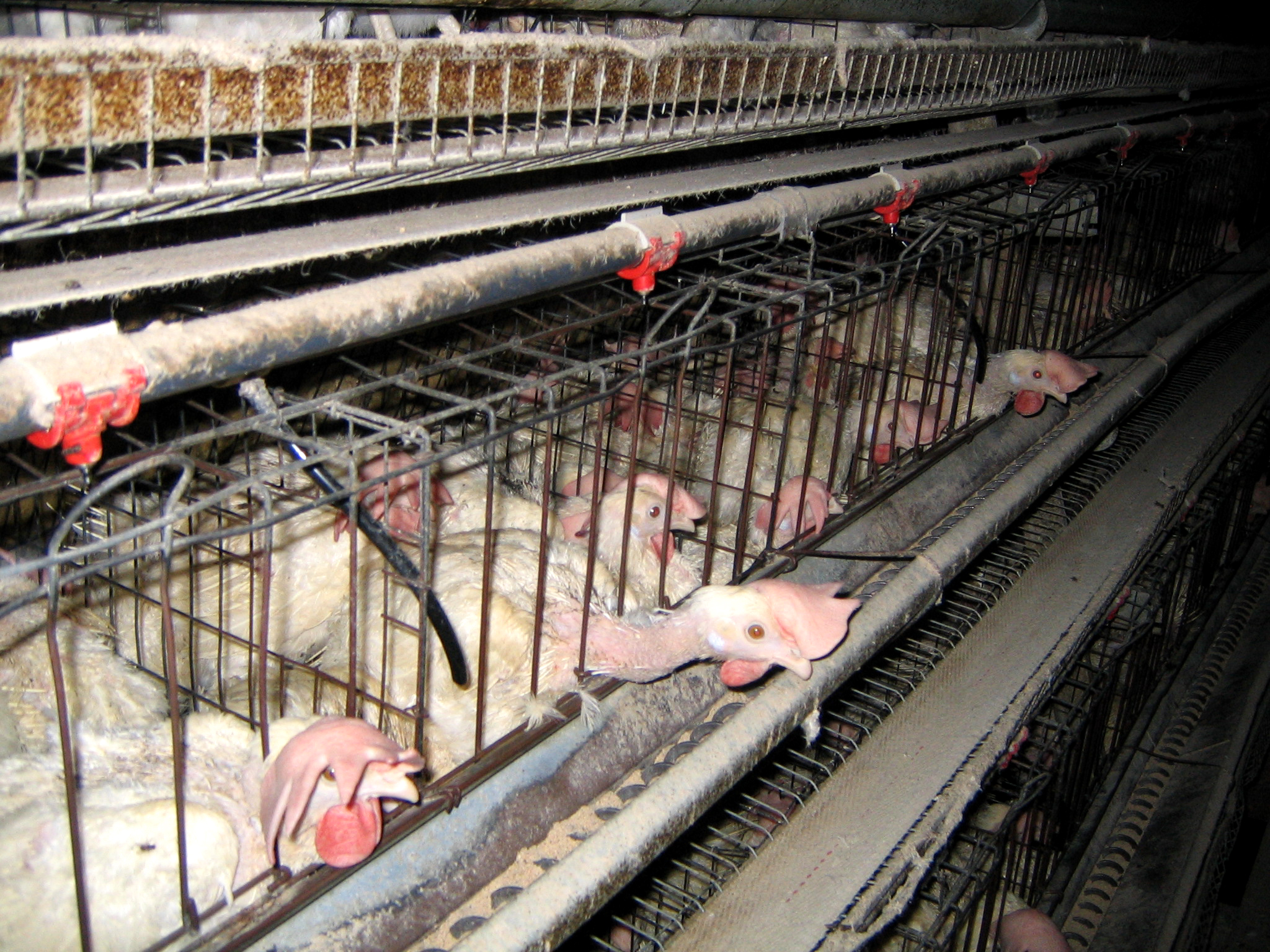
In Canada at any given time, there are approximately 28 million egg-laying hens. Most of them spend their short lives of 12 to 24 months in wire cages (called battery cages), with each hen having less room than a sheet of paper. The hens are crammed five to seven to a cage with no room to express any natural behaviours such as nesting, wing-flapping, dust-bathing or foraging. The frustration from such extreme crowding causes the birds to cannibalize each other. Industry’s answer to this problem is to cut off the hens’ beaks with a hot blade or a laser, which has been scientifically proven to cause extreme pain.

Until now, the bodies of hens that are no longer considered productive (spent hens) have been worthless, so much so that even transporting them to slaughter was uneconomical. On-farm killing and composting has been encouraged, using methods such as gassing, macerating and electrocution.

There are significant welfare problems with both transport and on-farm slaughter. Transportation of farm animals is poorly regulated in Canada for any species, and the vulnerability of spent hens means they are particularly at risk. Their bones are fragile due to excessive egg production and lack of exercise – between 24% and 29% of laying hens have broken bones by the time they reach the processing plant, according to a 1989 study. The battery cages in which they spend their lives are poorly designed, so even removing them from the cages can cause painful injuries, including fractures. Because of their low economic value, each bird is not treated with care and ‘catchers’ can be extremely rough when removing hens from cages and cramming them into transport drawers.

The trip to the slaughterhouse is fraught with yet more misery, including inclement weather, long transport distances, vehicle vibration, etc. Once there, stressed and suffering, they are again pulled from the containers and hung upside down to have their heads dragged through an electrified water bath (called stunning). Too many birds survive the stunning and are fully conscious as their throats are slit.

While on-farm slaughter addresses the problems with transport, welfare is still a serious issue. Because farms are away from the city, the public, including authorities tasked with oversight of animal welfare, does not see what’s happening. All of the killing methods, including gassing, maceration, and electrocution, can cause terrible suffering.

An improvement in economic value is not likely to result in increased welfare. Spent hens will continue to suffer until the public accepts the painful reality of their lives and deaths.  Their suffering can be reduced by purchasing only cage-free eggs or by cutting out eggs altogether.

Categories
News/Blog Uncategorized

Big Ag would benefit from neutered provincial SPCAs

Two disturbing pieces of proposed legislation, one in Ontario, the other in B.C., appear to be aimed at reducing the powers of SPCA constables to protect animals.

In B.C., Bill 24 would see responsibility for hearing the appeals of individuals whose animals have been seized because of distress, move from the B.C. Supreme Court to the BC Farm Industry Review Board (BC FIRB).  This would include both farm and companion animals.  The proposal has caused widespread consternation, with the BC SPCA arguing that it would result in cases taking longer to resolve.  The society has expressed “deep concerns that, based on the recorded history of BC FIRB decisions, the earliest that appeals will be heard is six months and in many cases, it may take much longer.”  Consequently, the BC SPCA has called on the public to oppose the bill.

VHS agrees with the BC SPCA’s position.  VHS board director Rebeka Breder, a lawyer specializing in animal law, told the Georgia Straight: “The bottom line is that this does not help animals in any way or further the protection or welfare of animals in British Columbia. If anything, I find that it impedes it.”

Meanwhile, in Ontario, Bill 47 is proposing to give the province’s agriculture ministry the power to enforce farm animal welfare instead of the OSPCA.  The society says the bill “would cause Ontario to hold the worst Animal Welfare legislation in Canada.”

It is an odd coincidence that two pieces of provincial legislation are proposing to strip powers from the courts or SPCAs (whose sole purpose is to protect animals) and hand them over to provincial agriculture bodies.  The current membership of the BC FIRB includes farmers but no one with specialist experience in animal welfare (let alone companion animals).  The Ontario ministry of agriculture’s vision statement is for “Thriving rural Ontario, agriculture, and food sectors”, while the OSPCA’s vision highlights  “making a measurable difference for animals.”   It would no doubt suit the agriculture industry to have bodies whose focus is not animal welfare overseeing the treatment of livestock instead of professional animal welfare investigators.

In the United States, powerful lobbyists for the agriculture industry have succeeded in convincing legislators in Iowa to outlaw investigations of farm animal cruelty by animal advocates working undercover as employees.  Several other states are considering such “Ag-gag” laws.  Such proposals have yet to emerge in Canada, but it is clear that public concern over factory farms and animal welfare has alarmed the intensive agriculture industry.

Animal advocates should be vigilant and ensure that the legislative moves in B.C. and Ontario do not allow Canada’s Big Ag  to keep its treatment of farm animals away from the scrutiny of animal cruelty investigators and a concerned public.


Categories
News/Blog Uncategorized

Horses die for our entertainment

News that the HBO series ‘Luck’ has been cancelled after three horses died during production, has put the spotlight on the horse racing industry just as a number of horses have been killed in high profile races.

The deaths of five horses in two days at the U.K.’s famous Cheltenham Festival has outraged animal welfare advocates, including the RSPCA.  Meanwhile, it has been reported that 16 horses have died in the last 14 weeks at New York’s Aqueduct Horse Track, prompting the State’s Governor to call for an independent inquiry.

Of course, race horse deaths are nothing new.  Last year, it emerged that 20 horses had died within as many months at the Hastings Park Racecourse in Vancouver.

And horses die regularly in other forms of equine entertainment, such as rodeos.  More than 50 horses have died at the Calgary Stampede since 1986,. This includes two at last year’s Stampede, as reported by the Calgary Herald ‘s pathetically upbeat headline: Visitor numbers up, horse deaths down as Calgary Stampede ends’ (Six died the year before.)

Supporters of these spectacles should face up to the fact that animals are dying so that they may be entertained.


Categories
News/Blog Uncategorized

Red meat is bad, but don’t switch to chicken or fish

Eating red meat increases the risk of premature death says a major new report by the Harvard School of Public Health.

This latest study showing that red meat consumption is a health hazard will likely be welcomed by opponents of factory farming. After all, anything that potentially reduces the demand for meat should be good news for animal welfare, the environment and human health. Unfortunately, it’s not that simple. Like many studies showing the health risks associated with eating red meat, this one recommends switching to alternatives such as fish or poultry – options that are fraught with environmental, sustainability and animal welfare problems.

VHS launched an Eat Less Chicken project specifically to counter suggestions that chicken is a more acceptable choice than red meat. In terms of pound-for-pound animal suffering, eating poultry is among the worst options, as billions of chickens are inhumanely raised and slaughtered to provide relatively small amounts of meat. While poultry production is not as environmentally damaging as, say, intensive pig farming it still has considerable negative impacts.

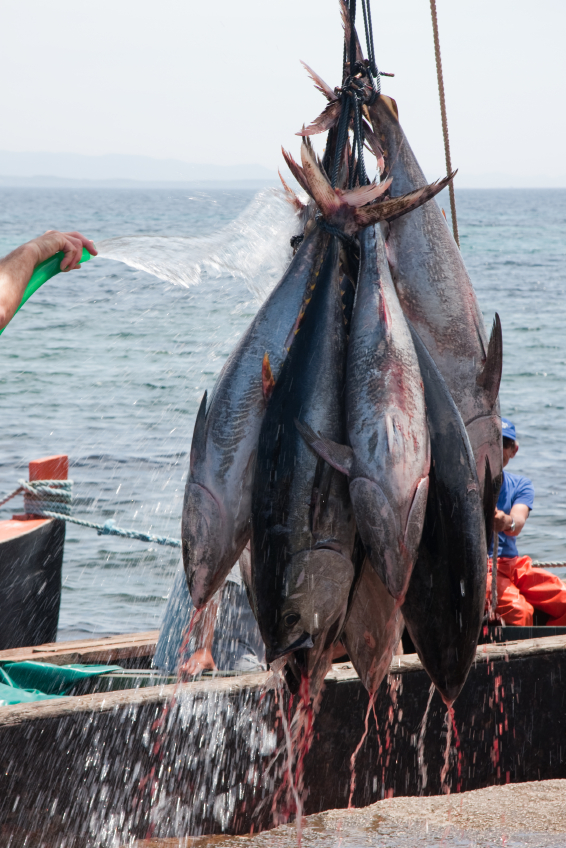
If substantial numbers of people were to start replacing red meat with fish, it would likely further devastate global fish stocks, three quarters of which are already either fully or over exploited.

The simple truth is that moving toward a plant-based diet is the best way to reduce our impact on the environment, improve our health and prevent animal suffering.

For more information see our Eat Less Meat webpage.

Categories
News/Blog Uncategorized

Gosha needed help and we were there

Gosha lost his sight in one eye and needs medicine for allergies and a chronic a chronic eye condition. Photo credit: Cynthia Mollison


by Debra Probert, VHS Executive Director

Gosha, a handsome ginger with white markings, was rescued as a tiny kitten in Jerusalem, where homeless cats number in the tens of thousands. Gosha’s guardian had moved there from Canada and was appalled at the sheer numbers and the terrible condition of Israel’s ‘street cats’.

It was shocking to learn how the cats must forage for food in dumpsters, and are often considered, and treated like, vermin. As I look around at my five rescued cats, dozing peacefully, I can’t imagine them living in the streets and eating garbage every day.

Gosha was pulled from under a bus; a dirty, pathetic little ragamuffin who barely resembled a kitten. When found, both of his eyes were swollen shut; scarred, misshapen and sightless. After massive doses of antibiotics and hours of veterinary care, he was turned over to his new guardian, who was told to isolate him for 10 days. That 10 days changed her life, as she found Gosha was, in her words, “so incredibly cute, smart and brave, and so appreciative.”

When Gosha’s guardian found herself back in Canada and out of work, she was unable to pay for food and medication for this little guy, who has survived so much. He only sees out of one eye and has a chronic eye condition and allergies, requiring medications each day. But with his meds, he’s healthy and happy.

Gosha was rescued as a kitten in Israel.

Everyone needs a little help now and then, and that’s why VHS here – to offer a helping hand that will enable beloved companion animals to stay in their homes, rather than be turned over to a shelter, or worse, for the lack of a few dollars. In fact, our McVitie Fund was established by one of our supporters in memory of a special ginger boy named McVitie. When McVitie became ill, his guardian couldn’t help but think about what it would be like if he couldn’t look after him. He wanted to ensure that others would get the help they needed for their animal friends in an emergency.

My five cats are all rescued and all have medical issues. One of them, Nat, is curled up on my lap as I write. He keeps nudging my elbow so that I’ll stop and stroke him. He gazes up at me with unconditional love and trust. I can’t imagine what I would do if I found myself without the means to buy his food and medicine. Will you help bolster our fund by donating today?

Gosha, safe and happy at home. Photo: Cynthia Mollison

Our emergency help program is only one of many ways we help animals. Elsewhere on our website, you can learn about our work for animals abused at the Calgary Stampede, for egg laying hens and for captive and performng animals. We’ve been tremendously successful in changing attitudes about the treatment of animals.

Because of your support, VHS has grown into a force to be reckoned with, because we speak for you, and you care deeply about what happens to animals. Please help us continue to be there for animals who so desperately need our help.

Categories
News/Blog Uncategorized

One option for keeping cats safe at night

Custom-built cat enclosure provides indoor/outdoor access

Nicholas Read, a long-time VHS supporter, had a problem.  Actually, two problems: Leo and Henry, his two very demanding (but adorable) ginger cats.

Both were accustomed to the outdoor life before Nick adopted them (Henry was semi-feral) and they have remained fiercely protective of their right to roam.  But, as Nick lives on Vancouver’s west side he was worried about the dangers from urban wildlife.

After a lot of late-night worrying about when the “boys” would get home, Nick hit on the idea of building a pen on his deck, adjacent to his apartment window, that would allow Leo and Henry to jump out and in as they wished throughout the night.  While various ready-made cat pens can be found on the Internet, Nick wanted something custom-made to ensure his cats could have safe, easy indoor/outdoor access, with an enclosure that was hard-wearing and aesthetically pleasing.

Fortunately, Nick discovered that one of his friends was a talented woodworker who enjoys challenges.  Scott McLean, a college instructor, jumped at the opportunity to design and build a suitable enclosure.  For Nick, it couldn’t come too soon.

“Leo and Henry have been going outside for years, so it’s impossible to keep them in all the time, he says. “But I worry about coyotes and birds. I worry about coyotes killing them, and them killing birds. So it seemed a good compromise to ask Scott to build an enclosure. This way they can still go out at night and be safe. And when I’m away and they have to be kept inside, they can still get fresh air.”

Scott describes his approach to the task: “When designing the pen I considered its function, but also how it would fit into Nick’s deck environment.  I appreciated that the cats had their needs, but also was mindful of avoiding a situation where it overwhelmed his deck.  In Nick’s case a slanted front was used to lessen the vertical space that was taken up by the pen, which added interest and gave it a less obstructive look, all without compromising the function for the cats.  The design of Nick’s pen uses a cedar wooden frame with the metal mesh as the filler.  I think the use of wood gives the enclosure a polished look and takes the industrial edge off.  It also fits in well with the wooden deck, planters and a garden environment.”

Scott also took in a number of practical elements. First, the wood needed to be protected from the weather.  Mitred joints were used in the construction so that the end grain of the wood was not exposed and there was less chance that the wood will soak in water and rot prematurely.  The bolts and hardware are all weather resistant and caulking is used to prevent water from pooling and rotting out the wood.

Second, the enclosure had to be relatively easy to assemble and disassemble.  Only two wrenches are needed to assemble the pen and it is constructed of several panels, each of which is not too heavy or awkward to move by oneself.  The construction of the pen in several smaller panels also means that it can be stored without taking up too much space and can be moved to different locations without the need of a large truck.

Nick was thrilled with the result, but would the cats approve?  Leo immediately jumped in to investigate and now enjoys his new outdoor rec-room.  Henry took some coaxing (actually a gentle push) but has also given the enclosure the paws-up.

Scott enjoyed the project so much, he would welcome the opportunity to help others by making specially-built enclosures available to demanding cats on the Lower Mainland.

“The cat enclosures are fully custom,” he says. “Any shape or size is possible, which is a great advantage since we all have different spaces and needs.  If a customer was looking to start small and then add on in the future, this desire could be incorporated into the original design.  There are many choices out there in terms of metal mesh and wood.  The selection of the materials would be made in consultation with the customer, but also in consideration to the environment in which the enclosure would live.  Also, things like sustainably harvested wood can be used if this is important to the customer, as it was in Nick’s case.”

Cost of the enclosures is dependent on the size and the materials selected.  Enclosures similar to Nick’s cost approximately $900 plus tax.  Scott McLean can be contacted at scottdouglasmclean@gmail.com


Categories
News/Blog Uncategorized

Bill the caring cat

Bill is a great help to others but this time he needed help

All cats are special in their own ways, but there’s one feline VHS came across who’s putting his exceptional qualities to good use.

His name is Bill and he belongs to the Chrysalis Society, a Vancouver non-profit helping women recover from substance abuse.  Chrysalis contacted VHS because Bill had a painful fractured tooth that needed extracting and the society was strapped for funds to pay the vet costs.

In talking to the people at Chrysalis we discovered that Bill plays an important role in the lives of the women the society supports.  He lives in one of the Chrysalis houses, where up to nine women are accommodated and where Bill has quite a therapeutic effect on the clients. Rayma Hagan, a housing manager at Chrysalis, told us about Bill’s role since he arrived six years ago:

“Bill quickly demonstrated that he was a working cat with an intuition that enabled him to connect at a heart level with each woman that he came in contact with.  He spends extra time with women when he senses their pain.”

And Rayma says Bill’s job is not without its perks: “Some of Bill’s favourite pastimes are going for rides in the car, greeting the neighbours, hanging out/snuggling with the women.  He does love to sit on your shoulder, especially at Christmas while setting up the tree, or while riding slowly on your bike down the lane way. Bill is a pleasure to have around. Everyone loves him!”

Bill’s tooth extraction went well and he’s back on the job.  We’re always pleased when we can ensure an animal gets the care he or she needs, but it was especially gratifying to help one who does a lot of caring himself!

Categories
News/Blog Uncategorized

Sled dogs always at risk

Following the revelations in February about the horrific slaughter of 56 sled dogs in Whistler B.C., various defenders of the sled dog industry insisted that it was an “isolated incident’ and that the industry’s reputation should not be tarnished by the actions of one “bad apple.”

While the Whistler massacre may be an extreme example, there are certainly other instances in which dogs have been put in danger because of the failures of sled dog operators.

Most recently, 37 sled dog were left homeless when an operator in Quebec went out of business.  A former employee tried to care for them but ended up living in a tent in the woods with the dogs tied to surrounding trees.  Animal welfare groups are now trying to find homes for the dogs.

In 2009, also in Quebec, nearly 100 malnourished sled dogs, some blind and many pregnant, were seized by the SPCA from a sled dog business in financial difficulty.

In the same year, about 100 starving sled dogs were seized from an operator in Colorado.  Eight dogs were found dead.

Back in B.C., 34 badly-neglected huskies were seized from a sled dog business in Tumbler Ridge in 2008.

Those are just the incidents that get reported.  Who knows what happens at the many sled dog operations in isolated rural locations that are rarely subjected to scrutiny?

These cases support the Vancouver Humane Society’s contention that whenever a business depends on exploiting animals for profit, those animals will be put at risk.  When equipment is obsolete it can be sold or dumped.  When employees are no longer needed they can, at worst, be laid-off.  When animals are surplus to requirements they become commodities with no rights, leaving them vulnerable to methods of disposal that are at the whim of business owners.

That’s why VHS called for a ban on sled dog operations following the Whistler massacre.  The B.C. government rejected that option and instead imposed greater legal penalties for animal cruelty in the province.  It also established a “working group” to produce a new “standard of care” for sled dogs in B.C.  VHS is urging the working group to at least recommend a ban on the tethering of sled dogs for long periods and take other measures to protect their welfare.  VHS’s full submission to the working group can be seen here.

The sled dog working group is due to report its recommendations to the Minister of Agriculture on September 7th.  VHS, and, no doubt, the public, await the report with interest.


Categories
News/Blog Uncategorized

Smart pigs amaze us but we eat them anyway

It’s common to hear North American animal lovers express their horror at cultures that find eating dogs or cats acceptable.  And, indeed, it is repulsive to see these sensitive, intelligent animals abused and raised for slaughter.

But two recent stories in the news highlight a double standard in attitudes about animals killed for food – at least for those who eat meat.

Media in the United Kingdom and around the world have been raving about the accomplishments of Louie the pig, who has amazed and amused the British public by learning how to compete in dog agility competitions.  Louie has demonstrated intelligence and trainability on a par with his canine friends.

Meanwhile, two Dutch pigs called Rudi and Felix, are making a claim to fame for their therapy work in seniors’ homes – a role also usually associated with service dogs.  Again, media have lapped up the heartwarming story of clever and gentle pigs showing off their talent.

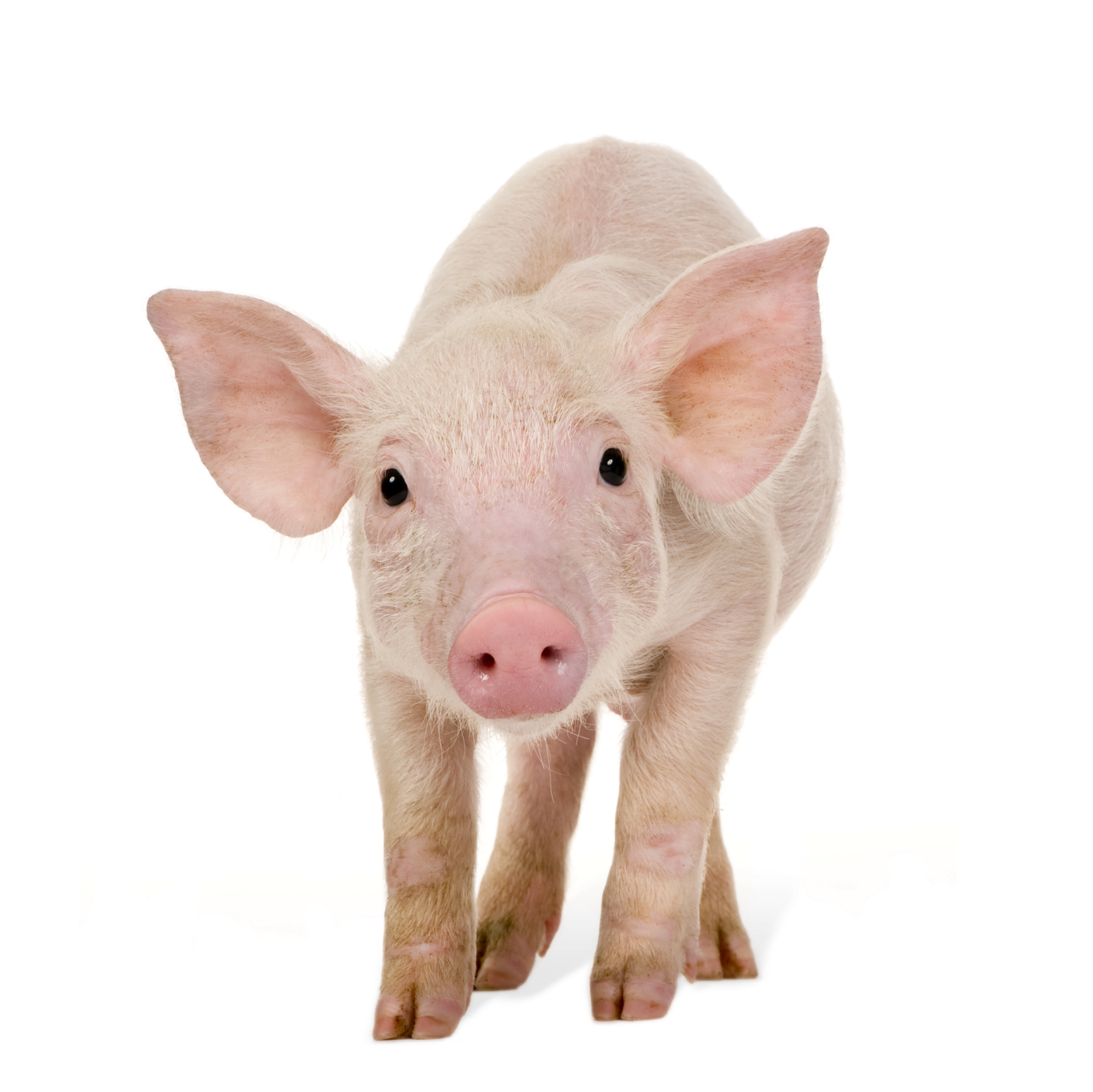
Of course, the intelligence of pigs has been well-established in scientific studies, and, like other animals, they can feel pain and suffer.

Yet pigs endure some of the worst treatment of animals raised for food. Hog barns house up to 5,000 pigs in crowded pens. Stress from overcrowding creates aggression and boredom, so most pigs have their tails cut off to prevent tail-biting.  Breeding sows are confined for almost their entire reproductive lives in stalls that are just slightly bigger than the sows themselves. They eat, sleep, and defecate in the same space; their manure falls through slatted floors to a cesspool beneath.

So the next time you hear someone who loves bacon telling you how appalled they are about dogs being eaten in Korea, remind them of how we abuse, slaughter and eat intelligent, sensitive pigs by the million right here at home.