Categories
News/Blog Uncategorized

Inhumane transport of horses to Japan

The Canadian Horse Defence Coalition has released video of Alberta horses being inhumanely shipped to Japan for slaughter.  CHDC has issued the following press release:

FOR IMMEDIATE RELEASE

CFIA Fails Again at Enforcing Regulations for Live Horse Exports to Japan

October 18, 2012, Calgary, AB – Footage taken of Alberta horses being shipped live to Japan for slaughter shows that the Canadian Food Inspection Agency (CFIA) is violating their own standards set forth in the Health of Animals Regulations. The Regulations prohibit the transportation of all animals under conditions that would expose the animals to undue injury or suffering.

The 2012 footage shows horses in a feedlot being loaded with electric prods into transport trucks, transported to the Calgary International Airport and being crated in wooden crates so small they cannot stand in their natural position, in violation of Section 142 of the Health of Animals Regulations (“No person shall transport or cause to be transported animals in a railway car, motor vehicle, aircraft or vessel unless each animal is able to stand in its natural position without coming into contact with a deck or roof.”) Some horses were even being crated together, even though it is in violation of Section 141.8 of the Health of Animals Regulations, which states that horses over 14 hands high need to be segregated for air transport.

Canadian draft horses from various producers are routinely live shipped to Japan for slaughter from the Calgary and Winnipeg International Airports. On arrival in Japan, horses are transported to a feedlot; once they reach desired weight they are slaughtered for horse sashimi, which is considered to be a delicacy in Japan. The meat must be eaten within three days because it is highly perishable; according to the 2008 Alberta Horse Welfare Report, each Canadian horse is worth approximately $20,000.

“Footage shows large horses overcrowded (not segregated) into wooden transport crates, often unable to stand in their natural position for a long journey to Japan, in clear violation of two of the CFIA’s own regulations”, says Sinikka Crosland, executive director with the Canadian Horse Defence Coalition. These transport conditions not only are inhumane but also are likely to lead to injuries and potential deaths during transport.

“Once again we see CFIA turn a blind eye and choose to protect industry profits rather than do their job”, says Crosland. “The CFIA’s mandate is both to protect human health and monitor animal welfare. We recently have seen them fail to protect the public from contaminated meat and now we have clear evidence of them failing to follow their own regulations when it comes to the live transport of horses for meat.”

– 30 –

To learn more about the Canadian Horse Defence Coalition: http://defendhorsescanada.org

Categories
News/Blog Uncategorized

Pipeline threat to precious wildlife

Grizzly in the Great Bear Rainforest. Photo by Ian McAllister, Pacific Wild

Why VHS opposes the Northern Gateway pipeline 

British Columbia’s Great Bear Rainforest is home to an abundance of wildlife.  Kermode bears (spirit bears), Grizzly bears, wolves, whales, salmon and many other species depend on the forest and its pristine waterways and coastline for their survival.

The proposed Northern Gateway pipeline will deliver oil to giant tankers plying the rugged coastal waters of the Rainforest, putting the welfare wildlife at risk.  For that reason, VHS supports the efforts of environmental groups opposed to the pipeline.  We urge our supporters, other animal welfare groups and animal lovers everywhere to do the same.

Photographs and video footage of the Great Bear Rainforest and its wildlife show just what is at stake in the fight to stop the pipeline.  They show just how unique the forest is and how precious the animals are.

Below are some links to more videos

Spirit bears of the Rainforest (Pacific Wild video)

Wolves in the Rainforest (Pacific Wild video)

This is not an Enbridge animation (Shortt and Epic video for Dogwood Initiative)

Some organizations opposing the Northern Gateway pipeline (each with recommended actions):

Pacific Wild

The Dogwood Initiative

Greenpeace Canada

Raincoast Conservation Foundation

Living Oceans

Sierra Club BC

West Coast Environmental Law

Forest Ethics

Nature Canada

Pipe Up Against Enbridge

Categories
News/Blog Uncategorized

Happy ending for Scooter

Scooter’s on the mend


Scooter, a handsome tabby boy, had just been to the vet to be neutered. The vet suggested he wear a cone until he healed, so he wouldn’t open the wound, but when Scooter got home, he was disoriented from the cone and fell off his scratching post. His family rushed him back to the vet, who diagnosed a dislocated hip. Because the family is on a severely limited income, there was no money to help their precious cat, and with the three children in tears, they desperately called VHS for help.

Thanks to our McVitie Fund and a challenge grant from the Irene Joy Stewart and Florence Maud Shedden Endowment for Domestic and Wild animal Welfare, Scooter was successfully treated and is now back home and on the mend. His guardian had this to say: “My wife, myself, and our three kids give our thanks! We can’t thank you enough for helping to keep a beautiful animal alive and enjoying a full life. Thank you, Thank you, THANK YOU!”

And thank you to all of you who support VHS – and there’s still time to have your donation doubled!

Categories
News/Blog Uncategorized

The truth behind the Canadian Wildlife Federation


The Canadian Wildlife Federation (CWF) is categorized as an animal protection charity by the Canada Revenue Agency. But just what is the CWF protecting animals from when the organization is deeply rooted in the hunting and fishing community?

In fact, the CWF comprises twelve provincial organizations, most of which have a major focus on protecting and promoting hunting and fishing. The Alberta Fish and Game Association (a CWF founding member) states “Our passion is to promote…the conservation and utilization of fish and wildlife…” The Ontario Federation of Anglers and Hunters advocates for “the protection of our hunting traditions” and offers such goodies as a ‘buck fillet knife’ and “hunting Christmas ornaments.”

The Newfoundland and Labrador Wildlife Federation states in its bylaws that “The purpose of the Federation shall be to promote, foster and protect the interests of the sportsmen of this province.” The B.C. Wildlife Federation states it is ‘a province-wide voluntary conservation organization of hunters, anglers and recreational shooters..”.

Even CWF president Dave Powell has served as vice-chairman of an organization called the Hunting for Tomorrow Foundation and is past-president of the aforementioned Alberta Fish and Game Association.

But unsuspecting animal lovers visiting the CWF website would find it difficult to make this connection to the hunting community. The website screams warm and fuzzy with wildlife photo contests and other motherhood-and-apple-pie activities. Rather than camouflage clothing and floating gun cases, their shopping section offers opportunities to adopt animals, including black bears and beluga whales, and Robert Bateman tote bags. Conservation is the operative word. But the question arises; for what purpose?

The only reference to the affiliates and their primary purpose is found in an obscure part of the website featuring Annual Reports. And unless one follows the links to these websites, there is no way to know that the conservation effort is about preserving animals so that they can continue to be hunted. It’s ironic that a donor can adopt a black bear, which is one of the animals hunted by the many ‘sportsmen’ who are behind the CWF and its affiliates. Most animal lovers would find this repugnant and feel duped to know that their donations were being used in this fashion.

This is not to say that the organization and its affiliates have not contributed significantly to the conservation of wildlife. However, the public, and most especially donors, have a right to know the policies of the organization they are supporting. It should be clearly stated in their written materials and on their website that they support hunting, fishing and trapping – in their words, the ‘wise use’ of wildlife.


Categories
News/Blog Uncategorized

Three horses die in Stampede chuckwagon race

VHS issued the following news release on July 12:


Death of three horses at Calgary Stampede
Vancouver Humane Society calls for suspension of chuckwagon races

The Vancouver Humane Society (VHS) is calling for the suspension of the Calgary Stampede chuckwagon races following the death of three horses in this evening’s race.

“Clearly, the Stampede’s much publicized safety improvements have failed to make the race any safer,” said VHS spokesperson Peter Fricker.  “Horses continue to die needlessly. This has to stop.”

Fricker said the Stampede should suspend the races immediately and conduct a full safety review of the event using independent expertise.

“The Stampede has run out of excuses,” said Fricker.  “Now is the time to take real action to stop these horses from dying.”

More than 50 horses have died in the chuckwagon event since 1986.

-ends-

Categories
News/Blog Uncategorized

VHS launches ad condemning calf-roping

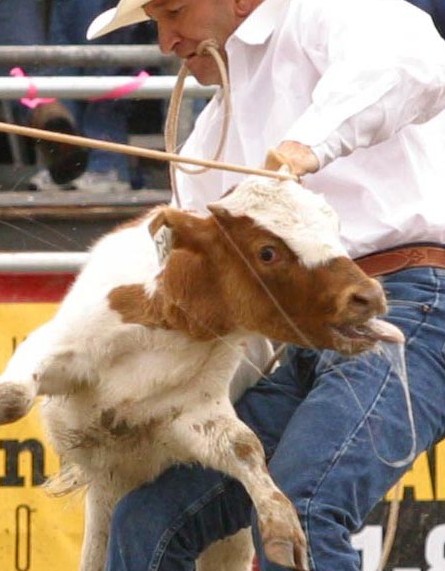
VHS is publishing a thought-provoking ad in a Calgary newspaper condemning rodeo calf-roping.  The ad, appearing in Fast Forward Weekly on Thursday, July 5, highlights the young age of calves used in the event by juxtaposing a photo of a calf and a human baby, underlined by the words: “Just 3 months old – Would you abuse a baby to entertain a crowd?”

The ad can be seen here.

CTV coverage.

Categories
News/Blog Uncategorized

Mayor Watts to Mayor Nenshi: Ban calf-roping


              This has to stop


The popular mayor of Surrey, B.C., Dianne Watts, has written a letter to Calgary mayor Naheed Nenshi, urging him to advocate for a ban on calf-roping at the Calgary Stampede.

Mayor Watts supported the decision by Surrey’s Cloverdale Rodeo to drop calf-roping and several other rodeo events in 2007.   In her letter, she tells Mayor Nenshi that eliminating calf-roping at the Stampede “would improve animal welfare and serve as an example to the Rodeo world.”

Mayor Nenshi is a member of the Calgary Stampede’s board of directors.  VHS is asking the public to email him and ask that he speak out against calf-roping.


Categories
News/Blog Uncategorized

Tormenting animals to make them buck

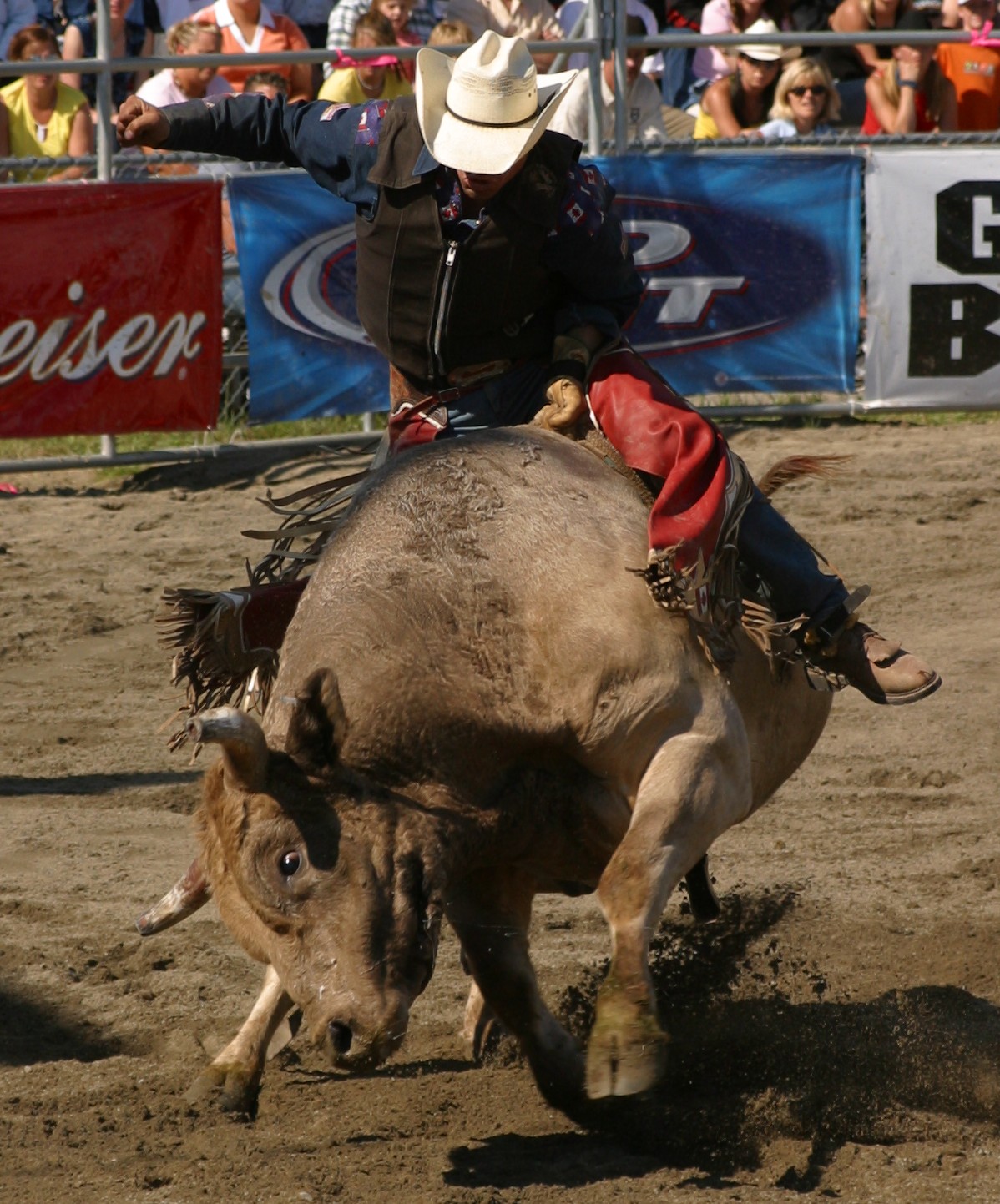
The rodeo industry likes to say that bucking bulls and horses only work a few seconds a year and otherwise lead pampered lives.  They also like to talk about the animals being “born to buck.”

But if you watch this video you’ll see that bucking bulls are tormented at a young age to “train” them to buck.   A metal weight (called a dummy) is placed on their backs and is only released when they buck their hardest.  The animals are clearly distressed and want the weight off their backs.  What animal wouldn’t?   Can you imagine doing this to dogs?  It’s only because we are conditioned to seeing livestock treated badly that there is no public outcry against such practices.  Yet cattle and horses, as prey animals, are especially likely to suffer fear and stress from such treatment.  And they are subjected to this distress for the trivial purpose of amusing humans (and to make money for a few of them).

It’s true that bucking bulls and horses are deliberately bred to have a genetic predisposition to buck.  But even with such a predisposition, it’s still necessary to torment them with “dummies.”   And even that’s not enough to ensure they buck for the crowds – there’s also the flank strap, which is tied around the animal’s hindquarters to cause further stress.  It’s only released when the animal stops bucking.

The whole bucking stock industry is designed to make animals behave unnaturally.  Is it not perverse that this industry, including the Calgary Stampede, strives to breed horses that no one can ride?  It’s the exact opposite of what real cowboys have historically sought to achieve.   That’s because rodeo has little to do with the genuine traditions of real ranching.  It is a circus and, like all circuses, it exists to exploit animals for the sake of entertainment.

And what happens to the animals that are not good enough for this circus? As we now know, there’s a good chance they’ll end up in the slaughterhouse.

More information on the Calgary Stampede.

Categories
News/Blog Uncategorized

Wayne Pacelle of HSUS in Vancouver

Wayne Pacelle, president of The Humane Society of the United States, will be in Vancouver on Sunday, June 17 to sign his new book and discuss animal welfare issues. VHS is co-hosting the event with Humane Society International Canada.


WHO: Wayne Pacelle, president and CEO of The Humane Society of the United States

WHAT: Discussion, Q&A and book signing

WHERE: Black Bond Books at Book Warehouse, 632 West Broadway, Vancouver

WHEN: Sunday, June 17; 12:00 – 2:00 PM       

Pacelle’s bestselling book The Bond: Our Kinship with Animals, Our Call to Defend Them  has been called revolutionary, uplifting and inspiring. The book takes readers on a journey from America’s great open spaces to its crowded factory farms to the ice floes of Canada where seals are slaughtered. Pacelle illuminates the stark dichotomy we face in an age when animals are more beloved yet more abused than during any period in history.

Pacelle will discuss the themes in the book and issues of local, national and international impact at the Vancouver event.

Categories
News/Blog Uncategorized

Calgary Stampede sends young horses to slaughter

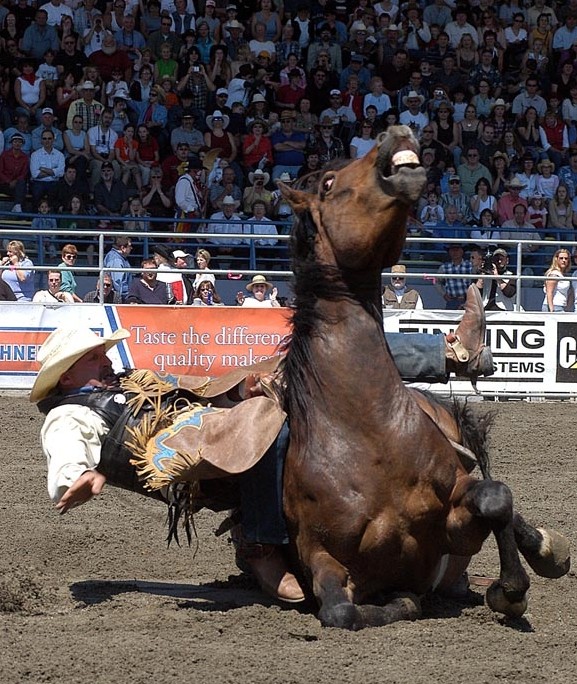
Bucking horses are a major part of rodeo ‘entertainment’

An article in an Alberta magazine has revealed that the Calgary Stampede sends young, healthy horses to slaughter if they can’t make the grade as bucking horses for the Stampede rodeo. (CTV News is running a report on the revelations.)

The current issue of Alberta Views carries a story by journalist Curtis Gillespie about animal care at the Stampede.  In it, Gillespie asks staff at the Calgary Stampede ranch (which breeds and raises bucking horses for the rodeo) about the fate of bucking horses not good enough to perform at the Stampede. Here is a passage from the article:

I asked what happens to those horses that simply aren’t suited to bucking, that aren’t naturals? “We usually just keep ’em around,” Marrington said. “A lot of mares go into the breeding program, even if they can’t buck, because we know they’re genetically good. We do cull, no question about that. But the fact is, you can get some young horses, for whatever reason, that fight the chute, or are just bad, and they could hurt cowboys with no ability, and they’ll just run over you. And they’re disposed of, and that’s all I’m going to tell you. They’re out of the system, out of the inventory. It’s inventory in, inventory out.”

The next day, I asked ranch manager Raymond Goodman how many times, on average, a young horse is dummied before a decision is made to remove it from the bucking program.

“Usually three or four times,” he said.

“And if they’re mares, they go back into the breeding program?”

He nodded.

“And what about geldings and studs?” I asked. “They’re culled?”

“Yup.”

“And they go where? Fort MacLeod?”

“Yup, Fort MacLeod.”

Fort McLeod is the site of a slaughterhouse run by Bouvry Exports Ltd., where many horses are sent for slaughter.  The plant was the subject of  an investigation by the Canadian Horse Defence Coalition in 2010, which found evidence that horses were being killed inhumanely.  The CHDC revealed video footage showing horses at the slaughterhouse being shot and then hoisted away by their legs while still fully conscious.

Please let the Stampede’s chief executive, Vern Kimball, know what you think about this.