Categories
News/Blog Uncategorized

100 years of cruelty is nothing to celebrate

In a few weeks time, on July 6, animals will once again be suffering at the hands of the Calgary Stampede.  And once again, we will be calling on all civilized, compassionate Canadians to oppose this spectacle of animal abuse.

Some people wonder why the Vancouver Humane Society, a small animal charity on the West Coast, picks on the Calgary Stampede, a so-called national icon and self-described “greatest outdoor show on earth.”

The simple answer is this:  The Stampede subjects animals to fear, pain and stress for the sake of entertainment and that’s immoral.

To be clear, VHS only objects to the Stampede rodeo.  We have no issue with the other activities that make up the bulk of the Stampede.  If people want to dress up as cowboys and party, that’s fine with us. We just want to stop animals from suffering.

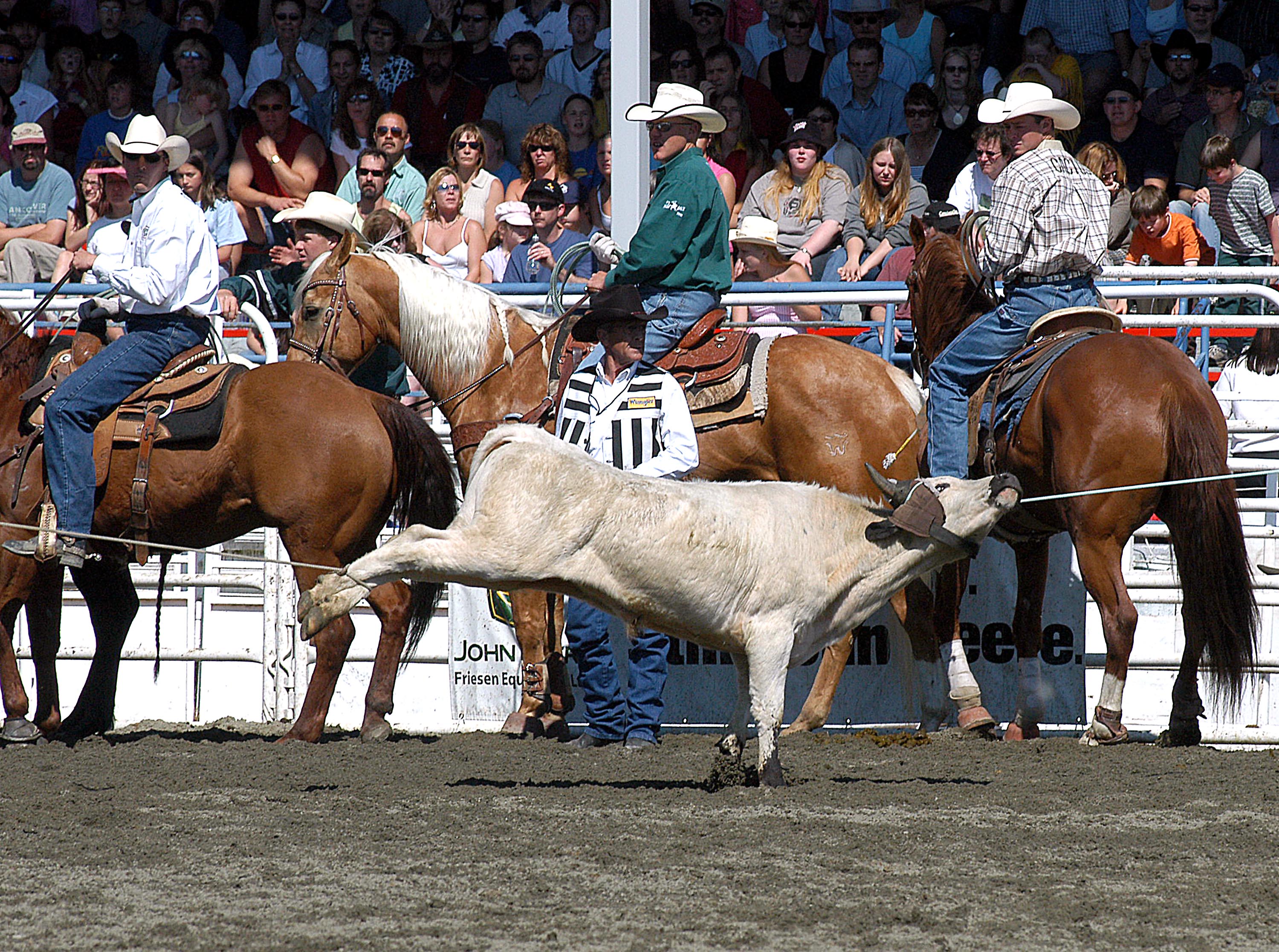
The Stampede will say that rodeo animals don’t suffer.  Can they really believe that a three-month-old calf doesn’t feel fear when it is goaded out of a chute and chased into the arena? Can they really believe that the calf doesn’t feel pain when, at 27 miles per hour, it is roped to a jarring halt, then picked up and thrown to the ground?  Imagine this being done to your dog.

Some people who defend rodeo say, well, the pain is only inflicted for a short time, so what’s the big deal.  Okay, imagine that a reality television program featured kittens or puppies receiving a mild electric shock for just a few seconds.  No one would stand for it.  There would be a public outcry.  Why? Because the idea of subjecting animals to abuse for the sake of entertainment would be considered barbaric, unconscionable and unacceptable. Yet we accept it in rodeo, where crowds of people actually applaud as they watch animals experience pain.

Oh, but rodeo is different.  It’s about tradition and agricultural heritage and what happens on the ranch.  Really?  The truth is that real working cowboys never rode bulls, wrestled steers or raced chuckwagons.  And the calf-roping event is a cruel travesty of the range practice.  “That’s not the way it’s done on the ranch. On the ranch it’s done quietly and calmly, not like at the rodeo,” says renowned animal behaviourist, Temple Grandin.

Even if rodeo events were a genuine part of Canadian heritage, would that justify cruelty to animals?  In London, one of the last bear-baiting pits, situated a few paces from Shakespeare’s Globe Theatre, was closed down in 1642.  While the Globe has been rebuilt, nothing remains of the bear pit.  There are some parts of our heritage we should retain and be proud of and there are others we should consign to the dustbin of history.  That’s where traditions of animal cruelty belong.

The Stampede is marking its 100th anniversary.  A century of unnecessary animal suffering.  If you believe in a future without such suffering, please speak out against rodeo.  If you believe in a civilized compassionate Canada, please join our campaign.  We’re going to take a stand against animal cruelty at the Calgary Stampede.  Please stand with us.

Watch this space.

More info on the Calgary Stampede rodeo.


Categories
News/Blog Uncategorized

Ask Mayor Nenshi to speak up for compassion

Compassionate Canadians must write to Calgary’s mayor.  Here’s why:

It’s time to end cruel calf-roping at the Calgary Stampede and there’s one man who could make it happen:  Naheed Nenshi, the mayor of Calgary.

Since his election in 2010, Mayor Nenshi has done much to enhance Calgary’s image as a progressive city with a heart.  But the city’s image remains tarnished by the cruelty inflicted on animals during the annual Calgary Stampede rodeo.  And calf-roping is perhaps the cruellest rodeo event of all.

Three-month old calves are goaded out of the chute at full speed (up to 27 miles per hour). The terrified animal is then chased by a mounted rider who ropes the calf to a sudden, bone-jarring halt, picks him up and slams him to the ground. The event is timed and the rider who does it fastest wins.

The time pressure of the event and the prize money at stake can lead to poor roping, harsh handling and mistakes by riders – all of which put the calf at risk of injury. But it is not just the risk of injury that is the problem with calf-roping. It’s the fear.

All cattle are “prey” animals and research has shown they are particularly sensitive to fear. Dr. Temple Grandin, the distinguished animal behaviourist, has written that fear is “so bad” for animals it can be worse than pain.

There can be no doubt that a three-month-old calf, goaded and chased into an arena with a shouting crowd is suffering even before the rope pulls him off his feet.  How can tormenting an animal in this way be acceptable as entertainment?  Treating a dog this way would result in cruelty charges.

Mayor Nenshi, as a member of the Stampede’s board of directors, could be a voice for compassion by urging the board to stop the unconscionable cruelty of calf-roping.  By taking this step, the Stampede could begin evolving into an acceptable form of entertainment – one that doesn’t rely on the abuse of animals.

Please tell Mayor Nenshi to speak up for the innocent calves who suffer for the sake of human amusement by emailing him this letter.

More information on the Calgary Stampede rodeo here.


Categories
News/Blog Uncategorized

Horses die for our entertainment

News that the HBO series ‘Luck’ has been cancelled after three horses died during production, has put the spotlight on the horse racing industry just as a number of horses have been killed in high profile races.

The deaths of five horses in two days at the U.K.’s famous Cheltenham Festival has outraged animal welfare advocates, including the RSPCA.  Meanwhile, it has been reported that 16 horses have died in the last 14 weeks at New York’s Aqueduct Horse Track, prompting the State’s Governor to call for an independent inquiry.

Of course, race horse deaths are nothing new.  Last year, it emerged that 20 horses had died within as many months at the Hastings Park Racecourse in Vancouver.

And horses die regularly in other forms of equine entertainment, such as rodeos.  More than 50 horses have died at the Calgary Stampede since 1986,. This includes two at last year’s Stampede, as reported by the Calgary Herald ‘s pathetically upbeat headline: Visitor numbers up, horse deaths down as Calgary Stampede ends’ (Six died the year before.)

Supporters of these spectacles should face up to the fact that animals are dying so that they may be entertained.