Categories
animal welfare cruelty News/Blog

Travel writers, truth and animal welfare

Travel writers should pay attention to animal welfare at events like rodeos

Last week, a travel article appeared on the website of Fodor’s, the world’s largest publisher of travel and tourism information, describing the author’s recent visit to the Calgary Stampede.

The article gushed over the Stampede’s recovery from the flood in June and detailed all the activities to be enjoyed, summing up the experience  this way: “Part rodeo, part party, part fair, part food fest, all fun; the Calgary Stampede’s has bucked and two-stepped its way into stardom. That’s how Canada does the rodeo, come hell or high water. Yahoo!”

A similar article, by the same author, appeared on a Vancouver-based travel website.  In both pieces, not a single mention was made of the animal welfare issues at the Stampede rodeo.  Nor were this year’s deaths of two rodeo animals, a steer and a horse, despite the fact they made headlines across the country.

No one expects travel writers to promote the views of animal advocates when referring to activities involving animal welfare controversies, but shouldn’t such controversies at least be mentioned?  Shouldn’t people who care about animals be warned about any animal welfare issues at an event? Any international tourist reading these pieces would have no idea of the potential harm and suffering animals are exposed to at rodeos.

It is difficult for animal advocates to bring the truth about rodeo to the public’s attention, especially especially when faced with a powerful public relations machine like the Calgary Stampede.  It’s even more difficult when travel writers uncritically accept the Stampede’s public relations agenda.
 

Categories
animal welfare cruelty News/Blog rodeo

VHS response to horse death at Stampede

July 13, 2013

VHS is extremely sorry to hear of the death of another horse at the Calgary Stampede chuckwagon races.

It is getting harder for the public to believe that these deaths are just coincidence or bad luck. There is something inherently unsafe about the race.

Nothing the Stampede has done has stopped horses dying.

VHS is reiterating its call for the Stampede to suspend the chuckwagon race and have an independent panel of experts review the event to determine if anything can be done to make it safe.

More than 50 horses have died at the Stampede since 1986.

-ends-

Categories
advertising cruelty News/Blog rodeo

VHS response to steer death

Steer death at Calgary Stampede

VHS has issued the following news release:

Steer killed at Calgary Stampede rodeo
Vancouver Humane Society calls for event to be suspended


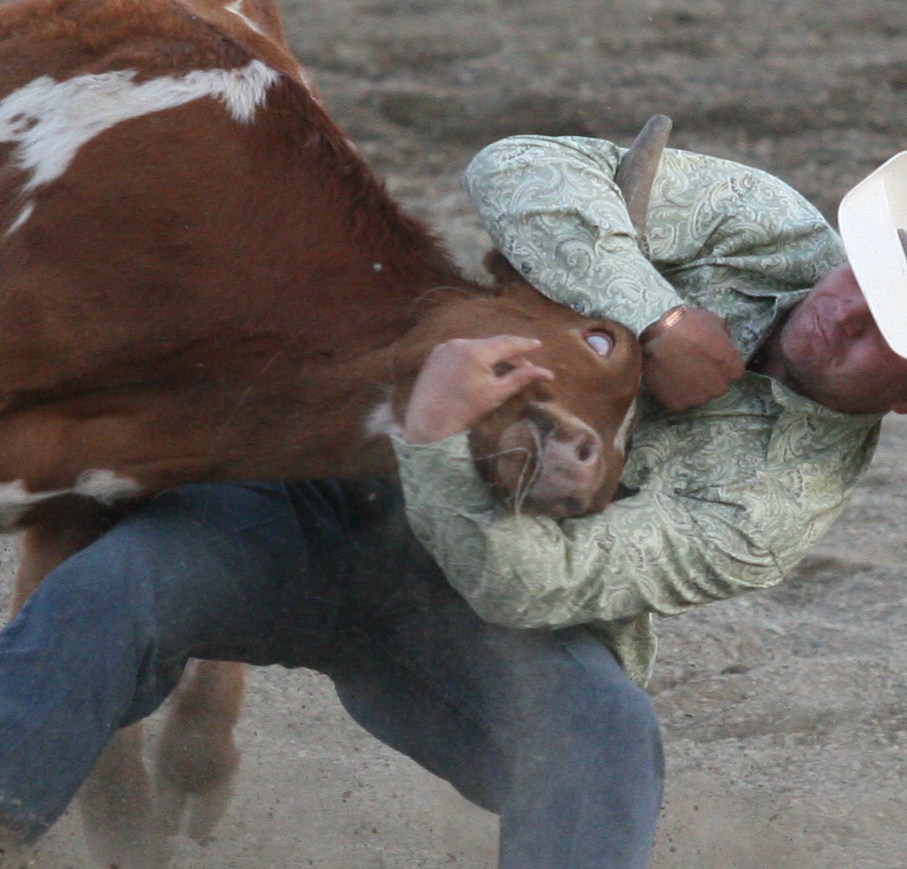
The Vancouver Humane Society (VHS) has called for the suspension of steer-wrestling at the Calgary Stampede rodeo after an animal was badly injured in the event and had to be euthanized.  Another steer died in the event during the 2009 Stampede.

“Why should animals suffer and die just to entertain a crowd,” said VHS spokesperson Peter Fricker.  “If these events are so hard on the animals that it can kill them, it’s obvious they are suffering pain and stress.”

Fricker said that rules changes made by the Stampede to make steer-wrestling safe had obviously not worked.  He said the event should be suspended and reviewed by an independent panel of experts to determine if it could be made humane and safe.

VHS says that steer-wrestling has no historical connection to ranching and was invented for rodeos.  “It has nothing to do with agricultural heritage,” said Fricker.  “It’s just a cruel and dangerous circus act.”
-ends-


Categories
animal welfare cruelty News/Blog rodeo

VHS launches ad against calf-roping

Vancouver Humane Society ad against calf-roping

The Vancouver Humane Society (VHS) is running a full-page ad calling for a ban on calf-roping in a Calgary newspaper.  The ad, shown above, appears in the July 4 edition of Fast Forward Weekly on page 3.

The ad contrasts the compassion of basic human kindness with the cruelty of calf-roping and calls on the Calgary Stampede to “have a heart for animals” and ban the rodeo event.

A high-resolution pdf version of the ad is here.

Categories
animal welfare cruelty News/Blog rodeo

Who opposes rodeo?

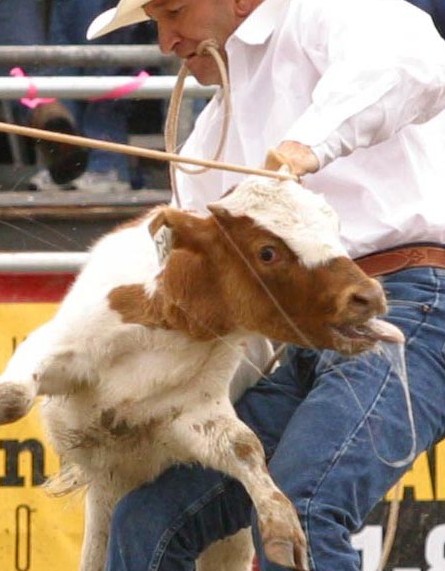
Events like steer-wresting are cruel.  That's why VHS opposes rodeo.


Rodeo promoters like the public to think that it’s just a few animal rights activists who oppose rodeos.  In fact, mainstream animal welfare agencies throughout the civilized world are opposed to rodeo events like calf-roping and steer-wrestling, as these position statements show:

Canadian Federation of Humane Societies 
Calgary Humane Society 
British Columbia SPCA
Ottawa Humane Society (pdf file – see pg. 9)
American SPCA
Australian RSPCA
Royal New Zealand SPCA (pdf file – see 6.4)
Humane Society of the United States


Categories
cruelty News/Blog rodeo

Help us fight rodeo cruelty at the Calgary Stampede

cruelty of calf-roping at Calgary Stampede
Photo – Joanne McArthur


If you think what’s happening in this photo is wrong then help us stop it. 

Support our campaign against rodeo cruelty at this year’s Calgary Stampede.


Categories
News/Blog Uncategorized

Three horses die in Stampede chuckwagon race

VHS issued the following news release on July 12:


Death of three horses at Calgary Stampede
Vancouver Humane Society calls for suspension of chuckwagon races

The Vancouver Humane Society (VHS) is calling for the suspension of the Calgary Stampede chuckwagon races following the death of three horses in this evening’s race.

“Clearly, the Stampede’s much publicized safety improvements have failed to make the race any safer,” said VHS spokesperson Peter Fricker.  “Horses continue to die needlessly. This has to stop.”

Fricker said the Stampede should suspend the races immediately and conduct a full safety review of the event using independent expertise.

“The Stampede has run out of excuses,” said Fricker.  “Now is the time to take real action to stop these horses from dying.”

More than 50 horses have died in the chuckwagon event since 1986.

-ends-

Categories
News/Blog Uncategorized

Mayor Watts to Mayor Nenshi: Ban calf-roping


              This has to stop


The popular mayor of Surrey, B.C., Dianne Watts, has written a letter to Calgary mayor Naheed Nenshi, urging him to advocate for a ban on calf-roping at the Calgary Stampede.

Mayor Watts supported the decision by Surrey’s Cloverdale Rodeo to drop calf-roping and several other rodeo events in 2007.   In her letter, she tells Mayor Nenshi that eliminating calf-roping at the Stampede “would improve animal welfare and serve as an example to the Rodeo world.”

Mayor Nenshi is a member of the Calgary Stampede’s board of directors.  VHS is asking the public to email him and ask that he speak out against calf-roping.


Categories
News/Blog Uncategorized

Tormenting animals to make them buck

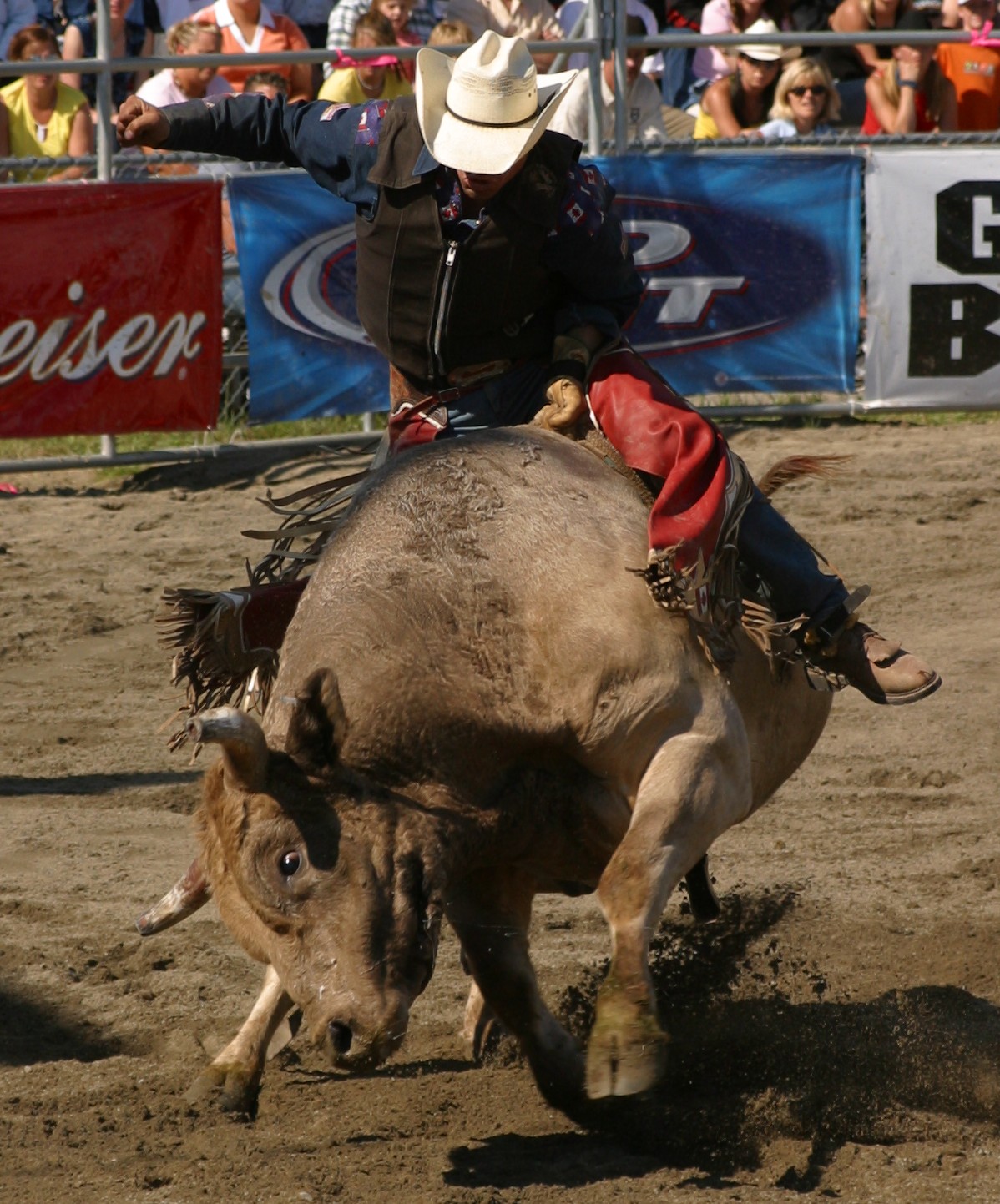
The rodeo industry likes to say that bucking bulls and horses only work a few seconds a year and otherwise lead pampered lives.  They also like to talk about the animals being “born to buck.”

But if you watch this video you’ll see that bucking bulls are tormented at a young age to “train” them to buck.   A metal weight (called a dummy) is placed on their backs and is only released when they buck their hardest.  The animals are clearly distressed and want the weight off their backs.  What animal wouldn’t?   Can you imagine doing this to dogs?  It’s only because we are conditioned to seeing livestock treated badly that there is no public outcry against such practices.  Yet cattle and horses, as prey animals, are especially likely to suffer fear and stress from such treatment.  And they are subjected to this distress for the trivial purpose of amusing humans (and to make money for a few of them).

It’s true that bucking bulls and horses are deliberately bred to have a genetic predisposition to buck.  But even with such a predisposition, it’s still necessary to torment them with “dummies.”   And even that’s not enough to ensure they buck for the crowds – there’s also the flank strap, which is tied around the animal’s hindquarters to cause further stress.  It’s only released when the animal stops bucking.

The whole bucking stock industry is designed to make animals behave unnaturally.  Is it not perverse that this industry, including the Calgary Stampede, strives to breed horses that no one can ride?  It’s the exact opposite of what real cowboys have historically sought to achieve.   That’s because rodeo has little to do with the genuine traditions of real ranching.  It is a circus and, like all circuses, it exists to exploit animals for the sake of entertainment.

And what happens to the animals that are not good enough for this circus? As we now know, there’s a good chance they’ll end up in the slaughterhouse.

More information on the Calgary Stampede.

Categories
News/Blog Uncategorized

Calgary Stampede sends young horses to slaughter

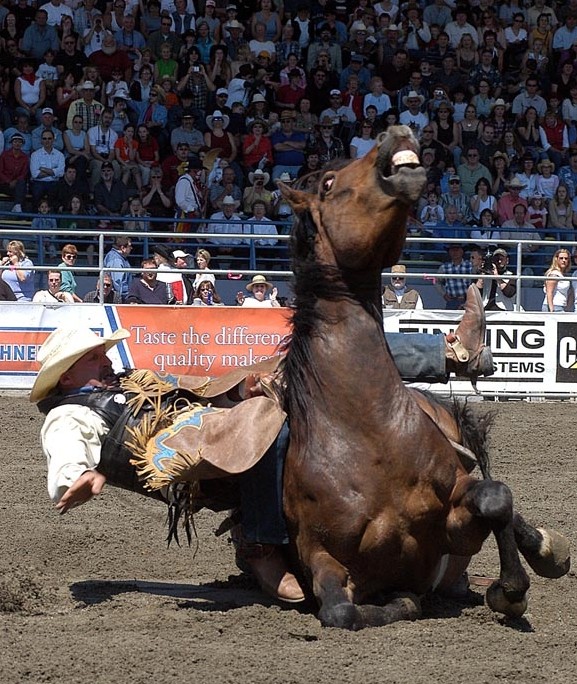
Bucking horses are a major part of rodeo ‘entertainment’

An article in an Alberta magazine has revealed that the Calgary Stampede sends young, healthy horses to slaughter if they can’t make the grade as bucking horses for the Stampede rodeo. (CTV News is running a report on the revelations.)

The current issue of Alberta Views carries a story by journalist Curtis Gillespie about animal care at the Stampede.  In it, Gillespie asks staff at the Calgary Stampede ranch (which breeds and raises bucking horses for the rodeo) about the fate of bucking horses not good enough to perform at the Stampede. Here is a passage from the article:

I asked what happens to those horses that simply aren’t suited to bucking, that aren’t naturals? “We usually just keep ’em around,” Marrington said. “A lot of mares go into the breeding program, even if they can’t buck, because we know they’re genetically good. We do cull, no question about that. But the fact is, you can get some young horses, for whatever reason, that fight the chute, or are just bad, and they could hurt cowboys with no ability, and they’ll just run over you. And they’re disposed of, and that’s all I’m going to tell you. They’re out of the system, out of the inventory. It’s inventory in, inventory out.”

The next day, I asked ranch manager Raymond Goodman how many times, on average, a young horse is dummied before a decision is made to remove it from the bucking program.

“Usually three or four times,” he said.

“And if they’re mares, they go back into the breeding program?”

He nodded.

“And what about geldings and studs?” I asked. “They’re culled?”

“Yup.”

“And they go where? Fort MacLeod?”

“Yup, Fort MacLeod.”

Fort McLeod is the site of a slaughterhouse run by Bouvry Exports Ltd., where many horses are sent for slaughter.  The plant was the subject of  an investigation by the Canadian Horse Defence Coalition in 2010, which found evidence that horses were being killed inhumanely.  The CHDC revealed video footage showing horses at the slaughterhouse being shot and then hoisted away by their legs while still fully conscious.

Please let the Stampede’s chief executive, Vern Kimball, know what you think about this.