Categories
Media Release

Vancouver Humane Society calls for end to cruel rodeo events at Chilliwack Fair

Media release

July 26, 2017

Vancouver Humane Society calls for end to cruel rodeo events at Chilliwack Fair

Society says photos from 2016 fair show rodeo animals suffering

Vancouver – The Vancouver Humane Society (VHS) is calling for an end to calf-roping and steer-wrestling at the upcoming Chilliwack Fair rodeo (August 11-13).

VHS has written to Chilliwack City Council asking for a ban on the two events and has also called on the Chilliwack Agricultural Society, which runs the fair, to voluntarily drop them from the rodeo program. VHS has launched an online campaign to urge the public to contact the council, the fair and its sponsors to ask for an end to the events.

VHS says calf-roping and steer-wrestling subject animals to fear, pain and stress for the sake of mere entertainment. “Terrified calves, only three months old, are chased, roped to a sudden halt, picked up and thrown to the ground before being tied up and steers have their necks twisted until the are literally bent to the ground,” said VHS spokesperson Peter Fricker.  “Tormenting animals to amuse a crowd should be unacceptable in the 21st century.”

VHS obtained photographs taken at the 2016 Chilliwack Fair, which it says show rodeo animals in distress.

A 2015 survey by polling company Insights West found that 66 per cent of B.C. residents are opposed to rodeos.

-ends-

Categories
animal welfare News/Blog Promoted zoo

A Whale Sanctuary in BC?

Renowned neuroscientist Dr. Lori Marino spoke to the public about the Whale Sanctuary Project at an event presented by the Vancouver Humane Society and the BC SPCA on July 11th. She and the executive director of the project, Charles Vinick, were in British Columbia looking at possible sites for the sanctuary.

The theme of the evening at the Roundhouse in Vancouver was “Reconciliation”, which was introduced by Bob Chamberlin, Chief Councilor of the Kwicksutaineuk Ah-kwa-mish First Nation. Chief Chamberlin discussed the reconciliation between Canada and its First Nations people, and how this should expand towards a reconciliation between all humans and the natural world. Recognition of this planet as a living being, and respecting the animals and nature, is a necessary step towards this reconciliation.

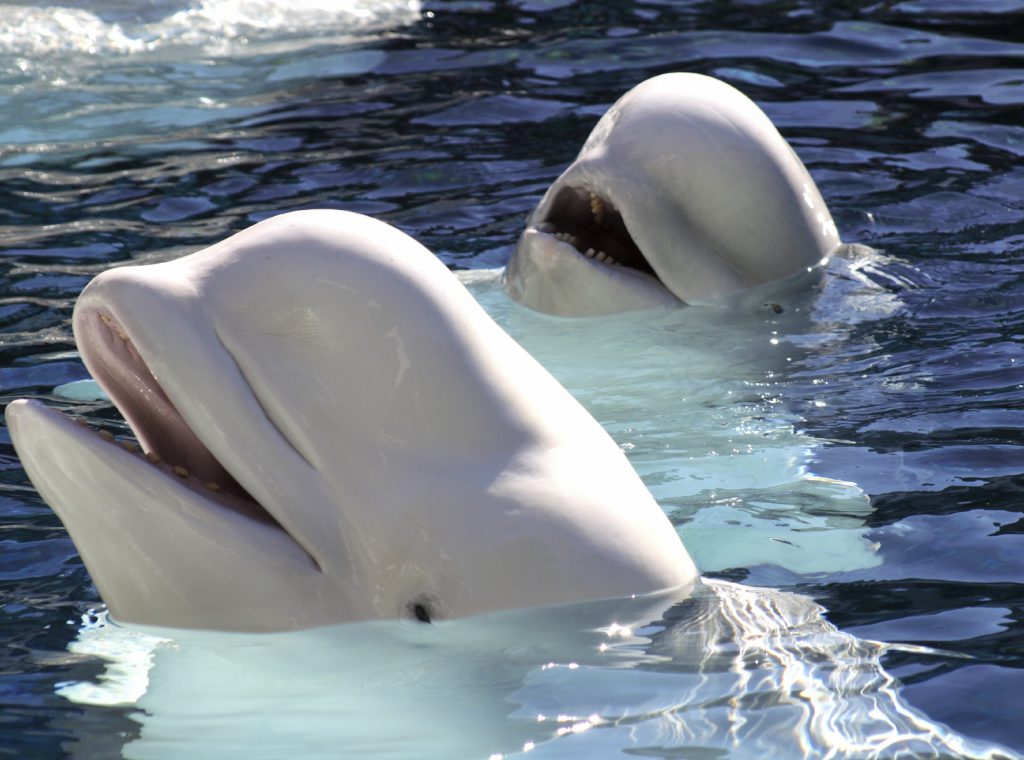
Dr. Marino continued on this theme by describing the Whale Sanctuary Project, which aims to create a seaside sanctuary for formerly captive cetaceans (whales and dolphins) that maximizes the well-being and autonomy of its residents. It will create an environment as close as possible to their natural habitat.

Other sites under consideration are along the coasts of Washington State and Nova Scotia.  There is a thorough list of requirements that a site must meet and Dr. Marino and her team have been working closely with First Nations communities to ensure that the project is adopted rather than tolerated. They hope to complete the site selection portion of this project by the end of the year. 

Once the sanctuary site has been selected they will begin a three-phase process to ensure it is ready for its first resident by 2019. They will first focus on development of infrastructure and veterinary facilities, followed by administration and housing. The final phase will develop educational and visitor programs. The sanctuary will allow the public to see cetaceans in a natural setting and will focus on education and conservation, not entertainment. Dr. Marino and her team believe a sanctuary is about the animals, not about the people, and they will work to create a better life for these highly intelligent animals.

Learn More!


Categories
Opinion Editorial

They refused to run an ad about animal cruelty at the rodeo

Article originally published in the National Observer.

Earlier this year, a tiny community newspaper in Iowa won a Pulitzer Prize for taking on big agriculture companies over factory farm pollution.

The Storm Lake Times, which investigated the effects of nitrogen from farm drainage on drinking water in the state, was praised for its “editorials fuelled by tenacious reporting, impressive expertise and engaging writing that successfully challenged powerful corporate agricultural interests in Iowa.”

The family that owns the newspaper reportedly lost a few friends and a few advertisers, but never doubted they were doing the right thing.

“We’re here to challenge people’s assumptions and I think that’s what every good newspaper should do,” said one family member at the time.

It’s a great example of a community newspaper showing courage and tenacity in seeking the truth. Some newspapers still uphold the highest standards and values of a free press.

Then there’s the Williams Lake Tribune. In May, I tried to book a full-page ad in the Tribune on behalf of the Vancouver Humane Society (VHS), where I work as the communication director.

The ad, as I informed the Tribune’s publisher via email, would express VHS’s opposition to the Williams Lake Stampede rodeo, which took place between June 29 and July 2. The event may be lesser-known than the famous Calgary Stampede kicking off this weekend, but from the perspective of the VHS, it’s every bit as cruel.

Rejected by the corporate owner

After a couple of days of silence from the publisher, I emailed again and received this reply from an executive at Black Press, the Tribune’s corporate owner:

“In consultation with our lawyer we have determined that we are entitled to decline advertising in the circumstances. The Williams Lake Tribune is a sponsor of the Stampede because it is a significant community event that the paper supports. We appreciate that your society opposes the event and we respect your right to that opinion. You were wise to check with us before commissioning artwork and design.

“While we cannot say definitively that we will decline all possible advertising, we can say, from experience, that anti-Stampede type display advertising that suggests or argues gratuitous cruelty to animals by image or text is unlikely to be accepted by the Williams Lake Tribune at this time.”

Since the words “unlikely to be accepted” seemed to leave the door slightly open, I sent the executive the planned content of the ad to see if it would be acceptable. This included a photograph of the steer-wrestling event taken at last year’s Williams Lake Stampede, accompanied by text stating: “You know in your heart this is not right. Stop cruel rodeo events at the Williams Lake Stampede.”

The executive replied that this would not be accepted.

A matter of public interest

This is not the first time a Black Press newspaper has refused one of VHS’s anti-rodeo ads. In 2015, Abbotsford News rejected a full-page ad opposing the Abbotsford Rodeo (which was ultimately cancelled in 2016). No reason was given for the rejection.

It’s perfectly legal for a newspaper to refuse an ad for any number of reasons. The ad might be libelous or gratuitously offensive or misleading to readers. VHS’s ad did contain a graphic image of a steer being wrestled to ground, but it only showed what a rodeo-goer would typically see at the stampede — the very activity that the Williams Lake Tribune says it promotes and supports.

If the Tribune finds a photo of steer-wrestling offensive and unacceptable, how can it support the event?

It’s also perfectly normal for a newspaper not to agree with an ad it might carry. The Tribune could have made this clear with a disclaimer on the VHS ad or it could have run an editorial explaining its contrary position on rodeo.

But the Tribune chose instead to suppress a legitimate point of view on a matter of public interest. It didn’t trust its readers to make up their own minds about rodeo. Unlike The Storm Lake Times, it didn’t challenge assumptions, “like every good newspaper should do.”

The B.C. and Yukon Community Newspaper Association, of which the Williams Lake Tribune is a member, says part of its mission is to: “Improve standards in the practice of the profession of journalism, and to promote a high standard of conduct and professional ethics in the business of newspaper publishing.”

The Canadian Association of Journalists’ ethics guidelines state that, “Defending the public’s interest includes promoting the free flow of information, exposing crime or wrongdoing, protecting public health and safety, and preventing the public from being misled.” (Italics added).

Clearly, ethics matter to journalists and to the public they serve. People still believe that a free press is vital to democracy, that diversity of opinion matters, that newspapers should be courageous defenders of free speech.

What isn’t clear is whether those things matter to the Williams Lake Tribune, which, to my knowledge, has not been nominated for a Pulitzer Prize.

Categories
animal welfare compassion cruelty News/Blog Promoted rodeo

Newspaper refuses to print ad opposing rodeo

This is the ad the Williams Lake Tribune refused to print.


So much for freedom of speech in Williams Lake


Earlier this year, a tiny community newspaper in Iowa won a Pulitzer Prize for taking on big agriculture companies over factory farm pollution.

The Storm Lake Times, which investigated the effects of nitrogen from farm drainage on drinking water in the state, was praised for its “editorials fuelled by tenacious reporting, impressive expertise and engaging writing that successfully challenged powerful corporate agricultural interests in Iowa.”

The family that owns the newspaper reportedly lost a few friends and a few advertisers, but never doubted they were doing the right thing.

“We’re here to challenge people’s assumptions and I think that’s what every good newspaper should do,” said one family member.

It’s a great example of a community newspaper showing courage and tenacity in seeking the truth. Some newspapers still uphold the highest standards and values of a free press.

Then there’s the Williams Lake Tribune. In May, VHS tried to book a full-page ad in the Tribune. The ad, as we informed the Tribune’s publisher via email, would express VHS’s opposition to the Williams Lake Stampede rodeo.

After a couple of days of silence from the publisher, we emailed again and received this reply from an executive at Black Press, the Tribune’s corporate owner:

“In consultation with our lawyer we have determined that we are entitled to decline advertising in the circumstances.

“The Williams Lake Tribune is a sponsor of the Stampede because it is a significant community event that the paper supports. We appreciate that your society opposes the event and we respect your right to that opinion. You were wise to check with us before commissioning artwork and design.

“While we cannot say definitively that we will decline all possible advertising, we can say, from experience, that anti-Stampede type display advertising that suggests or argues gratuitous cruelty to animals by image or text is unlikely to be accepted by the Williams Lake Tribune at this time.”

Since the words “unlikely to be accepted” seemed to leave the door slightly open, we sent the executive the planned content of the ad to see if it would be acceptable. This included a photograph of the steer-wrestling event taken at last year’s Williams Lake Stampede, accompanied by text stating: “You know in your heart this is not right. Stop cruel rodeo events at the Williams Lake Stampede.”

The executive replied that this would not be accepted.

This is not the first time a Black Press newspaper has refused one of VHS’s anti-rodeo ads.  In 2015, the Abbotsford News rejected a full-page ad opposing the Abbotsford Rodeo (which was ultimately cancelled in 2016).  No reason was given for the rejection.

It’s perfectly legal for a newspaper to refuse an ad for any number of reasons.  The ad might be libelous or gratuitously offensive or misleading to readers.  VHS’s ad did contain a graphic image of a steer being wrestled to ground, but it only showed what a rodeo-goer would typically see at the Stampede – the very activity that the Williams Lake Tribune says it promotes and supports.  If the Tribune finds a photo of steer-wrestling offensive and unacceptable, how can it support the event?

It’s also perfectly normal for a newspaper not to agree with an ad it might carry. The Tribune could have made this clear with a disclaimer on the VHS ad or it could have run an editorial explaining its contrary position on rodeo.

But the Tribune chose instead to simply suppress a legitimate point of view on a matter of public interest.  It didn’t trust its readers to make up their own minds about rodeo.  Unlike the Storm Lake Times, it didn’t challenge assumptions, “like every good newspaper should do.”

The B.C. Community Newspaper Association, of which the Williams Lake Tribune is a member, says part of its mission is to: “Improve standards in the practice of the profession of journalism, and to promote a high standard of conduct and professional ethics in the business of newspaper publishing.”

The Canadian Association of Journalists’ ethics guidelines state that “Defending the public’s interest includes promoting the free flow of information, exposing crime or wrongdoing, protecting public health and safety, and preventing the public from being misled.”

Clearly, ethics matter to journalists and to the public they serve.  People still believe that a free press is vital to democracy, that diversity of opinion matters, that newspapers should be courageous defenders of free speech.

What isn’t clear is whether those things matter to the Williams Lake Tribune, which, to our knowledge, has not been nominated for a Pulitzer Prize.
 

TAKE ACTION: Help us fight rodeo cruelty at the Williams Lake Stampede


Categories
Media Release

Sir Paul McCartney praises Metro Vancouver Meatless Monday effort

Media release

June 12, 2017

For immediate release

Sir Paul McCartney praises Meatless Monday effort in Metro Vancouver

Former Beatle sends message to Vancouver Humane Society

Sir Paul McCartney has sent a message via the Vancouver Humane Society (VHS) praising the cities of Vancouver, New Westminster, North Vancouver and Port Moody for proclaiming Meatless Monday on May 15th in their communities. Meatless Monday raises awareness about the links between diet and the environment, health and animal welfare.  The superstar and animal lover wrote:

“Congratulations to Vancouver, the City of North Vancouver, New Westminster and Port Moody for going meat free on Monday 15 May. A great step forward in showing how easy and fun it is to have meat free days and help protect the planet from climate change. Well done. Love Paul and family.” – Paul McCartney

The proclamations were inspired by the ongoing Meatless Monday initiatives of VHS and local schools. To date, eleven secondary and post-secondary institutions are pairing meatless options on Mondays with information on the benefits of plant-based eating.  VHS is sharing Sir Paul’s message with the four municipalities and the participating schools.

Meatless Monday is a global initiative, active in more than 30 countries and growing in popularity in Metro Vancouver. The campaign is aimed at increasing awareness about the impact of food choices and improving access to humane, healthy and sustainable food options. Reducing our overconsumption of animal products and increasing our consumption of plant-based foods helps fight climate change, protects individual and public health and reduces the demand for cheap meat that drives factory farming.

-ends-

Categories
Media Release

UBC hosts Canada’s first-ever plant-based culinary training and summit for food service professionals

MEDIA RELEASE

FOR IMMEDIATE RELEASE

May 29, 2017

UBC hosts Canada’s first-ever plant-based culinary training and summit for food service professionals

Vancouver – Chefs and food service professionals from across the Lower Mainland and Vancouver Island and from as far as Winnipeg will be gathering this week at UBC for Canada’s first “Forward Food Culinary Training & Summit”. This workshop has helped over 1,100 food service professionals in the United States meet growing demand for healthier, more sustainable and cost-effective menu items.

Hosted by UBC Food Services, in partnership with Humane Society International/Canada, The Humane Society of the United States, and the Vancouver Humane Society, the two-day culinary experience will help chefs refine their plant-based cooking skills and will offer hands-on training, led by Chef Wanda White, former Executive Operations Chef at the University of North Texas who opened the U.S.’s first vegan university dining hall. Chef Wanda will instruct attendees on how to prepare delicious meatless, eggless, and dairy-free entrees that will appeal to guests of all dietary preferences.

“It’s wonderful to see the high level of enthusiasm for plant-based meals among chefs and food service managers in BC,” said Gabriel Wildgen, Campaign Manager for HSI/Canada. “We expect this event to be the first of many across Canada. Together with our partners in the education and nutrition, we’re creating healthier, more sustainable communities, all while providing delicious meals that cut costs.”

Following the May 29th and 30th culinary training will be a Forward Food Summit on May 31st, geared towards food service professionals and offering insights into the latest trends in both implementing and marketing plant-based menu items. The summit includes a series of speakers, a cooking demonstration, lunch at the UBC Farm (weather permitting) and opportunities for attendees to share skills in a peer-to-peer environment.

“UBC Food Services is passionate about this topic,” said Melissa Baker, Registered Dietitian and Manager of Nutrition and Wellbeing with UBC Food Services. “We know about the many health benefits of eating a primarily plant-based diet, including a reduced risk for chronic disease. Plant-based diets are also more sustainable. This event is an opportunity for our food services team and other institutions to raise awareness of these benefits and to better meet the growing demand for plant-based offerings in food service operations across Canada.”

UBC Food Services intends to incorporate some of the recipes being featured in the culinary training into campus menus, including at a dedicated vegetarian stations at all three residence dining halls starting September 2017.

Plant-based eating is gaining momentum throughout Metro Vancouver and beyond, with new veggie-based restaurants and meat-alternatives launching on a regular basis. Meanwhile, meat-reduction initiatives like Meatless Monday are being embraced by local students, who are helping add plant-based items to cafeteria menus with the help of the Vancouver Humane Society.

“We’re thrilled to be supporting eleven local schools with their Meatless Monday campaigns and the feedback so far has been very positive,” said Emily Pickett, Program Coordinator for the Vancouver Humane Society. “Students passionate about health and sustainability have been keen to introduce their peers to the delicious world of plant-based eating and Meatless Monday is a great way to do just that.”

In an effort to support the participating schools and to highlight the benefits of reducing our overconsumption of animal products, the cities of Vancouver, North Vancouver, New Westminster and Port Moody each passed proclamations earlier this month declaring Monday, May 15th as “Meatless Monday.”

All of this makes veg-friendly Vancouver the prime location for Canada’s first “Forward Food Culinary Training & Summit” and organizers are excited to help attendees get creative with plant-centred plates at this sold-out event.

Categories
Media Release

Today is Meatless Monday in Vancouver

Media release

May 15, 2017

Today is Meatless Monday in Vancouver

Students lead the way, as more schools offer plant-based meals

Vancouver –  In an effort to raise awareness of the links between diet and the environment, health and animal welfare, the Cities of  Vancouver, New Westminster, North Vancouver and Port Moody have proclaimed today Meatless Monday. Students in Metro Vancouver are leading the way in introducing the concept, with a number of secondary and post-secondary schools offering plant-based meals in their food facilities on Mondays.

To mark the occasion Vancouver Councillor Adriane Carr will visit David Thompson Secondary at 1755 E 55th Avenue at 11:30 a.m. to congratulate students and staff on the success of their Meatless Monday initiative.

Eleven Metro Vancouver schools will be participating by offering at least one meatless dish on their menu in addition to their regular menu items. Two of these schools, Argyle Secondary and Lord Byng Secondary, are launching their initiatives today.

The Carnegie Community Centre, which  serves the Downtown Eastside, will be offering a special Meatless Monday menu today.  The centre aims to offer healthy, culturally diverse and delicious food on a daily basis for the community.

Meatless Monday is a global initiative, active in more than 30 countries and growing in popularity in Metro Vancouver. The campaign is aimed at increasing awareness about the impact of food choices and improving access to humane, healthy and sustainable food options. Reducing our overconsumption of animal products and increasing our consumption of plant-based foods helps fight climate change, protects individual/public health and reduces the demand for cheap meat that drives factory farming.

-ends-

Categories
animal welfare Circus compassion cruelty News/Blog Promoted

Circus on the run!

The circus is coming to the PNE.  And we need to stop it.

VHS supporters will recall that the Royal Canadian Circus was scheduled to appear at Concord Pacific Place in Vancouver from May 12th to 14th, but after VHS encouraged the public to complain to Concord Pacific about the circus’s questionable animal welfare record, the venue was switched to the PNE.  It’s not too late to let the PNE know how you feel about its decision to host this performance.

This circus is put on by the U.S.-based Tarzan Zerbini Circus, which has a reportedly poor animal welfare record with regard to its treatment of elephants, as detailed in this 2016 article in the Ottawa Citizen and in this report by People for the Ethical Treatment of Animals (PETA). This gives us concerns about the welfare of other animals in its care. 

The article in the Citizen, by the Harvard Law School’s Animal Law & Policy Fellow, reveals that the Zerbini Circus has been cited for animal welfare violations in the U.S. and states that it “has featured elephants who are kept chained and forced to perform under threat of punishment.”

The PETA report says the circus failed to “meet minimum federal standards for the care of animals” used in exhibition, as established in the Animal Welfare Act in the U.S. It states that in 2011 the USDA “cited Tarzan Zerbini for failure to prevent elephants from being exposed to tuberculosis (TB).”

While it is VHS’s understanding that the Vancouver performance of the Royal Canadian Circus will feature only domestic animals and not exotic animals (which is prohibited by City of Vancouver bylaw), its parent company’s animal welfare record raises serious concerns.  Consequently, we are urging the public not to attend the Royal Canadian Circus’s performances.

We are also asking the public to complain to the PNE about hosting this circus.

Please email the PNE and politely ask them to cancel the performance of the Royal Canadian Circus.

Categories
Media Release

Vancouver Humane Society questions Vancouver Aquarium’s claims on marine mammal rescue

Media release

April 27, 2017

Vancouver – The Vancouver Humane Society (VHS) is questioning claims by the Vancouver Aquarium that its marine mammal rescue program is threatened by a ban on cetacean display at the aquarium. The Vancouver Park Board voted in March to amend a bylaw to ban the display of cetaceans at the aquarium.

VHS points out that other major wildlife rehabilitation facilities in British Columbia do not put rescued animals on public display, despite dealing with many more rescues than the aquarium.

“Wildlife rehabilitation is not about rescuing animals to put them on display,” said VHS spokesperson Peter Fricker.  “The mandate is to rehabilitate and release animals.”  He said the aquarium’s current non-releasable rescued animals do not need to be on display to meet their welfare needs.

VHS argues that the aquarium should seek to work with the Whale Sanctuary Project, which is proposing to establish sea-pen sanctuaries for former captive cetaceans and non-releasable rescued cetaceans.

-ends-

Categories
Opinion Editorial

Battery cage ban lacks enforcement tools

Article originally published in the Vancouver Sun.

Ethical Canadian consumers might have been pleased to hear the recent announcement by the National Farm Animal Care Council that the infamous “battery cage” for laying hens is to be phased out.

But while the end of this cruel cage system is welcome, the council’s new codes of practice for hens are far from any guarantee of good animal welfare.

An obvious issue is that egg farmers still have until 2036 before all hens must be out of battery cages. So, for the time being, supermarket shelves will be full of eggs from long-suffering hens that have been crammed into small cages.

By 2036, all hens must be in either cage-free housing or in “enriched” cages. Enriched cages, while bigger than battery cages, still restrict natural behaviours like running, full wing-flapping and flying, and do not permit unrestrained perching and dust-bathing. Even in an enriched cage system that meets the new code requirements, many of the welfare problems inherent in battery cages remain. In short, a cage is a cage. That is why an enriched cage would still not meet the standards required by the B.C. SPCA Certified Program, a third-party animal welfare certification system. Farmers who do opt for enriched caging will be committing to a major investment, guaranteeing these cages will continue to compromise animal welfare for decades.

But perhaps the most serious shortcoming in the new codes relates to inspection and enforcement. The National Farm Animal Care Council itself defines the codes of practice as “nationally developed guidelines” for the care and handling of farm animals. Guidelines are not regulations or laws. The codes refer to “requirements” that farmers “may” be compelled by industry associations to comply with and these requirements “may” be enforceable under federal and provincial legislation.

The codes also list a number of “recommended practices,” which are even less meaningful than code requirements, as they merely “encourage adoption of practices for continual improvement in animal welfare outcomes.” But no one is going to make a farm implement such practices, as the codes state that “…failure to implement them does not imply that acceptable standards of animal care are not met.” In other words, good practice is optional.

In fact, no independent, third-party body inspects egg farms to ensure the requirements under the codes are being met (unless they have signed up to a separate certification program like the B.C. SPCA’s or Certified Organic). It’s still the egg industry policing the egg industry, whatever spin is put on it.

So where does this leave the compassionate consumer who cares about animal welfare? For people who buy eggs, the least inhumane choice remains eggs that are certified organic, which are guaranteed to be cage-free and have the highest welfare standards. Consumers who continue to reject eggs from any cage system will send a strong market signal to parts of the egg industry that may be pinning their hopes on developing enriched cages under the new codes.

The most humane choice for consumers is, of course, to eliminate egg purchases altogether and transition to a plant-based diet. This has become a more feasible and popular option, as an increasing number of plant-based protein sources have rendered eggs unnecessary to a healthy diet. Reduced demand for eggs still means not only fewer hens in cages, but also fewer unwanted male chicks destroyed (by an industry that needs only hens) and fewer “spent hens” being shipped off to slaughter at the end of their lives.

While the end of the battery cage is a welcome victory for those who have long condemned its obvious cruelty, it’s not yet an end to the animal suffering inherent in the egg industry.