Categories
animal welfare News/Blog Promoted rodeo

Calgary Stampede under fire for purchasing favourable “journalism”

Screenshot Canadaland

Canadaland reports that in 2011, the Calgary Stampede commissioned a piece to run in prestigious magazine Canadian Geographic. Journalist Curtis Gillespie thoroughly investigated, and ultimately wrote a piece entitled “Rodeo under scrutiny: The debate over animal care at the Calgary Stampede.”


Among other things, the balanced piece explained that horses were bred specifically to buck; horses who didn’t buck wildly enough were slaughtered. Gillespie’s editor called the piece “brilliant” and a “magnum opus.”


However, the publisher decided to pull the story at the last minute and instead ran a piece by someone who had previously published a book called “Celebrating the Calgary Exhibition and Stampede.”


Canadian Geographic ran the Stampede-friendly piece, “Rodeo renewal: How animal-care practices are changing perceptions of the century-old Stampede.” It was not identified as sponsored content.


In spite of its unethical advertising practices disguised as journalism, the Stampede’s attempts to create the illusion that rodeo is positive are failing. Public opinion across Canada is turning firmly against this barbaric spectacle of violence against animals.

Fortunately, the truth about the Stampede sending horses to slaughter did come out in 2012.

Please visit our rodeo campaign page to learn more about this issue and what you can do to help.

Categories
animal welfare cruelty News/Blog Promoted rodeo Uncategorized

Is the tide turning against rodeo in Canada?

the chucks

Photo: Jo-Anne McArthur

.


There are encouraging signs that attitudes toward rodeo and chuckwagon races in Canada may be changing, if independent opinion in mainstream media is anything to go by.

A recent editorial in the Vancouver Sun said that it was “hard to argue” with the description of the Calgary Stampede as “a spectacle of animal abuse.”

In the same week, a column in the Ottawa Citizen described the Calgary Stampede chuckwagon race as a “brutal mix of human domination over an animal running at breakneck speed in confined quarters” and asked: “Would we miss it if it disappeared?”

Calf roper at 2006 Russian River Rodeo, Duncans Mills, California

Another column in the Calgary Herald, authored by a member of the Herald’s editorial board stated: “…the bottom line is these animals are still being used for sheer entertainment in events that can cause them traumatic injuries and death — and it is unnecessary for them to be subjected to this. Are we humans so hard up for entertainment that we must amuse ourselves by watching events that can cause animals to suffer and die?”

Elsewhere on the prairies, an editorial in the Moose Jaw Times-Herald criticized the Calgary Stampede, stating: “Shutting down the rodeo portion of the Stampede deserves serious consideration.”

Meanwhile, the BBC drew international attention to the deaths of chuckwagon horses at the Stampede with a lengthy analysis titled “Why horses die on the half-mile of hell”.

Update: Yet another opinion piece (in Metro News Canada) critical of the chuckwagon race has been published.

Update: An article in the Ottawa Citizen describes watching the CBC coverage of the Calgary Stampede, stating:”…it was impossible not to feel empathy for the poor animals, so clearly unwilling participants in this painful and terrifying circus. In the name of tradition, the CBC broadcast an ugly and cruel spectacle, one that felt like it took place in a dark, shameful past that the public no longer wanted to acknowledge, or had an appetite for.”

Aside from media comment, it should be remembered that virtually all mainstream animal welfare agencies oppose rodeo.

A 2013 public opinion poll showed that the majority of B.C. residents are opposed to rodeo.  Maybe that sentiment is beginning to spread across the country. Let’s hope so.

Categories
animal welfare compassion News/Blog Promoted Uncategorized

Iskut from Iskut, helped through McVitie Fund For Animals

iskut from iskut

Guest post by Desiree; activist, animal lover & McVitie fund for animals recipient

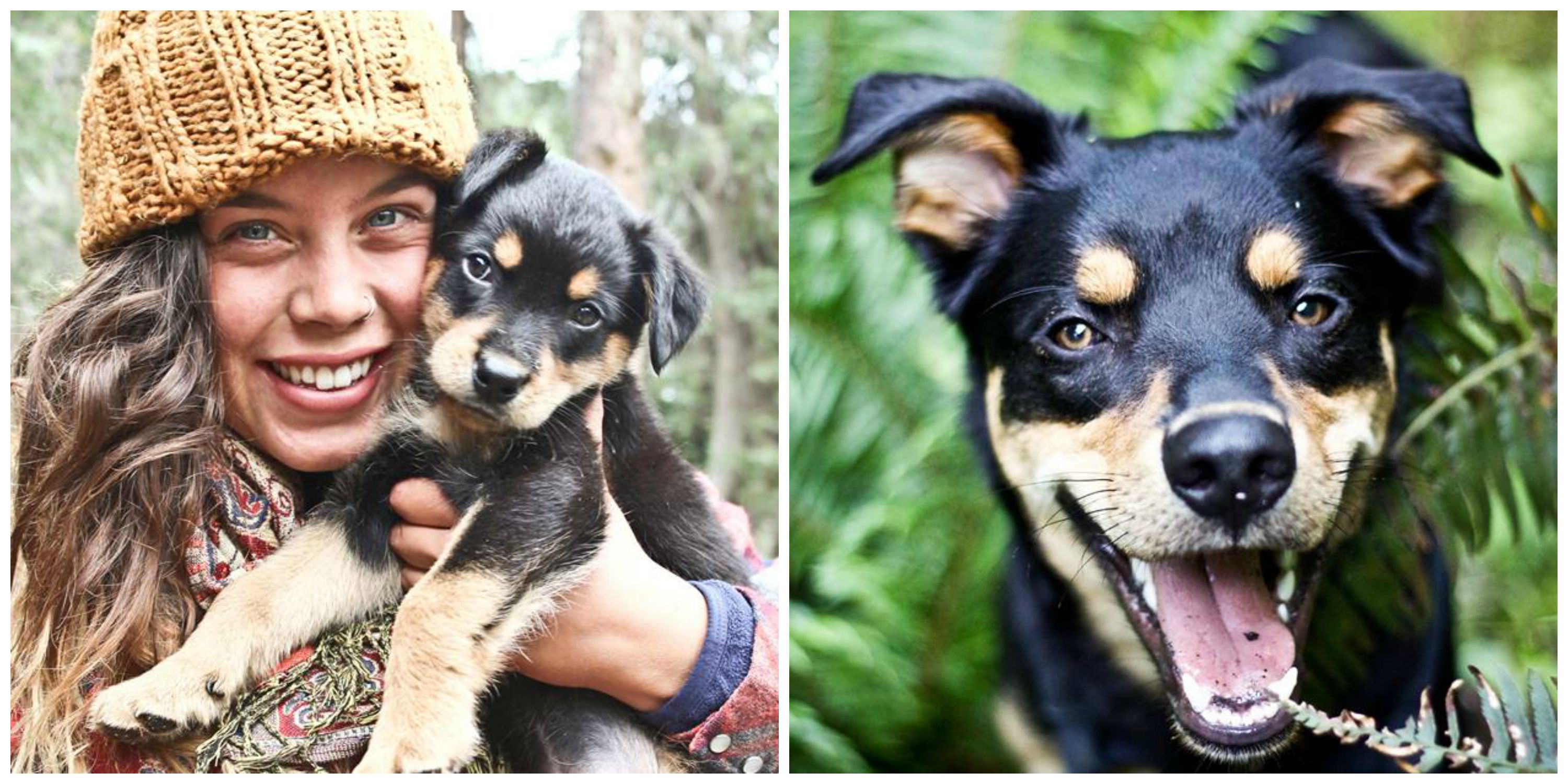
This captivating dog was found wandering the streets of a small northern community, Iskut, B.C., all on his lonesome at the age of one month. It was pretty much love at first sight when the two of us locked eyes; him, in search of a mother and I in search of a companion with the most unconditional of love. He literally walked into my life and I’m sure you can understand by looking at his picture, why I couldn’t say no to this face that was longing to be rescued.

I was so grateful to have received support from the Vancouver Humane Society, through their McVitie fund for animals, upon returning home with him from volunteering. They helped me with his vaccinations, tattoo and a neuter – everything he needed to start this new chapter of his life off right.

.
iskutI spent last summer biking 2000 km to this area, Tl’abane, more commonly referred to now as the Sacred Headwaters – the birthplace of the Skeena, Stikine and Nass rivers, some of the most vital salmon bearing rivers in all of so-called North America. It is home to the unceded, unsurrendered Tahltan First Nation who have lived in harmony with the land and water for thousands of years.

Iskut and I began our adventure together exploring the mountains, lakes and rivers in Tl’abane. To this day gallivanting in the great outdoors is our favourite activity. I watch as he leaps and bounds through the forest, down snowy mountainsides, through the shallows of creeks and rivers; I think he has mistaken himself for a deer or rabbit. Nevertheless, his playfulness, quirkiness and endurance are prominent signs of a healthy and happy pup, which was made all the more possible by the McVitie fund. He has touched a lot of lives and every time someone asks about him I get to tell a story that should be shared far and wide. Thank you again to the Vancouver Humane Society for helping me help this special pup!

VHS’s McVitie fund for animals provides low-income guardians of companion animals with spay/neuter assistance, as well as help with unexpected, emergency vet bills. Please consider supporting the McVitie fund. Increase your impact by donating today – all donations will be matched by a generous VHS donor!

iskut3

Categories
animal welfare Dairy News/Blog Promoted

Still no charges in dairy cruelty case

It has now been one year since the BC SPCA recommended criminal animal cruelty charges against eight employees at Chilliwack Cattle Sales, Canada’s largest dairy producer, and many months since provincial animal cruelty charges were recommended against the company itself. Yet, Crown prosecutors have still yet to come to a decision about laying charges.

For its part, the BC SPCA responded quickly, conducting a raid on the facility and recommending animal cruelty charges within days of receiving video and written evidence covertly obtained by an employee over the course of four weeks last spring.

The delay is unusual and concerning. Prosecutors have been presented with incontrovertible evidence of animals being routinely whipped, kicked, and punched in their faces, bodies, and testicles. Still more animals were documented on video suffering from untreated gruesome injuries and infections.

Internationally respected bovine expert and veterinarian Dr. James Reynolds commented that the video depicted “the most severe cases of animal abuse I have ever seen in 32 years.”

Worse, the company itself appears to have been complicit in the abuse and neglect, despite attempting to distance itself from the employees during the public outcry that followed the footage’s release. The whistleblower stated that he repeatedly brought his concerns to management, which failed to act; several more fired employees came forward to say that they were unfairly taking the fall for a company that created and condoned the apparent widespread culture of cruelty.

Yet, Chilliwack Cattle Sales continues to operate with impunity, milking a staggering 3500 cows three times each day.

It did not take long for the BC Milk Marketing Board to act. By last September, the regulator had made the standards in the national dairy code of practice mandatory, effective virtually immediately. Such actions by provincial regulators are all the more important in Canada’s supply-managed dairy industry, where milk is pooled and dairy processors cannot set animal welfare standards for their suppliers—a tactic commonly used in other countries.

This case presented a unique opportunity for prosecutors to take farmed animal cruelty as seriously as it ought to be. We killed 740 million animals for food in 2014, making farmed animals by far the largest population of animals under human care (by contrast, there are about 15 million pets in Canada). However, these pigs, chickens, turkeys, and cows are kept largely in windowless sheds on private property, entirely shielded from the scrutiny of law enforcement, which is unable to inspect farms without first receiving a complaint from the public.

Unsurprisingly, on the rare occasion that complaints about farmed animal cruelty are received, they come from neighbours concerned about neglect on small operations, where animals may be visible. Employees at factory farms are unlikely to report abuse when their livelihood is at stake, or when they may be reporting on their friends—or themselves.

In the case of Chilliwack Cattle Sales, however, not only was an employee able to obtain evidence of illegal animal cruelty, he was able to actually document malicious abuses while they were being committed, rather than simply after-the-fact conditions of neglect.

Although animal cruelty laws in this country are regularly criticized for being weak, the reality is that provincial and federal law are clear that animal abuse and neglect are illegal. National codes of practice, created with government funding, set standards of care that arguably form a part of the law.

However, these laws are meaningless without adequate enforcement. Barriers to enforcement admittedly do exist—farmed animals are out of sight, law enforcement only acts in response to public complaints, and cruelty laws are mostly enforced by private bodies that are underfunded (the BC SPCA, for example, receives no government funding and must fundraise for all of its operating expenses, from sheltering animals to investigating cruelty).

But when a robust file of evidence virtually falls into prosecutors’ laps along with charge recommendations from law enforcement, farmed animals at last have an opportunity for swift justice.

Let’s hope the concerning one-year delay ultimately results in meaningful prosecutorial action against Chilliwack Cattle Sales. Anything less sends the message that illegal animal cruelty is a permitted ingredient in Canada’s food supply.

Categories
animal welfare fundraising News/Blog Promoted

When a call to VHS is a needy animal’s last hope


tucker collage

“My cat accidentally slipped out the front door and was hit by a car. I’m on disability right now and don’t have enough money to cover the entire vet bill. Please, is there any way you can help me?”

This is the kind of desperate call the Vancouver Humane Society gets several times a week. As VHS’s Program Coordinator & Office Manager, I’m typically the staff member handling the calls when distraught individuals contact us in need of help because their dog, cat or other companion animal is in dire need of emergency vet care. These are low-income folks – often they are on disability, or were recently laid off and are struggling to make ends meet while searching for work, or they are pensioners on a limited income. Whatever their circumstances may be, they all have the same thing in common – they are loving and committed caregivers who simply need a bit of help during a tough time.

Unfortunately, there are always more needy animals than there are available funds and very few programs similar to VHS’s “McVitie Fund For Animals” exist. Often, those without enough funds to cover the vet bill are forced to choose between giving up their beloved companion or euthanasia. This is why the McVitie fund exists – to offer an alternative and keep already cherished animals in their forever home, instead of being surrendered to shelters or unnecessarily euthanized.

Being able to say “yes, we can help” when I receive those desperate calls and hearing the relief in the caller’s voice reminds me of the importance of such a program. Because no one should have to go without their own pain medication in order to make sure their companion animal gets the care they need, or be disadvantaged in receiving help because of a disability, or be unfairly judged due to an unexpected financial hardship when in reality they may have been the only hope for an abandoned animal in need.

I believe in the McVitie Fund For Animals whole-heartedly. I believe in the much needed service it provides and in what it represents in a society where we need to do more to help each other. I believe in the important work VHS does to help animals, so much so that as team captain for VHS in the Scotiabank Half-Marathon/5k. On June 28th, we’ll be running for the animals in what is VHS’s most important fundraiser of the year.

All of our team members have unique and personal reasons for joining this run. Mine is the McVitie Fund For Animals. So please, consider and help our team achieve our goal. Your support causes a ripple effect of happiness – for me, answering the phone at VHS, because I can say “Yes!” to the caller; then for the distraught caregiver on the other end of the line; third to the needy animal; and lastly, to the veterinarian we use who has offered his or her services to our clients at such a reduced rate.

Categories
Cruelty-free News/Blog plant-based diet Promoted

The five best places to get vegan ice cream in Vancouver

Warm weather is here, and with it an excuse to indulge in a scoop or three of ice cream. Although supermarket freezers are exploding with delicious vegan ice cream choices (Luna & Larry’s salted caramel & chocolate is a personal favourite), sometimes we all want to let someone else do the scooping while we enjoy a new flavour with friends.

Fortunately, there’s no shortage of mouthwatering, cow-approved vegan ice cream options in Vancouver. Here are five of our favourites:

1. Chau Veggie Express, 5052 Victoria Drive

chauveggieexpress

Caramelized Banana and Chocolate Chunk Cookie Dough; Image Chau Veggie Express

Chau Veggie Express offers a wide variety of ice creams by the scoop and pint, all of which are vegan. Current flavours include: coconut vanilla bean, Vietnamese coffee chocolate, Thai iced tea, chocolate hazelnut praline, caramelized bananas and cookie dough, coconut vanilla bean and lemongrass, and coconut pandan leaf and kale.

Andrew, Chau’s pastry chef and the genius behind Chau’s innovate vegan ice cream offerings, says: “I developed the recipes based on my favourite childhood memories. The ice creams are salted. The ice cream base is seasoned to reflect a very traditional Vietnamese style preparation of coconut cream used in Vietnamese desserts as well as savoury dishes, and I love it. It gives the ice cream another dimension and depth of flavour, and this is the way I grew up eating desserts at

Vietnamese shops and cafes.”

.

2. Earnest Ice Cream, Multiple Locations

earnesticecream

Mint Chip; Image Earnest Ice Cream

Earnest Ice Cream serves up rotating, seasonal flavours alongside classics. Scoops and pints are available in their two shops, while their pints can be found at distributors all over the city.

Earnest Ice Cream says, “We change our vegan flavours weekly. We try to have two offerings, but depending on popularity sometimes one sells rather quickly.” Past vegan offerings have included coconut-lime sorbet, café au lait, chocolate, cookies + cream, lemon, maple walnut, and mint chip. Check out their website for what’s currently available in their scoop shops!

.

3. Rain or Shine, 1926 West 4th; 3382 Cambie

rainorshine

Coconut Chocolate Chunk; Image Rain or Shine

Rain or Shine has on its regular menu a vegan sundae: the Yumaste! It’s made with coconut chocolate chunk ice cream, seasonal berry compote, chocolate sauce and candied hazelnuts. All of their sundae toppings are made in house; other vegan offerings include fig balsamic reduction and eureka lemon olive oil.

While the coconut chocolate chunk ice cream, made with organic coconut milk, is always available, Rain or Shine also rotates through seasonal offerings. Josie from Rain or Shine says, “Currently we have an organic cucumber lime sorbet but we will be making a mint strawberry sorbet soon. We may also do a grapefruit IPA sorbet for craft beer week.”

.

4. Bella Gelateria, Yaletown and Coal Harbour

bellagelateria

Orange & Vanilla Creamsicle and Chocolate Sorbetto; Image VHS

While sorbet is typically vegan and can be found at gelato joints all over town, Bella Gelateria is worth a special visit. In 2014, its proprietor won “International Gelato Master of the Year.” What does this mean? We have no idea, but Bella Gelateria’s array of sorbettos—ranging from the familiar to the exotic—are smooth, creamy, and flavourful.

On a recent visit, their Yaletown location featured eight non-dairy sorbetto flavours: cantaloupe, chocolate, creamsicle (orange & vanilla), faloodeh (rose water & rice noodles), lemon & basil, mango mango mango, rambutan, and yuzu citrus (Japan).

.

5. What’s Shaken Milkshake Bar, 586 Davie Street

whatsshaken

Banana, peanut butter, and chia protein shake; Image What’s Shaken

Okay, so this one is shakes, not ice cream, but it’s too good not include.

What’s Shaken generally carries a non-dairy base of almond or coconut ice cream. You can design your own drink from the many offerings, or choose from the menu.

Xiomara at What’s Shaken says, “A few favorite non dairy shakes are Oreo, Chocolate Peanut Butter, Mango, Strawberry, Creme Latte, Blueberry, Coconut Nutty and Kale Colada. Our protein and superfood shakes can also be made with Vegan protein powder and we carry almond milks and coconut water.”

What’s your favourite vegan ice cream in Vancouver? Did we miss anything great? Let us know in the comments!

Categories
animal welfare News/Blog Promoted

Giles means everything to PTSD sufferer

“She couldn’t bear the thought of Giles being seriously injured.”

giles3_1 (3)

Giles is a sweet four-year-old boy whose guardian Shelley took him in after he was born in a barn and faced a lifetime of fighting for everyday existence. He’s been a constant companion and an important part of Shelley’s life ever since.

Giles’ incredibly affectionate and loving nature is important for more reasons than one, as Shelley suffers from severe depression and PTSD. His friendship is motivating – his playful and goofy demeanor can always cheer her up, and his sensitive temperament helps see her through the tough times.

Recently, Giles injured his leg and Shelley noticed him favouring it. The situation was a great source of stress for her. She couldn’t bear the thought of Giles being seriously injured and given her low-income situation, she needed help. That’s when VHS stepped in, thanks to the support of our amazing donors! Giles underwent an x-ray to ensure nothing was broken and received medication to help manage his pain. After some time resting his leg, Giles was thankfully back to his old self – cuddling, chattering and running around the house with lots of energy. His guardian was over the moon to have her friend back and grateful for the support of VHS.

VHS’s McVitie Fund assists low-income pet guardians with emergency veterinary bills. Often, it means the difference between life and death for these animals! Over the years, we’ve helped hundreds of  desperate companion animals like Giles to get the help they need to remain in their forever, loving homes. Can you help? Right now, your donation will be matched by a generous anonymous donor!

Thank YOU for your support for this and VHS’s other campaigns to stop animal cruelty!

Categories
animal welfare News/Blog Promoted

Animal rights news from VHS!


E-newsletter header2

Sign up for our new E-Newsletter

VHS has launched a new E-Newsletter to keep supporters up-to-date on our campaigns against animal cruelty.  To receive the newsletter, which will be issued three times a year, sign up here.  Don’t miss out on news about the issues we’re working on, including: farm animal welfare, rodeo cruelty, Meatless Monday, animals in captivity and other animal rights topics.

If you would like to receive our paper newsletter, Animal Writes!, just email us or call the VHS office at 604 266 9744.

To receive our Action Alerts, which let supporters know when urgent help is needed with a campaign or animal welfare emergency, sign up here.


Categories
animal welfare compassion Cruelty-free News/Blog Promoted

Nice Shoes: a pioneer in cruelty-free, compassionate shopping

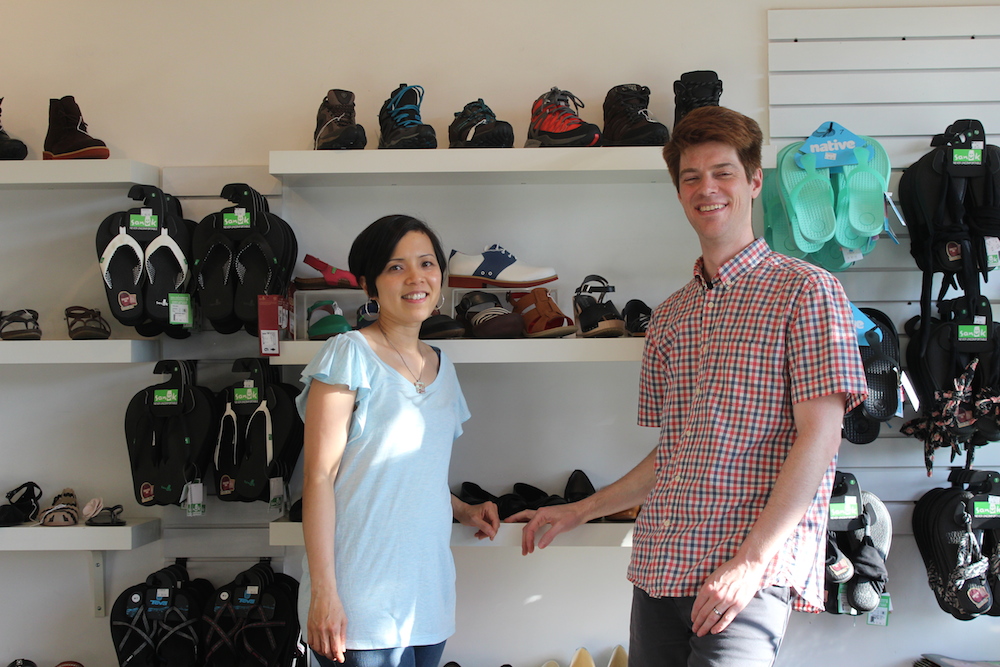
Joanne Chang and Glenn Gaetz of Nice Shoes

.


Nice Shoes, Vancouver’s only vegan shoe store, was opened in 2011 by animal advocates Glenn Gaetz and Joanne Chang. The store carries 100% vegan shoes as well as purses, bags, belts, wallets and other cruelty-free products.

VHS supports the growth of cruelty-free businesses and we were interested to find out more about how Nice Shoes is faring in Vancouver’s competitive retail market. Here’s our Q&A with Glenn and Joanne.

.


VHS: Can you say a bit about what motivated you to open Nice Shoes?

G&J: As shoppers, we were motivated by the anxiety and frustration we felt every time we walked into a shoe store knowing that the salesperson couldn’t answer our questions about materials – or even cared to try. As activists, we were motivated by our desire to normalize the vegan lifestyle.

VHS: How difficult was it to start a business that was the first of its kind in Vancouver?

G&J: Starting a business was the easy part! Vancouver has a vibrant vegan and animal rights community and everyone is excited when a new vegan business opens. The challenge comes in maintaining a profitable business and growing our customer base.

VHS: How is the business going now and how do you feel about the future of Nice Shoes?

G&J: We think there’s a bright future for Nice Shoes as veganism seem to be going through a growth spurt. We know this because a large portion of our customers are new vegans who have only made the transition within the last couple of years.

VHS: Who are your customers? Is there a predominant demographic?

G&J: Our main customers are vegans and vegetarians, but that in itself encompasses a huge range of people. We see vegans of all ages and professions. We also get quite a few non-veg customers who simply like the styles we carry.

VHS: Some vegan shoes are not cheap. Is affordability an issue?

G&J: Since our main goal is to normalize veganism, we are very thoughtful in selecting brands that are familiar and affordable to most people. We do carry some exclusive vegan brands (which tend to be pricier), but they are a small percentage of what we carry. Most of the shoes in our current spring/summer collection range from $30-$150. We also have great sales throughout the year and a student discount program.

VHS: Do you think the market is growing for cruelty-free products?

G&J: Absolutely! We find that “vegan leather” is now a popular term used proudly by mainstream brands to sell products. And a lot of these brands are rolling out vegan product lines and marketing them as such.

VHS: What do you think needs to happen to encourage consumers to make more ethical choices?

G&J: Consumers want nice looking things that are decent quality at a reasonable price. If the products can match what they are looking for, they will switch without even trying. We have a few loyal non-veg customers who might not even know that our products are vegan. By offering alternatives that look great and are equal to, if not better than, their animal product counterparts, we are lowering the barrier of entry to a vegan lifestyle. All things being equal, who wouldn’t choose the cruelty-free option?

VHS: How do you stay positive in a world where animal-based products are still so predominant?

G&J: We’ve been vegan for 18 & 20 years. In that time we’ve seen a lot of change. Twenty years ago, vegan shoes were horrible plastic things that looked atrocious and felt like cardboard. When we look at the selection and the quality of products available nowadays, we can’t help but smile. Animal products may still be predominant, but the alternatives are gaining ground every day.

VHS: What’s your most popular product?

G&J: Since the weather is getting nicer, women’s sandals are flying off the shelves. And hiking shoes are in high demand as people are starting to hit the trails.

VHS: What do you find most rewarding or satisfying about running Nice Shoes?

G&J: Nothing makes us happier than getting a positive feedback from our customers – it really makes all the hard work worth while. And of course, all the adorable dogs who visit us in the store.

Nice Shoes is located at 3568 Fraser Street (between E 19th & 20th) in Vancouver.
Tel: 604-558-3000
info@niceshoes.ca

Categories
animal welfare Food and Drink News/Blog

A&W’s move to antibiotic-free chicken doesn’t address animal welfare issues

You’ve probably seen the commercials.  A nice man from A&W Restaurants takes to the streets to offer consumers the company’s new antibiotic-free chicken.  People seem to approve and who wouldn’t?  The overuse of antibiotics in farm animals is a huge problem that threatens the effectiveness of the antibiotics we depend on for human health.

But A&W’s move to address the issue by sourcing only chickens that have not been treated with antibiotics, while laudable, does nothing to address another serious issue of concern to consumers – animal welfare.

Chickens raised for meat are the most abused animals on the planet. They live in huge indoor sheds in groups of 5,000 to 50,000, eating and sleeping in their own waste for their entire lives. Because they are bred for fast growth they develop painfully weakened bones from rapid weight gain and suffer from many other painful conditions.

In 1950 it took 84 days for a broiler to reach market weight. Today it takes 38 to 40 days. The University of Arkansas Division of Agriculture estimates that if you grew as fast as a chicken, you’d weigh 349 pounds at age two. These chickens look full-grown, but peep like the babies they are.

VHS encourages consumers to seek out plant-based alternatives to factory-farmed meat because of the profound suffering that it causes. Products from companies like B.C.-based Gardein provide convenient, healthy and great-tasting meat alternatives.