Categories
Cruelty-free Food and Drink News/Blog plant-based diet Promoted Uncategorized vegan vegetarianism

Buddha-Full Fresh Juice & Smoothies: Building a cruelty-free community on the North Shore

buddhafull
Geremie Voigt and Kyla Rawlyns of Buddha-Full Fresh Juice & Smoothies. photo: Stephen Hui, the Georgia Straight

Buddha-Full Fresh Juice & Smoothies represents an ethical, 100% animal friendly, community-based environment. Geremie Voigt and Kyla Rawlyns opened the café in North Vancouver five years ago. Buddha-Full proudly serves organic fresh juices & smoothies, raw organic cuisine, organic gluten-free baked goods, a full local retail section, and locally roasted coffee from Moja.

VHS supports the growth of cruelty-free businesses and we were interested to find out more about Buddha-Full. Here’s our Q&A with Geremie and Kyla.

VHS: What inspired you to open Buddha-Full Fresh Juice & Smoothies?

G&K: We both have been vegan for many years and have always been inspired by educating our community, family and friends on veganism and a conscious living dynamic.

VHS: How have you found the reaction from the community?

G&K: Our community tells us Buddha-Full is a staple in the lower Lonsdale area.  People tell us every day it is like going to their church!

VHS: What do you enjoy most about running Buddha-Full?

G&K: Standing by our initial mission of educating our community and holding a space where people can come and feel welcome. It’s important to us that our customers feel comfortable and know they are taken care of.

VHS: What do you find is the hardest part?

G&K: Challenges will always come up. The hardest part is having some customers coming in and asking for dairy products or meat products and educating them on why we choose to maintain our animal friendly selection.

VHS: How do you stay positive in a world where animal-based products are still so predominant?

G&K: Considering that veganism has doubled since 2009 in the U.S., we know things are changing and we are making a difference in the world.  We are proud to be standing by our ethics.

VHS: What is your most popular menu item?

G&K: The Lobo Smoothie (hemp protein, dates, peanut butter, banana and almond milk), it’s a Buddha-Full staple.  Also, the Pesto Vegan Sausage wrap is one of our absolute favourite items and we make it all in house!

VHS: Who are your customers? Is there a predominant demographic?

G&K: Upwards of 60% of our customers are female. The majority of our customers are not vegan, however they are interested and curious about veganism and feel welcomed in our space!

VHS: What do you think is the best way to encourage consumers to make more ethical choices? 

G&K: Leading by example is a great way to encourage ethical choices by others.  Be the change you want to see in the world!

VHS: Do you think veganism is becoming more mainstream?

G&K: We think the world is becoming increasingly educated about and involved with animal liberation.  Everyone we meet seems to have one at least one person in their family who is vegetarian, if not vegan.  Half of Kyla’s family is now vegetarian – Now that’s progress!

VHS: What are some of the lessons you’ve learned about running a vegan business?

G&K: Having a space where everyone feels welcome is crucial. People want some sort of familiarity and seem to frequent spaces that provide that on a consistent basis.

bfull collage


Buddha-Full is located at 106 West 1st Street – Suite 101, North Vancouver.

Tel: (604) 973-0231

Email: bfulljuice@gmail.com

Categories
animal welfare cruelty News/Blog Promoted rodeo Uncategorized

Is the tide turning against rodeo in Canada?

the chucks

Photo: Jo-Anne McArthur

.


There are encouraging signs that attitudes toward rodeo and chuckwagon races in Canada may be changing, if independent opinion in mainstream media is anything to go by.

A recent editorial in the Vancouver Sun said that it was “hard to argue” with the description of the Calgary Stampede as “a spectacle of animal abuse.”

In the same week, a column in the Ottawa Citizen described the Calgary Stampede chuckwagon race as a “brutal mix of human domination over an animal running at breakneck speed in confined quarters” and asked: “Would we miss it if it disappeared?”

Calf roper at 2006 Russian River Rodeo, Duncans Mills, California

Another column in the Calgary Herald, authored by a member of the Herald’s editorial board stated: “…the bottom line is these animals are still being used for sheer entertainment in events that can cause them traumatic injuries and death — and it is unnecessary for them to be subjected to this. Are we humans so hard up for entertainment that we must amuse ourselves by watching events that can cause animals to suffer and die?”

Elsewhere on the prairies, an editorial in the Moose Jaw Times-Herald criticized the Calgary Stampede, stating: “Shutting down the rodeo portion of the Stampede deserves serious consideration.”

Meanwhile, the BBC drew international attention to the deaths of chuckwagon horses at the Stampede with a lengthy analysis titled “Why horses die on the half-mile of hell”.

Update: Yet another opinion piece (in Metro News Canada) critical of the chuckwagon race has been published.

Update: An article in the Ottawa Citizen describes watching the CBC coverage of the Calgary Stampede, stating:”…it was impossible not to feel empathy for the poor animals, so clearly unwilling participants in this painful and terrifying circus. In the name of tradition, the CBC broadcast an ugly and cruel spectacle, one that felt like it took place in a dark, shameful past that the public no longer wanted to acknowledge, or had an appetite for.”

Aside from media comment, it should be remembered that virtually all mainstream animal welfare agencies oppose rodeo.

A 2013 public opinion poll showed that the majority of B.C. residents are opposed to rodeo.  Maybe that sentiment is beginning to spread across the country. Let’s hope so.

Categories
animal welfare compassion News/Blog Promoted Uncategorized

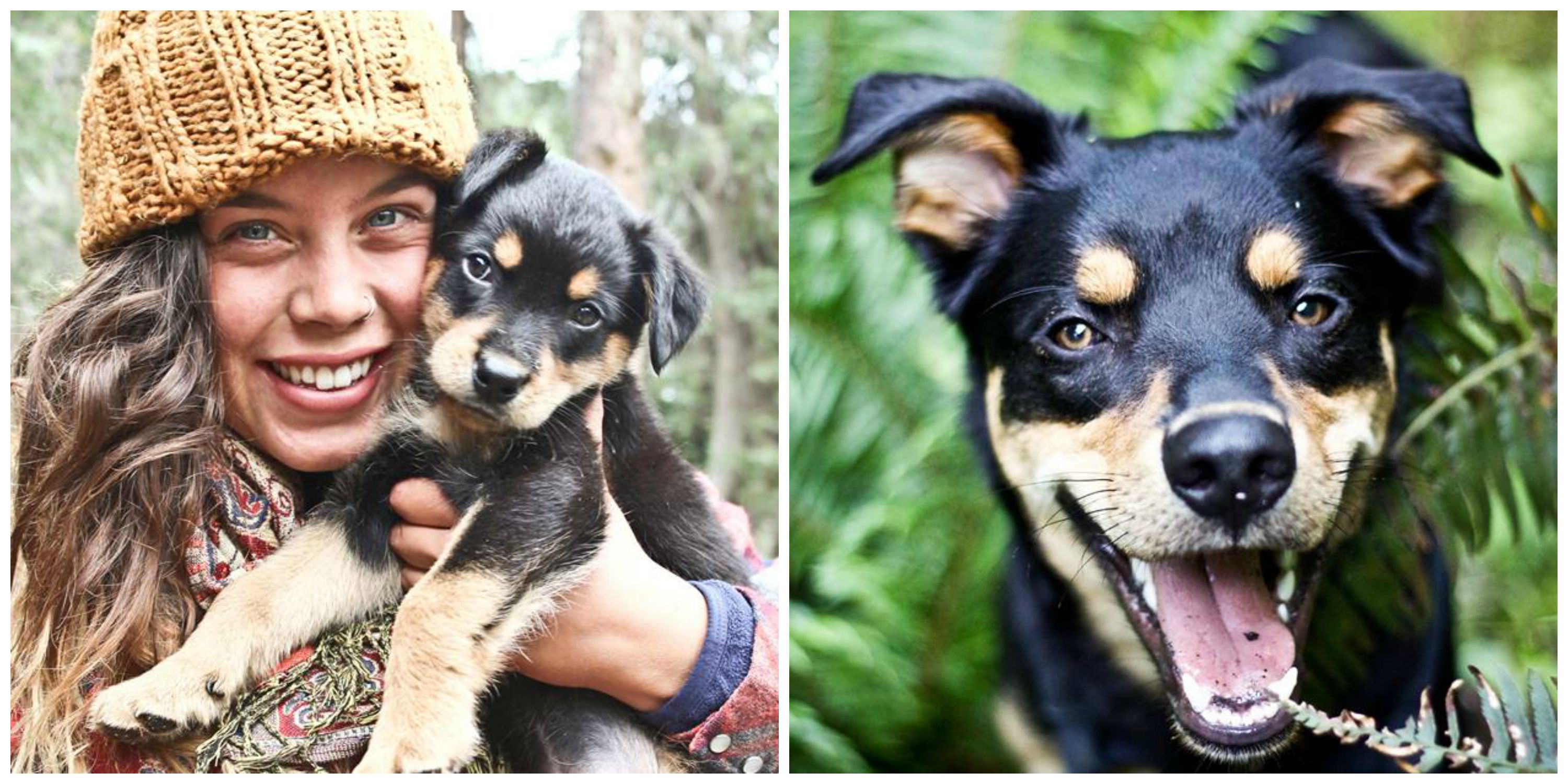
Iskut from Iskut, helped through McVitie Fund For Animals

iskut from iskut

Guest post by Desiree; activist, animal lover & McVitie fund for animals recipient

This captivating dog was found wandering the streets of a small northern community, Iskut, B.C., all on his lonesome at the age of one month. It was pretty much love at first sight when the two of us locked eyes; him, in search of a mother and I in search of a companion with the most unconditional of love. He literally walked into my life and I’m sure you can understand by looking at his picture, why I couldn’t say no to this face that was longing to be rescued.

I was so grateful to have received support from the Vancouver Humane Society, through their McVitie fund for animals, upon returning home with him from volunteering. They helped me with his vaccinations, tattoo and a neuter – everything he needed to start this new chapter of his life off right.

.
iskutI spent last summer biking 2000 km to this area, Tl’abane, more commonly referred to now as the Sacred Headwaters – the birthplace of the Skeena, Stikine and Nass rivers, some of the most vital salmon bearing rivers in all of so-called North America. It is home to the unceded, unsurrendered Tahltan First Nation who have lived in harmony with the land and water for thousands of years.

Iskut and I began our adventure together exploring the mountains, lakes and rivers in Tl’abane. To this day gallivanting in the great outdoors is our favourite activity. I watch as he leaps and bounds through the forest, down snowy mountainsides, through the shallows of creeks and rivers; I think he has mistaken himself for a deer or rabbit. Nevertheless, his playfulness, quirkiness and endurance are prominent signs of a healthy and happy pup, which was made all the more possible by the McVitie fund. He has touched a lot of lives and every time someone asks about him I get to tell a story that should be shared far and wide. Thank you again to the Vancouver Humane Society for helping me help this special pup!

VHS’s McVitie fund for animals provides low-income guardians of companion animals with spay/neuter assistance, as well as help with unexpected, emergency vet bills. Please consider supporting the McVitie fund. Increase your impact by donating today – all donations will be matched by a generous VHS donor!

iskut3

Categories
News/Blog Promoted Uncategorized vegetarianism

Almost 12 Million Canadians Now Vegetarian Or Trying To Eat Less Meat!


Canadians eating less meat

Action update: Check out our new Go Veg campaign


A new poll commissioned by the Vancouver Humane Society shows that 33 percent of Canadians, or almost 12 million, are either already vegetarian or are eating less meat.

That figure includes eight percent who identify as vegetarian or mostly vegetarian, as well as 25 percent who state that they are trying to eat less meat.

British Columbia is the most vegetarian-friendly province, with 13 percent of respondents identifying as vegetarian or mostly vegetarian and a further 26 percent trying to eat less meat.

Quebec and Ontario are not far behind. In Quebec, seven percent identify as vegetarian or mostly vegetarian, while a further 30 percent are trying to eat less meat. In Ontario, eight percent are vegetarian or mostly vegetarian and 23 percent are trying to eat less meat.

While younger Canadians are more likely to identify as vegetarian or mostly vegetarian, older Canadians are more likely to say that they are eating less meat. Of 18 to 34 year olds across the country, 12 percent are vegetarian or mostly vegetarian. For those 55 and up, 33 percent are trying to eat less meat, in addition to the five percent who identify as vegetarian or mostly vegetarian.

The poll, commissioned by VHS, was conducted online by Environics earlier this year, and surveyed 1507 Canadian adults.

There are so many reasons to reduce or eliminate animal products from our diets. With delicious and varied veg options increasingly available in supermarkets and restaurants, it has never been easier to explore compassionate food choices. For mouthwatering recipes and veg tips, please sign our Meatless Monday pledge!

Categories
News/Blog Promoted Uncategorized

Trinity Western University joins Meatless Monday movement

Meatless MondayThis April, Langley’s Trinity Western University became the second school in Western Canada to join the globally popular Meatless Monday movement. Trinity Western follows Langara College in encouraging students to start the week right by choosing veg meals each Monday.

VHS worked with Trinity Western students and food services personnel to implement Meatless Monday as an easy, positive way for students to make a meaningful difference for the planet, for our health, and of course, for animals.

Trinity Western advertises that “Each Monday, Dining will be presenting ‘plant based’ dinner menus that are not only good for your health but are also GREAT for the environment!”

Meatless Mondays are also great for animals. Our overconsumption of cheap meat has forced animals into factory farms, where they endure intensive confinement, mutilations without painkillers, crippling deformities, and terrifying slaughter—all in the name of profit.

Trinity Western goes Meatless Monday
TWU promotes Meatless Monday

If all Canadians went meatless on Mondays, more than 100 million animals would be spared from a miserable life and death in our country’s factory farms.

And research reveals that showing people how to go vegetarian can be even more important than showing them why. Students who are exposed to meatless meals learn that vegetarian cuisine is varied, diverse, filling, and delicious, and may be inspired to choose veg options more frequently—sparing even more animals from cruel factory farms.

To learn more about bringing Meatless Monday to your school or company, please contact us. We can send a speaker or workshop facilitator, provide you with resources, or simply offer guidance.

“I always wondered why somebody doesn’t do something about that. Then I realized I was somebody.” – Lily Tomlin

.


Categories
News/Blog Promoted Uncategorized

Langara College Becomes First Campus in Western Canada to Join Global Meatless Monday Initiative

Next Monday, March 30th, Langara College will become the first campus in Western Canada to adopt the popular Meatless Monday initiative, joining hundreds of schools worldwide including McGill, Dalhousie, and Queen’s, along with Columbia, Johns Hopkins, and U.C. Berkeley.

The initiative was introduced by Langara’s food services provider, Chartwells—which is owned by Compass Group, one of the largest food services providers in the world—in response to student demand and in collaboration with the Vancouver Humane Society (VHS).

Meatless Monday is an international movement of schools, hospitals, municipalities, companies, and families that choose to ditch meat each Monday in favour of healthy, delicious, humane, and eco-friendly vegetarian options.

“Meatless Monday is an incredibly popular initiative that resonates with people from all walks of life because it is an easy, positive way for each of us to make a meaningful difference for animals, our health, and the planet,” said Anna Pippus, special projects director for the VHS. “Our over-consumption of cheap meat has forced animals into factory farms, where they endure conditions and practices that most Canadians find appalling.”

“The Vancouver Humane Society commends Chartwells at Langara for responding to student concerns about the impact our food choices have on the world. Chartwells has demonstrated industry leadership in putting Meatless Monday on the menu,” she said.

Facts:

  • In 2014, 725 million animals were killed for food in Canada. Canadians eat almost 100 kg of meat per capita per year. The global average is less than 40 kg per capita.
  • According to Dietitians of Canada, plant-based eating has many health benefits, including lower rates of obesity, heart disease, high blood pressure, high blood cholesterol, type 2 diabetes and certain types of cancer.
  • Due to livestock farming’s inefficiencies, it is a major contributor to climate change, pollution, water use, land degradation and deforestation, biodiversity decline, and ocean degradation, sparking criticism from the United Nations and Chatham House, among many others.

Learn more about VHS’s Meatless Monday campaign and how you can get involved!

Meatless Monday Vancouver

Categories
News/Blog Promoted Uncategorized

The times they are a changin’

Eat less meat

Back in 2008, VHS had an opinion piece published in the Globe & Mail, calling for a reduction in meat consumption for animal welfare, environmental and health reasons.

At the time, we weren’t hopeful that governments, mainstream media or other power brokers were likely to take the issue seriously, despite the overwhelming evidence of the problems caused by meat production and consumption.

But last week, there was a hopeful sign of change when the foremost nutrition advisory panel in the United States officially called for Americans to eat less meat to protect their health and the environment.  (Animal welfare is not in the panel’s mandate, but its advice, if heeded, would likely save many animals from suffering and slaughter on factory farms across the U.S.)

Another welcome sign of the times was an amazing article in the Globe & Mail this week by nutritionist Leslie Beck.  Quoting celebrated Canadian scientist Dr. David Jenkins, the article laid out the compelling reasons why a vegan diet benefits human health, the environment and animal welfare.

So far, there is no indication that Health Canada, which produces Canada’s Food Guide, will follow the U.S. example of recommending a cut in meat consumption.  But with more articles like Leslie Beck’s it may only be a matter of time before Canada catches up.

See our our Eat Less Meat page for more information on this issue.

Categories
News/Blog Promoted Uncategorized

LUXTON RODEO CANCELLED!

Luxton Rodeo calls it quits after campaign by VHS and VCARE

VHS - Victoria Times Colonist Ad - small

The Luxton Rodeo in Langford, B.C. has been cancelled, following a three-year campaign by the Vancouver Humane Society (VHS) and Victoria Citizens Against Rodeo Events (VCARE).

The campaign,which gained support from local people in Langford and from animal lovers across the country, had called for an end to cruel rodeo events.  Powerful newspaper ads, like the one shown at left, helped raise public awareness about rodeo animal cruelty. VHS would like to thank everyone who supported this effort – this is your victory.

The demise of Luxton is another sign that British Columbians are turning against the cruelty of rodeo.  A 2013 public opinion poll by Insights West found that 56% of B.C. residents are opposed to rodeos, with only 38% in favour of them. On Vancouver Island, 63% were opposed to rodeos.

The cancellation of the Luxton Rodeo is the second blow to the rodeo industry in recent years.  In 2007, after a long campaign by VHS, the Cloverdale Rodeo announced that it would discontinue four key events: calf-roping, steer-wrestling, team-roping and wild cow milking.  VHS also convinced the City of Vancouver to ban rodeos in 2006.

VHS will continue its fight to end rodeo cruelty, including our campaign calling on the Calgary Stampede to drop calf-roping and to suspend its chuckwagon race.

Please join us in our effort to end the suffering of rodeo animals. With your help we will gain more victories for compassion and civilized behaviour toward animals.

Visit our rodeo campaign page for more information.


Categories
News/Blog Promoted Uncategorized

From margins to mainstream: meat-free eating is on the rise

According to a recent Globe & Mail article, vegan cuisine has moved into the mainstream.  Certainly, no one can fail to notice the emergence of vegan and vegetarian restaurants (along with more meat-free options in conventional restaurants) and the availability of meat and dairy substitutes in supermarkets.  While the overwhelming majority of people are still carnivores, adopting a plant-based diet is no longer on the freakish fringe of lifestyle choices.

Using Google books Ngram Viewer, a digital tool that can track the historical frequency of words in a database of about six million books, it’s possible to see how the concept of meatless diets has advanced in our culture in recent decades. The charts below are roughly indicative, tracking several relevant terms:


Ngram veg track


Although “vegetarian” appears to dip after 2000:


Ngram Vegetarian to 2008

Rising concerns about the impact of meat consumption on animal welfare, the environment and health have no doubt played a role in increased public interest in plant-based diets. But despite this trend, global consumption of meat is accelerating because of increased demand in Asia.

Animal activists, environmentalists and health advocates promoting lower meat consumption have their work cut out for them.

VHS is committed to encouraging a plant-based diet and lower meat consumption to help end factory farm cruelty and reduce animal suffering and slaughter.

Check out our Eat Less Meat program.

.


Categories
News/Blog Promoted Uncategorized

Why no action on dairy farm cruelty?

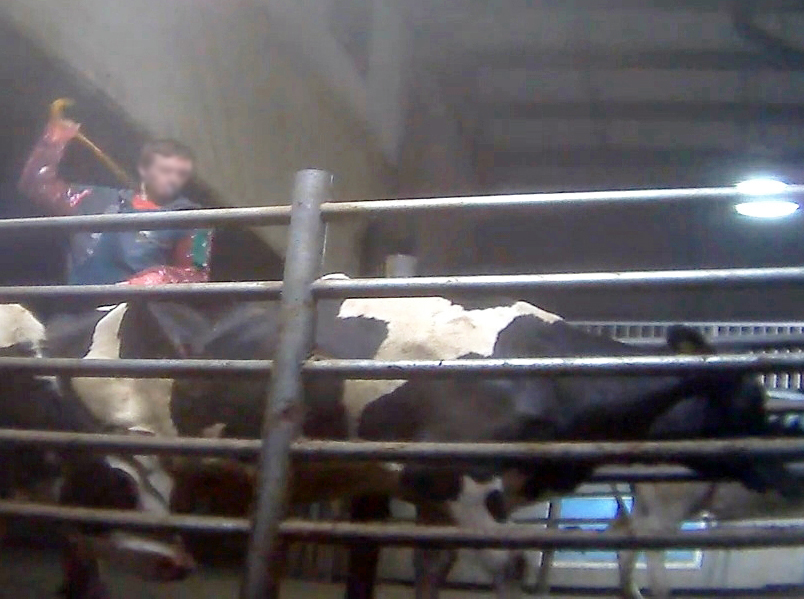
Worker about to beat cowNR


It has been almost seven months since the BC SPCA recommended charges against eight employees of a Chilliwack dairy farm, who allegedly whipped, punched and kicked cows at the farm.  Yet Crown Counsel has yet to announce whether the charges will be approved.

Video of the alleged beatings was released by the animal advocacy group Mercy for Animals, following work by an undercover investigator.  The BC SPCA, acting on this evidence, subsequently raided the farm and recommended animal cruelty charges under the Criminal Code.

Graphic video and photos from the undercover investigation were carried by news media across the country, shocking and outraging many Canadians.  Chilliwack Cattle Sales, the operator of the dairy farm, was the focus of intense public criticism and boycotts of milk from the farm were organized.

Despite the clear and overwhelming concern, Crown Counsel has still not responded to the BC SPCA’s recommendation.  Local news media have quoted the BC SPCA stating that the delay “is not typical of SPCA-recommended charges.”

VHS supporters, who worry that animal cruelty is not taken as seriously as it should be by our justice system, have expressed  concern that this case is perhaps not being pursued as vigorously as it should be.

VHS has contacted the Crown Counsel office to reiterate this concern and to enquire about progress on this case.  We are currently awaiting a reply.  It is our view that the public expects animal cruelty cases to be taken extremely seriously and that this case should be treated as a priority.